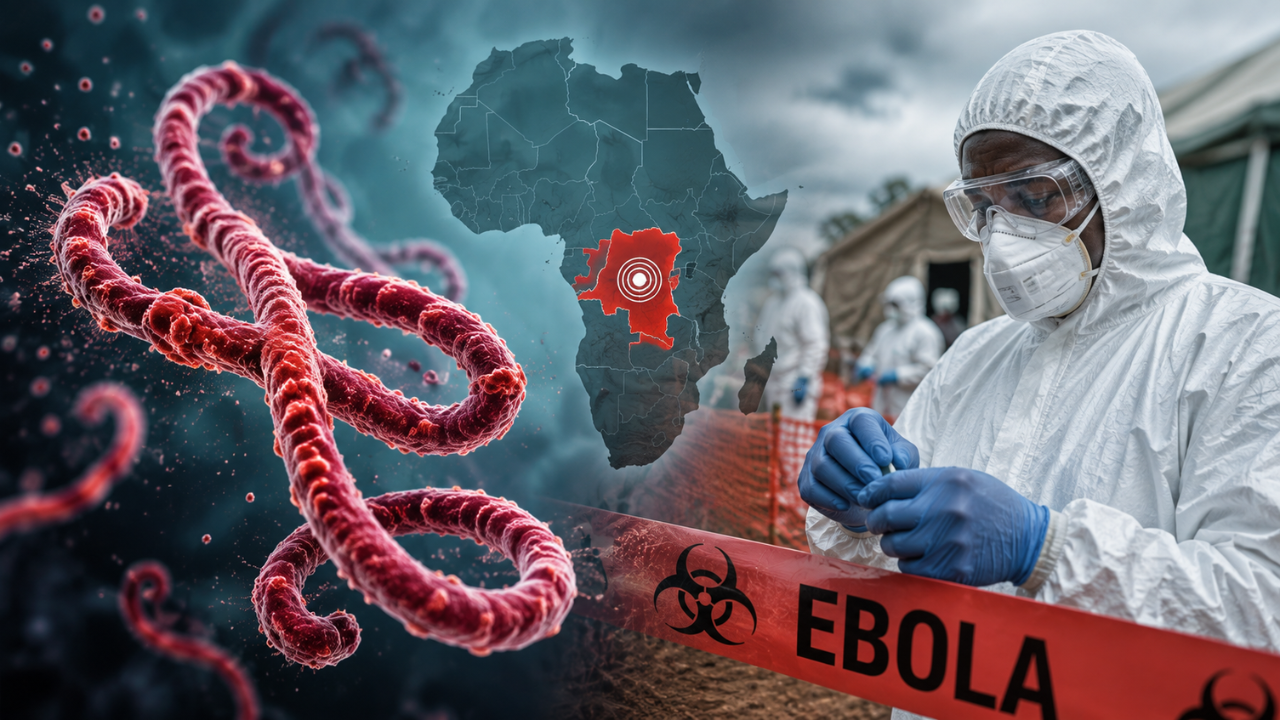
The Democratic Republic of Congo's Ebola outbreak has become the deadliest in the country's history, with more than 2,300 deaths and almost 5000 cases reported. Yet the World Health Organization (WHO) says the outbreak can still be brought under control within the next three months if they get the resources they urgently need.The outbreak, caused by the Bundibugyo species of Ebola virus, was declared in May and has now spread to six provinces. At least 2,325 people have died among nearly 4,945 confirmed cases, according to Reuters. It has already surpassed the previous record for deaths from Ebola in the DRC and has become the second-deadliest Ebola outbreak ever recorded globally, behind the 2014-2016 West African epidemic.The situation has turned grim as health teams are struggling to keep pace with transmission. Around 70% to 80% of new cases have no known link to previously identified infections, suggesting that the virus is spreading through chains that surveillance teams have not yet detected. WHO Says The Outbreak Can Still Be ContainedDespite the alarming numbers, WHO officials say the window for containment has not closed and that it can be controlled within the next few months. Thierno Balde, WHO's regional emergency director for Africa, said the outbreak could still be brought under control within three months if sufficient resources are made available.“About the next plan for the three months, yes, if you have the necessary resources, I think it will be possible to do that,” Balde told Reuters. One of the biggest problems in front of the authorities is that the response is underfunded. Of the estimated $115 million needed for the next phase of the response, only about 60% has been raised. WHO is therefore pushing for additional international support while attempting to expand surveillance, treatment and community-level response. Also read: DR Congo Ebola Outbreak Becomes Deadliest In Country's History As Death Toll Hits 2,325Why Is This Ebola Outbreak Challenging To Control?One of the biggest challenges is that health workers are finding many infections outside the existing contact-tracing network.Normally, once an Ebola case is identified, teams trace people who have been exposed, monitor them and rapidly isolate anyone who develops symptoms. That system becomes much less effective when people with Ebola have no known connection to an existing case.Conflict and population movement are contributing to the expanding outbreak. WHO has warned that the response is taking place in a remote and densely populated setting. Health workers are also struggling with limited resources and delayed salaries. Several reports of protests among Ebola response workers over unpaid wages also surfaced recently. Also read: Ebola Outbreak Is Claiming 1 Life Every 30 Minutes In DR Congo: UN Humanitarian OfficialCourse Of Action For Next 3 Months The current epidemic is caused by Bundibugyo virus, rather than the Zaire Ebola virus responsible for some of the largest previous outbreaks.There is currently no approved vaccine or specific treatment for Bundibugyo Ebola, although candidate vaccines and treatments are being evaluated. WHO has said work is underway to test promising candidates. WHO's three-month target does not mean the outbreak will automatically end in 90 days. It means health authorities believe rapidly scaling up the response could still interrupt transmission before the epidemic becomes even more difficult to control.The response is already being expanded, with additional treatment capacity, including around 400 new beds, and more epidemiologists being deployed to affected areas.