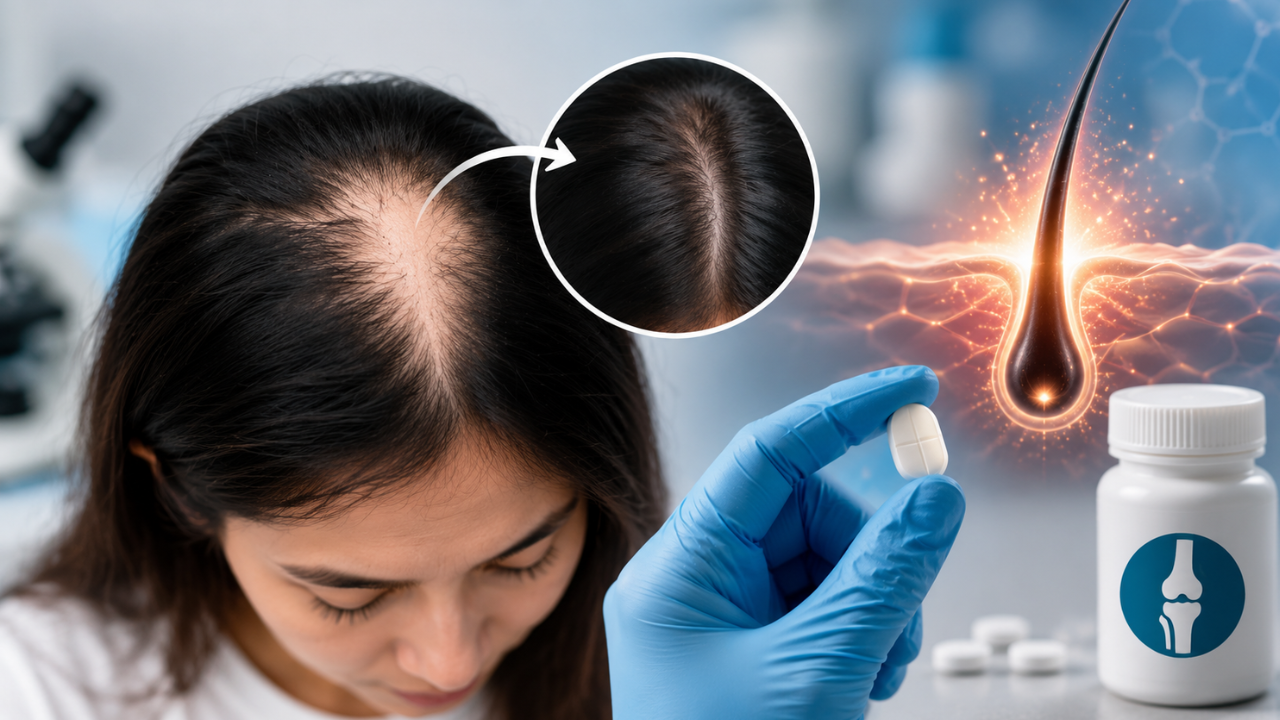
For people living with alopecia areata, hair loss can be unpredictable, persistent, and difficult to treat. Now, amid lack of a definitive cure, a medicine originally developed for inflammatory diseases such as rheumatoid arthritis, is showing striking results in patients with severe alopecia areata. Two large Phase III clinical trials involving 1,399 adults and adolescents found that the drug upadacitinib significantly improved scalp hair regrowth compared with placebo. The trial’s findings were published in JAMA Dermatology. The results are both striking and promising as alopecia areata is an autoimmune condition, in which the immune system mistakenly attacks hair follicles. How Can An Arthritis Drug Help Hair Grow? Upadacitinib, sold under the brand name Rinvoq, belongs to a class of medicines called JAK inhibitors. JAK proteins help transmit signals that are involved in immune and inflammatory responses. In alopecia areata, abnormal immune response contributes to the attack on hair follicles. By blocking JAK1 signaling, upadacitinib can slow down some of these immune responses, potentially allowing damaged or suppressed hair follicles to resume producing hair for some time. The drug is already used for other autoimmune conditions including rheumatoid arthritis, Crohn's disease and ulcerative colitis. Its potential use in alopecia is an example of drug repurposing, where an existing medicine gets used for a completely different disease.Also read: Going Slow & Steady Really Help With Sustainable Weight Loss? New Study Challenges The Norm How Much Hair Did Patients Regrow? The Phase III programme included two parallel trials, UP-AA1 and UP-AA2, involving adults and adolescents with severe alopecia areata. After 24 weeks, about 45% of patients taking 15 mg of upadacitinib achieved at least 80% scalp hair coverage. More than 54% of those taking 30 mg reached the same threshold. In comparison, only about 2% of placebo recipients achieved that level of regrowth. Researchers also reported improvements in eyebrow and eyelash hair and indirectly in quality of life Strikingly, benefits were seen in people with severe disease, rather than only those with a few small bald patches. Severe alopecia areata in the trials was defined as hair loss affecting at least half of the scalp.Also read: Meniscus Tears: Why Runners & Athletes Shouldn't Ignore This Common Knee Injury What Does This Mean For Alopecia Areata Treatment? Alopecia areata currently has no guaranteed permanent cure. And this trial does not mean that the condition can be cured. The disease can follow a relapsing and unpredictable course, with hair growing back and then falling out again. The new findings show that upadacitinib can promote substantial hair regrowth while patients are receiving treatment. They do not prove that the underlying autoimmune disease can be permanently eliminated. There are already approved JAK inhibitors for alopecia areata, including baricitinib, ritlecitinib and deuruxolitinib, so upadacitinib would not be the first drug in this category. Side Effects The safety findings in the trials were consistent with the known safety profile of upadacitinib, and researchers reported no new safety concerns during the study period. Common adverse events included upper respiratory infections, acne, increased creatine phosphokinase and nasopharyngitis. But JAK inhibitors are powerful medicines that regulates immune system and are not something people should take simply because they are experiencing hair loss. Their risks and benefits need to be assessed by a doctor.