
- Health Conditions A-Z
- Health & Wellness
- Nutrition
- Fitness
- Health News
- Ayurveda
- Videos
- Medicine A-Z
- Parenting
Coronavirus-Like Virus Discovered in South American Bats, Researchers Say
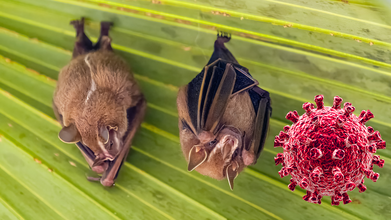
Credits: Canva
COVID-19, a pandemic that shook the world, and its variant, still continues to be around, especially the new 'Frankenstein' strain, that is said to be the contagious of all. However, the answer to what really was the source of the virus has not been found. Though there are certain theories that associate bats with it. While researchers have time and again said that more research is needed in this. A coronavirus carrying a genetic feature was found in the viruses that cause COVID-19 and MERS. This has been discovered in bats in Brazil. This may put some light back into the global range of bat-borne viruses that are capable of jumping to other species.
What Is The Virus Called?
The virus is called the BRZ batCoV. It was detected in Pteronotus parnellii, a small insect-eating 'mustached' bat, which is common across Latin America, The samples were collected in the states of Maranhao and Sao Paulo and the findings were released in a study as a preprint ahead of peer review publication. The study can be accessed at bioRXiv, and is titled: A Divergent Betacoronavirus With A Functional Furin Cleavage Site In South American Bats.
What Did The study Find?
The study, released Monday as a preprint pending peer review and publication, identifies the virus as part of the betacoronavirus family, the same group that includes SARS-CoV-2, MERS-CoV, and the original SARS virus. Genetic sequencing revealed a small segment of the virus’s spike protein that can be cleaved by enzymes in both animal and human cells, a trait that allows certain coronaviruses to infect cells more efficiently.
Interestingly, such furin cleavage sites have not been observed before in bat coronaviruses from the Americas, suggesting that these features may have evolved independently within South American bat populations.
The discovery is significant because a similar cleavage site in SARS-CoV-2’s spike protein sparked widespread debate during the pandemic, with some alleging it was evidence of laboratory engineering. However, subsequent research has demonstrated that comparable sites occur naturally in several coronaviruses, including this newly identified Brazilian strain, underscoring that such adaptations can emerge through normal viral evolution.
The new study is led by scientists from the University of Osaka. They had identified a previously unknown coronavirus in bats from South America, the first of its kind detected in the Western Hemisphere. The research, conducted by Kosuke Takada and Tokiko Watanabe in collaboration with teams from the University of São Paulo, the University of Wisconsin–Madison, and several international laboratories, found that the virus is related to MERS-like coronaviruses but distinct enough to form its own lineage.
Until now, similar viruses have only been found in bats across Asia, Africa, and the Middle East. The discovery marks a major step in understanding the global diversity and evolution of coronaviruses, particularly those circulating among wildlife.
Importantly, researchers emphasize there is no evidence that the newly detected virus infects humans. However, they note that such discoveries highlight the urgent need for continued monitoring of animal populations that could harbor viruses capable of crossing into humans.
Experts say the finding reinforces the value of global wildlife surveillance programs, which serve as an early warning system for potential zoonotic threats. Tracking these viruses before they spill over into human populations remains a critical step in preventing future pandemics.
US FDA Recalls Popular Anxiety Drug Xanax Over Potential Health Risks
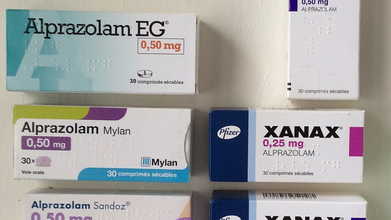
Credit: Wikimedia Commons
Xanax, one of the most widely prescribed medications to treat anxiety and panic disorders, has been voluntarily recalled nationwide over potential health risks, said officials at the US Food and Drug Administration (FDA).
The West Virginia-based company Viatris Specialty has recalled a specific allotment of the medication Xanax, also known as alprazolam.
“The voluntary recall of Xanax XR is specific to one lot of one strength of the brand product only, and no other batches of the Xanax XR brand product, or its generics, are impacted,” said a Viatris spokesperson, The Los Angeles Times reported.
“The vast majority of patients in the US are dispensing generic alprazolam, which this recall does not affect,” the spokesperson added.
Why Was Xanax Recalled
The FDA classified the recall as Class II category, because the product failed dissolution specifications, meaning it failed to dissolve at a standard rate. Class II recalls apply to products that can cause “temporary or medically reversible” health problems, as per the FDA.
The withdrawn product is Xanax XR, extended-release tablets distributed in the United States between August 27, 2024, and May 29, 2025, sold nationwide. The tablets are 3 milligrams, and 60 pills in a bottle.
A Viatris spokesperson said, in agreement with the FDA, patients who are consuming the recalled Xanax XR tablets do not need to take any action, the report said.
“Wholesalers and retailers, pharmacies, have been provided with instruction on how to return the product in question,” according to Viatris.
FDA officials said if you have questions or concerns about the recalled product, consult your doctor of pharmacist.
“In some instances, stopping your medicine may be more harmful to your health than continuing to take the recalled medicine,” the FDA said.
Also read: US FDA Recalls China-made Cough Drops And Throat Lozenges
What Is Xanax?
Xanax belong to a class of drugs called benzodiazepines, which work by enhancing the effects of gamma-aminobutyric acid (GABA), a chemical in the brain that helps calm the nervous system.
In addition to easing anxiety symptoms, alprazolam is also prescribed to control seizures in people with epilepsy. The drug is generally safe and helpful when used as directed, with its intended effect lasting up to six hours, according to the American Addiction Centers.
But despite their short-term effectiveness, psychologists have warned that depending on these medications without addressing underlying issues can be harmful in the long run.
A Spanish psychologist Fernando Azor, known for sharing mental health insights on TikTok, cautioned his followers about the overuse of benzodiazepines.
In a 2025 video, Azor explained that while drugs like alprazolam can help calm anxiety attacks, they only mask symptoms rather than helping people understand what triggers their distress.
“People experiencing anxiety crises often struggle to face the physical sensations, such as a racing heart, blurred vision, or nervousness—that come with anxiety. We automatically see them as dangerous or negative, but in reality, they are natural bodily responses to stress,” he added.
Also read:Depression, Anxiety To Blame? Why Gut Health Disorders Are Rising Among Young Indians
According to Azor, perceiving these sensations as something to eliminate immediately can create a cycle of avoidance and dependency, rather than resilience.
While benzodiazepines like alprazolam can offer short-term relief, mental health experts warn that they should not replace long-term coping mechanisms. Building emotional awareness and resilience through therapy and self-regulation remains key to managing anxiety sustainably.
India Introduces Healthy Lifestyle, Mental Wellness as Priority Areas at BRICS Meet
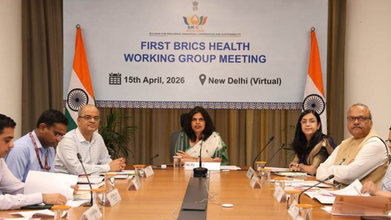
Credit: PIB
India’s Union Ministry of Health and Family Welfare has introduced "healthy lifestyle and mental wellness" as two key priority areas at the First Health Working Group (HWG) Meeting under the BRICS framework for the year 2026 in New Delhi.
HWG is a key platform for advancing cooperation in public health, said Punya Salila Srivastava, the Union Health Secretary while chairing the meeting.
She noted that as the BRICS Chair for 2026, India is guided by the overarching theme “Building for Resilience, Innovation, Cooperation and Sustainability”, reflecting a people-centric and humanity-first approach.
The theme underscores India’s commitment to strengthening collaborative frameworks that are responsive, inclusive, and future-ready.
India’s 2026 Chairship
While reaffirming commitment to existing priorities, the Union Health Secretary also proposed two new priority areas under India’s Chairship:
- BRICS Mission for Healthy Lifestyles: Aimed at promoting healthy behaviors and addressing key risk factors such as unhealthy diets, physical inactivity, tobacco use, and harmful use of alcohol
- Promotion of Mental Health and Wellness: Focusing on strengthening mental health services, addressing stigma, and integrating mental health into broader public health frameworks.

In addition, under the country’s Chairship, Srivastava said that the HWG aims to:
- Foster inclusive, sustainable, and evidence-driven health cooperation,
- Recognize the diverse health systems and socio-economic contexts of BRICS nations.
- Integrating traditional, complementary, and integrative medicine into health systems.
The BRICS Health Working Group
Srivastava hailed the BRICS Health Working Group meetings for having paved the way for collaboration on pressing health challenges in the recent year. She said that the HWG made efforts towards tackle communicable and non-communicable diseases, enhancing health systems, as improving access to affordable medicines.
“These efforts have further strengthened cooperation in pandemic preparedness, health technology innovation, and the promotion of Universal Health Coverage,” Srivastava said.
The meeting also deliberated on the nine priority areas, which include:
- BRICS TB Research Network;
- collaboration among BRICS Medical Products Regulatory Authorities;
- BRICS Integrated Early Warning System for prevention and response to mass infectious diseases;
- Digital Health Architecture for continuum of care, including specialised healthcare in remote areas;
- BRICS Mission for Healthy Lifestyles;
- promotion of mental health and wellness;
- Traditional, Complementary and Integrative Medicine (TCIM);
- fight against diseases driven by social determinants of health (DDSDH);
- BRICS Network of National Public Health Institutes.
The meeting brought together senior health officials, technical experts, and delegates from BRICS member countries—Brazil, Russia, India, China, South Africa, Egypt, Ethiopia, the United Arab Emirates, and Indonesia to deliberate on priority areas of cooperation in public health.
The global experts welcomed India’s leadership and the shared theme of building resilience through innovation, cooperation, and sustainability.
They also emphasized
- deepening collaboration on tuberculosis through the BRICS TB Research Network,
- strengthening the BRICS integrated early warning system for infectious diseases,
- enhancing digital health architectures to improve access (especially in remote and vulnerable communities),
- advancing regulatory cooperation
- local production of medicines and vaccines.
US FDA Asks Lilly To Share More Health Safety Data On Weight Loss Pill Foundayo

Credit: iStock
Weeks after the US Food and Drug Administration (FDA) approved Eli Lilly's Orforglipron, marketed as Foundayo, the regulator is asking Eli Lilly to share more safety data on its first oral pill for weight loss.
The FDA has also sought more information on whether Foundayo could be linked to liver and heart problems, according to the FDA's new drug application approval letter.
Foundayo won FDA approval this month under the Commissioner’s National Priority Voucher, a pilot program intended to fast-track drug reviews.
Foundayo: What More Does The FDA Want From Lilly
In the approval letter, the FDA noted that the currently available data do not fully clarify several potential risks, including
- heart problems such as heart attack and stroke,
- drug-induced liver injuries,
- delayed stomach emptying, which is when food remains in the stomach for too long.
However, the FDA asking for more data “doesn’t mean a safety problem has been found. It means they want more definitive long-term data,” Dr. Christopher McGowan, a North Carolina-based gastroenterologist, told NBC News.
“With orforglipron, it’s a newer, non-peptide version of a GLP-1, so we don’t yet have the same depth of safety data as the injectables,” he added.
Also read: Eye Drops: US FDA Recalls Over 3 Million Products Over Safety Concerns
Further, the agency also requires Lilly to run a series of new studies, including a registry tracking children with obesity who use weight loss drugs and a pregnancy registry to monitor outcomes.
Foundayo: How Did The FDA Approve?
In a statement, the US FDA said that "Foundayo has been approved for use in combination with a reduced-calorie diet and increased physical activity. The pill is targeted to reduce excess body weight and maintain weight reduction for the long term in adults with obesity or overweight".
The US FDA approved Foundayo after two randomized, double-blind, placebo-controlled trials in adults with obesity or overweight showed benefit.
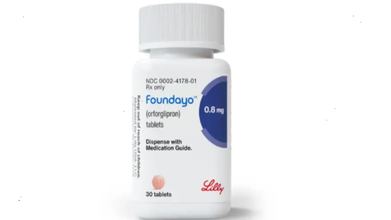
In these trials, 72 weeks of treatment with Foundayo, in combination with a reduced-calorie diet and increased physical activity, resulted in a statistically significant and clinically meaningful reduction in body weight.
Foundayo’s approval comes after the US FDA in December last year approved Novo Nordisk’s Wegovy pill — the first-ever GLP-1 pill for weight loss. The Danish drugmaker rolled out the pill in January this year.
Novo Nordisk was also the first to launch oral GLP 1 Rybelsus to treat type 2 diabetes. It was approved by the US FDA in September 2019.
Also read: US FDA Recalls China-made Cough Drops And Throat Lozenges
How Did Lilly React To The FDA's Query?
The FDA’s post-approval requirements are routine and consistent with the agency’s approach to ongoing safety reviews of newly approved drugs, according to a Lilly spokesperson, NBC News reported.
“Patient safety is Lilly’s top priority, and we actively monitor, evaluate, and report safety information for all our medicines,” the spokesperson said.
Meanwhile, Lilly has started selling the drug from April 6 through its direct-to-consumer platform LillyDirect at $149 per month for the lowest dose for self-pay customers, on par with Novo's pill. "Shortly after,” it will be available through retail pharmacies and telehealth providers in the US, as per Lilly.
- Follow Us :


© 2024 Bennett, Coleman & Company Limited