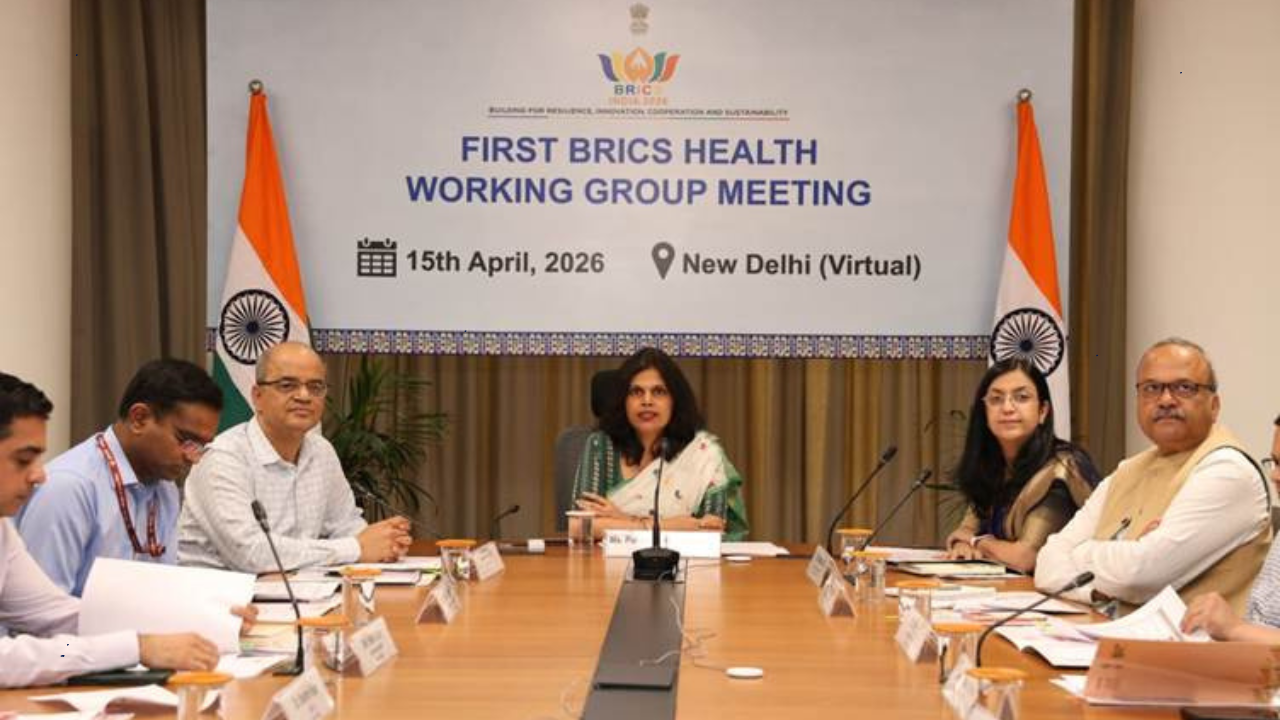
India’s Union Ministry of Health and Family Welfare has introduced "healthy lifestyle and mental wellness" as two key priority areas at the First Health Working Group (HWG) Meeting under the BRICS framework for the year 2026 in New Delhi. HWG is a key platform for advancing cooperation in public health, said Punya Salila Srivastava, the Union Health Secretary while chairing the meeting. She noted that as the BRICS Chair for 2026, India is guided by the overarching theme “Building for Resilience, Innovation, Cooperation and Sustainability”, reflecting a people-centric and humanity-first approach. The theme underscores India’s commitment to strengthening collaborative frameworks that are responsive, inclusive, and future-ready. India’s 2026 Chairship While reaffirming commitment to existing priorities, the Union Health Secretary also proposed two new priority areas under India’s Chairship: BRICS Mission for Healthy Lifestyles: Aimed at promoting healthy behaviors and addressing key risk factors such as unhealthy diets, physical inactivity, tobacco use, and harmful use of alcoholPromotion of Mental Health and Wellness: Focusing on strengthening mental health services, addressing stigma, and integrating mental health into broader public health frameworks. In addition, under the country’s Chairship, Srivastava said that the HWG aims to: Foster inclusive, sustainable, and evidence-driven health cooperation, Recognize the diverse health systems and socio-economic contexts of BRICS nations. Integrating traditional, complementary, and integrative medicine into health systems. The Health Secretary emphasized evidence-based traditional medicine, rooted in biodiversity and indigenous knowledge systems, as a valuable contributor to Universal Health Coverage and sustainable development. She also called for enhanced international cooperation in this domain. The BRICS Health Working Group Srivastava hailed the BRICS Health Working Group meetings for having paved the way for collaboration on pressing health challenges in the recent year. She said that the HWG made efforts towards tackle communicable and non-communicable diseases, enhancing health systems, as improving access to affordable medicines. “These efforts have further strengthened cooperation in pandemic preparedness, health technology innovation, and the promotion of Universal Health Coverage,” Srivastava said.The meeting also deliberated on the nine priority areas, which include: BRICS TB Research Network; collaboration among BRICS Medical Products Regulatory Authorities; BRICS Integrated Early Warning System for prevention and response to mass infectious diseases; Digital Health Architecture for continuum of care, including specialised healthcare in remote areas; BRICS Mission for Healthy Lifestyles; promotion of mental health and wellness; Traditional, Complementary and Integrative Medicine (TCIM); fight against diseases driven by social determinants of health (DDSDH); BRICS Network of National Public Health Institutes. These priority areas aim to strengthen cooperation in research, innovation, regulatory harmonisation, digital health, and equitable healthcare delivery, while reinforcing collective preparedness and resilience among BRICS nations, Srivastava said. The meeting brought together senior health officials, technical experts, and delegates from BRICS member countries—Brazil, Russia, India, China, South Africa, Egypt, Ethiopia, the United Arab Emirates, and Indonesia to deliberate on priority areas of cooperation in public health. The global experts welcomed India’s leadership and the shared theme of building resilience through innovation, cooperation, and sustainability. They also emphasized deepening collaboration on tuberculosis through the BRICS TB Research Network, strengthening the BRICS integrated early warning system for infectious diseases, enhancing digital health architectures to improve access (especially in remote and vulnerable communities), advancing regulatory cooperation local production of medicines and vaccines.