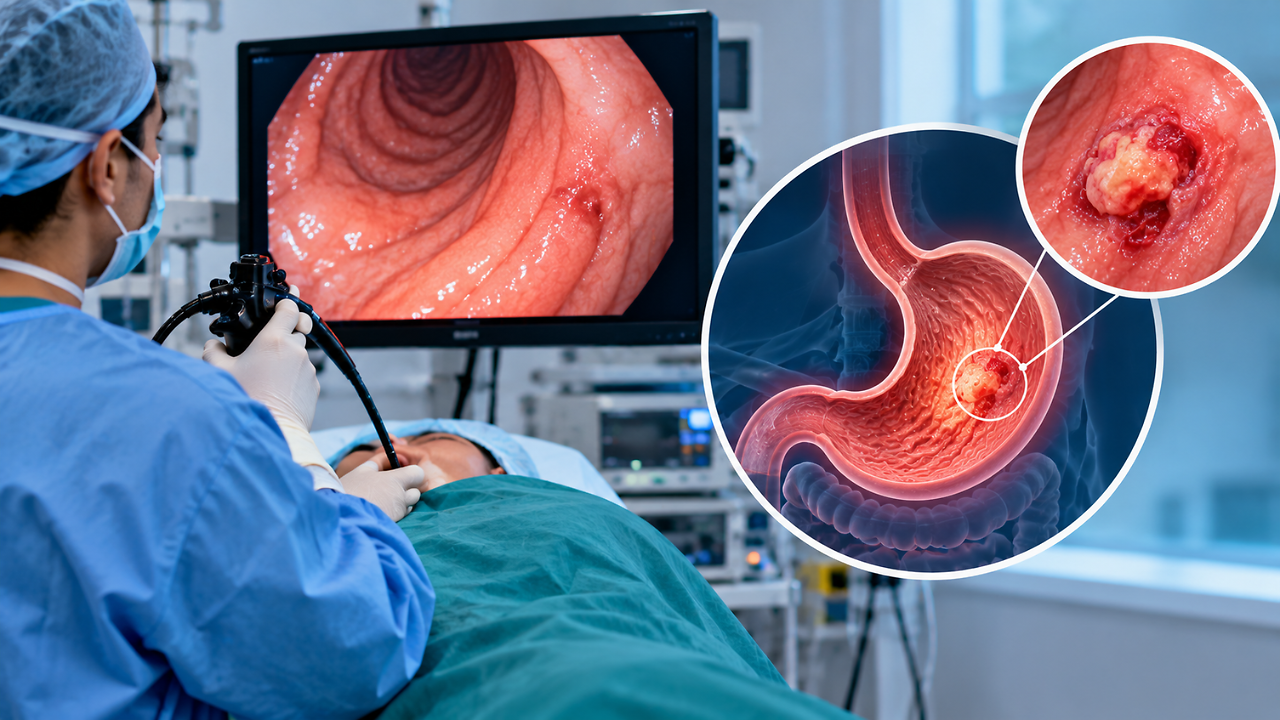
A few extra minutes during an upper gastrointestinal endoscopy may help doctors detect more gastric cancers and precancerous alternations, according to research recently discussed at the World Congress of Gastroenterology (WCOG) 2026 in New Delhi. At WCOG, it was discussed that the quality and duration of an endoscopic examination can influence the chances of finding early cancer. An inspection time of an additional at least seven minutes was linked with about 3.4 times higher detection of gastric cancer and dysplasia. The finding comes as gastrointestinal cancers continue to increase, contributing to a growing global health burden. GI cancers currently account for around one in four cancer cases and one in three cancer deaths worldwide. The overall burden of the disease is projected to nearly double by 2050. Dr. Pramod Garg, Professor & Head, Department of Gastroenterology and Human Nutrition, AIIMS, New Delhi; President, Indian Society of Gastroenterology and Co-Chair, Steering Committee, WCOG 2026, said, “Earlier detection depends on both identifying people at risk and ensuring that diagnostic procedures are performed to the highest possible standard. High-quality endoscopy can create an important opportunity to identify disease at a stage when intervention can make a greater difference.” Could Endoscopy Time Affect Cancer Detection? Also read: WCOG 2026: How Infections, Metabolic Disease Are Changing Digestive HealthAn upper gastrointestinal endoscopy allows doctors to examine the lining of the oesophagus, stomach, and upper part of the small intestine using a flexible camera device. Simply inserting the scope and looking quickly may not be enough to identify subtle abnormalities. A more systematic examination allows the endoscopist more time to examine the stomach lining, identify suspicious areas, improve mucosal visualisation and document findings accordingly. The WCOG discussion therefore puts focus on not just whether endoscopy is performed, but also on how long and how well it is performed. The reported 3.4 times association highlights the value of a careful, detailed examination that could help detect changes related to cancer early, prompting timely treatment.Also read: Fatty Liver, Chronic Gut Diseases And Worm Infections: India’s Changing Disease BurdenIndia's GI Cancer Burden The changes in India's gastrointestinal cancer burden were also discussed, including growing concern around early-onset colorectal cancer. Researchers are examining whether genetics, environmental exposures and changes in the gut microbiome could be contributing to colorectal cancer appearing at younger ages. WCOG 2026 also included concerns related gallbladder cancer, liver cancer and the rising role of metabolic risk factors. Discussions also focused on the use of AI in gastrointestinal diagnosis and the importance of validating these tools before introducing them in standard practice.Dr. Govind Makharia, Professor, Department of Gastroenterology and Human Nutrition, AIIMS, New Delhi and Chairman, Local Organising Committee, WCOG 2026, said, “AI has the potential to strengthen diagnosis and decision-making across gastroenterology, while advanced endoscopy is expanding what can be treated through minimally invasive approaches. The next step is ensuring that these technologies are supported by robust evidence and integrated responsibly into clinical practice.” H. pylori was also addressed as a preventable risk factor for gastric cancer. Dr Barry Marshall, Nobel Laureate in Physiology or Medicine, said, “H. pylori is much more than an ulcer organism. If the infection persists for many years, it can cause chronic inflammation in the stomach and increase the risk of gastric cancer. That gives us an opportunity because this is a potentially preventable cause of cancer.” Advances in minimally invasive procedures like POEM, endoscopic submucosal dissection and therapeutic EUS were also discussed, although access to advanced GI care remains uneven.