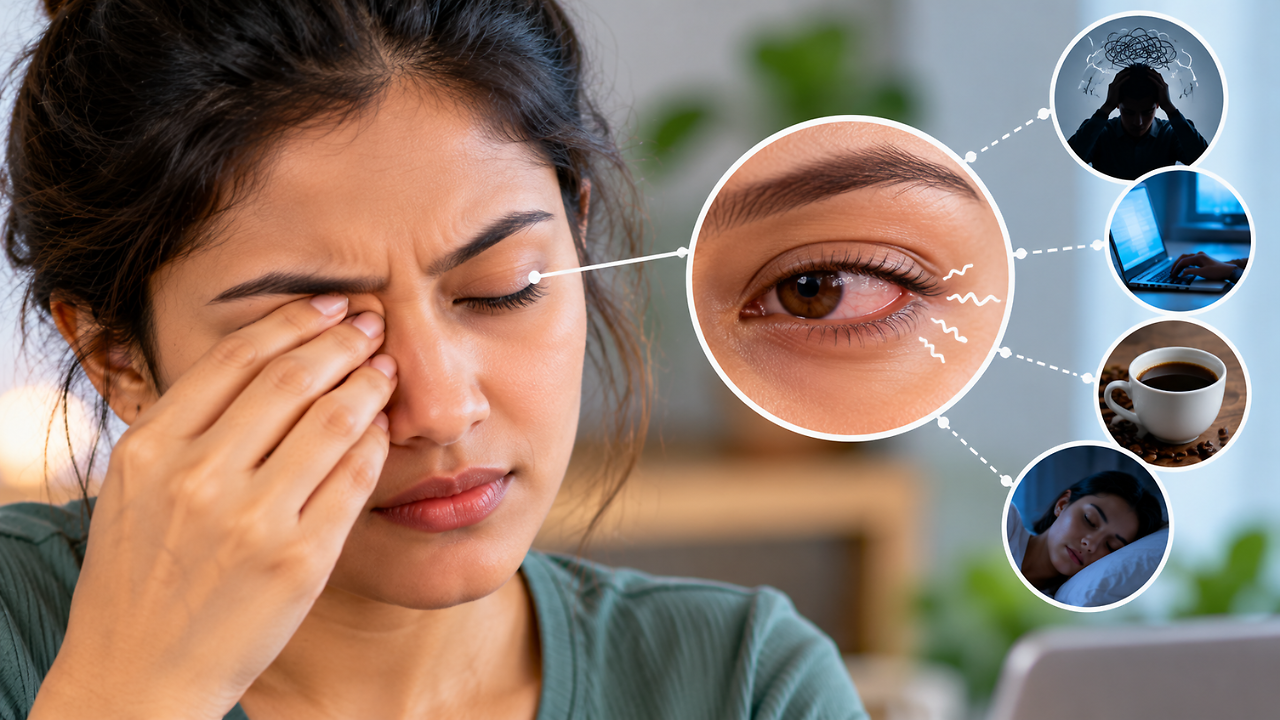
A sudden twitch in the eyelid can be surprisingly unsettling. For some people, it may happen occasionally and disappear on its own, while for others, repeated twitching can lead to concerns about whether something more serious is going on. The good news is that an occasional eyelid twitch is usually harmless and self-limiting. Stress is one of the common factors associated with it, but it is not the only one. What causes an eye to twitch? Eyelid twitching can often be associated with everyday factors such as stress, lack of sleep, high caffeine intake, smoking and general exhaustion. For someone going through a stressful period or not getting enough rest, the twitch may appear and become more noticeable. High coffee or caffeine consumption can also be a contributing factor. In most cases, the twitch settles on its own once the underlying trigger is addressed. It commonly resolves within a few weeks. This means that an isolated eyelid twitch does not necessarily indicate an underlying eye or neurological disease.Also read: Andrew Huberman’s Sleep Trick: Can Eye Movements Help You Fall Back Asleep? Can reducing stress help? Since stress, tiredness and lifestyle factors can contribute to eyelid twitching, addressing these factors can often help. Getting adequate sleep, reducing caffeine intake and making time for relaxation can be useful. Meditation and relaxation exercises may also help, particularly when stress appears to be a contributing factor. The key is to look at the bigger picture rather than immediately assuming that the twitch itself indicates a serious problem. When should you see an ophthalmologist? While an occasional twitch is generally not a cause for concern, it is worth consulting an ophthalmologist if the problem continues for several weeks or is accompanied by other symptoms. Particular attention should be paid if there are: Changes in visionSwelling of the eyelidsDifficulty or inability to open the eyesOther unusual symptoms accompanying the twitchPersistent or unusual eyelid movements can sometimes be associated with conditions such as blepharospasm or hemifacial spasm, while certain neurological conditions can also present with symptoms that may initially resemble an ordinary eye twitch. An ophthalmologist can assess the symptoms and determine whether further evaluation is required.Also read: The Hidden Health Cost Of Excessive Screen Time: Dry Eyes, Ringing Ears, Poor Sleep Does an eye twitch mean you have a neurological problem? This is one of the biggest concerns people have when their eyelid starts twitching. An isolated eyelid twitch, by itself, is usually not a sign of a serious neurological disease. Instead of focusing only on the twitch, individuals should pay attention to whether there are other neurological symptoms occurring at the same time. Symptoms such as facial weakness, numbness, difficulty speaking or difficulty walking warrant medical attention and should not be ignored. The presence of these accompanying symptoms is more significant than an occasional eyelid twitch on its own. Don't let an occasional twitch cause unnecessary worry Eyelid twitching can be irritating and, understandably, may cause anxiety. However, in most cases, it is temporary and can settle once contributing factors such as stress, fatigue or excessive caffeine consumption are addressed. Getting adequate rest, reducing caffeine, managing stress and incorporating relaxation techniques can be simple first steps. At the same time, persistent twitching or twitching accompanied by changes in vision, eyelid swelling, inability to open the eyes or other neurological symptoms should be evaluated by a medical professional. The important distinction is between an occasional, isolated twitch and a persistent or unusual pattern accompanied by other symptoms. Knowing that difference can help people avoid unnecessary worry while also recognising when professional evaluation is appropriate.