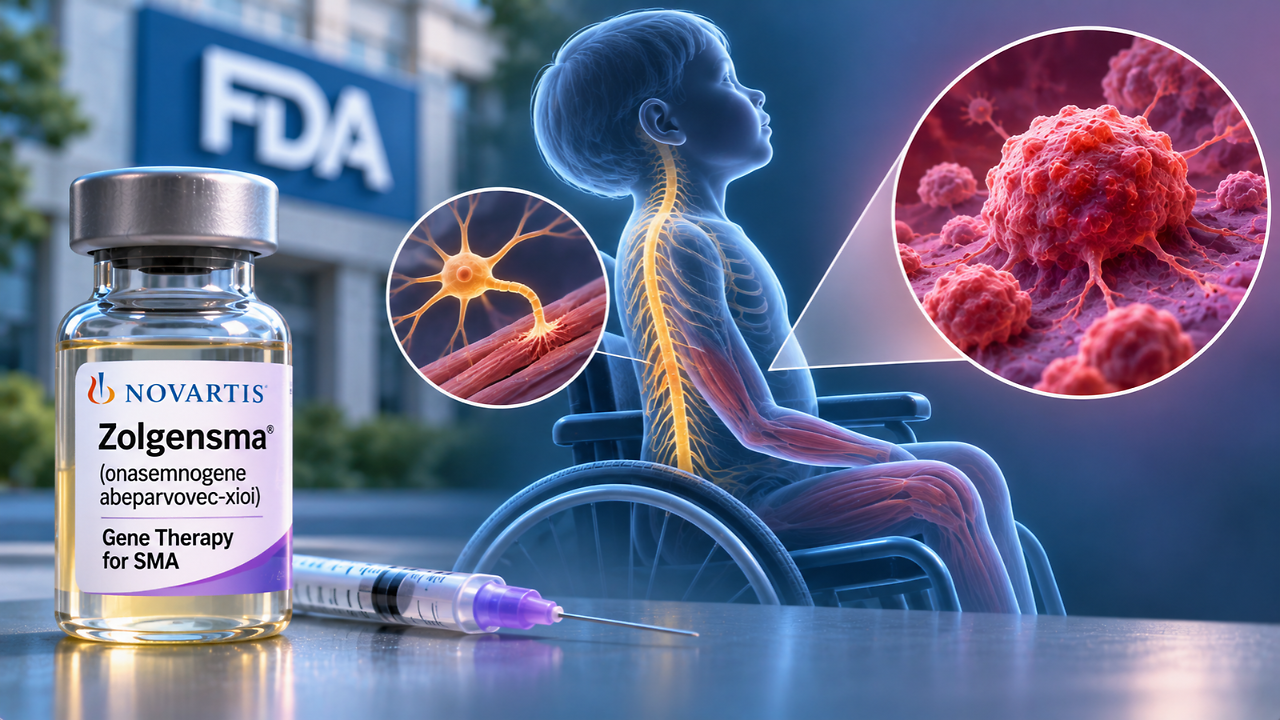
The US Food and Drug Administration (FDA) is investigating a possible cancer risk linked to Novartis' gene therapy Zolgensma after the Swiss drugmaker reported several cases of tumours in patients who had received the treatment. It included two patients aged less than two years old with spinal muscular atrophy (SMA) in which investigators found evidence linking the tumour to the therapy.Novartis's SMA Drug Under Investigation For Causing Tumour Growth Zolgensma is a one-time gene therapy used to treat children under two years of age with spinal muscular atrophy (SMA), a rare genetic disorder that causes progressive muscle weakness. More than 6,000 patients have received the treatment since its approval in 2019.In a safety update issued on November 6, the FDA said it had received reports of neoplasia, or tumour formation including malignancy, known as insertional oncogenesis. This occurs when genetic material delivered by a gene therapy becomes integrated into a patient's DNA and contributes to abnormal cell growth.In two cases, molecular analysis of tumour tissue showed that DNA from the therapy's viral vector had integrated into the patients' genomes within the GLI1 gene, which can promote cancer when activated. The FDA said it was also investigating a third tumour linked with GLI1.The agency said tumours had been found in the central and peripheral nervous systems, spinal and paraspinal regions, and kidney.Also read: Drug-Resistant Epileptic Seizures Reduce By Over 90% With Experimental Gene TherapyWhat Has The FDA Said About The Risk?The FDA is assessing whether regulatory action is needed and is reviewing whether the long-term safety studies address the risk.However, it stressed that the benefits of both Zolgensma and Novartis' other SMA gene therapy, Itvisma, continue to outweigh their potential risks for their approved uses.The two therapies use the same viral vector and genetic material but are administered differently. Zolgensma is given through an intravenous infusion to children under two, while Itvisma is injected into the spinal canal and is approved for adults and children aged two and older. The FDA said no cases of tumour formation had been reported following Itvisma treatment so far.The risk of tumour formation due to viral DNA integration is already mentioned in Zolgensma's information as a theoretical risk. The FDA said patients receiving either treatment should be monitored for tumour formation.Also read: India Proposes Stricter Drug Rules: Tougher Quality Checks, Licence SuspensionWhat Novartis Said? Novartis said the two patients whose tumours showed evidence of vector DNA integration had undergone treatment and continued to be monitored.In a statement, the company said, “Patient safety is our priority. In each case, we timely and appropriately notified health authorities and will continue to work with them on next steps.”The company also said it had received nine tumour reports since Zolgensma's approval and that the risk was included in the drug's prescribing information.The disclosures have raised questions among families and patients about when the information was shared. SMA Europe urged the company to explain what is known, what remains uncertain and what the findings could mean for children who have already received treatment. Novartis did not provide details on where the two new cases were in its statement.