
- Health Conditions A-Z
- Health & Wellness
- Nutrition
- Fitness
- Health News
- Ayurveda
- Videos
- Medicine A-Z
- Parenting
Amid Delhi's Toxic Smog And Severe AQI, Authorities Implement GRAP-3 Measures; What Does It Mean For People?
Credits: PTI
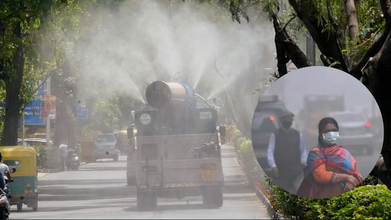
As Delhi's air quality continues to deteriorate, and reached emergency levels on Tuesday, as per the official data, it has been declared to be the worst in nearly 11 months. As a result, Graded Response Action Plan (GRAP) Stage-3 has been implemented in Delhi.
As of Tuesday, the city's average AQI as per the official data, stood at 428, this is worst since December 19 of last year, when the index read 451. This is a sharp rise from 362 AQI on Monday. Visibility too dropped to 600 metres at Safdarjung and 700 metres at Palam at 6.30am. The Central Pollution Control Board (CPCB) data continued to record 'severe' air quality levels across Delhi-NCR even on Wednesday morning.
You May Like To Read: Delhi Air Pollution: Think Pollution Only Hurts Your Lungs? Doctors Say It Can Cause Strokes Too
What Does GRAP 3 Mean For People?
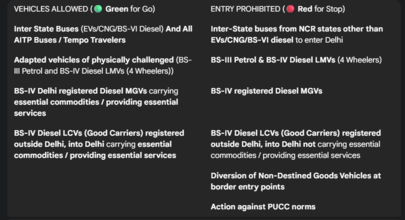
GRAP is a 9-point action plan that is being implemented to bring down pollution. The restrictions are imposed in Delhi, and comprises a list of the type of vehicles, which are allowed in the national capital. This means, if you do not live in Delhi, and are travelling via Delhi, you will also have to comply with the rules. Failure to do so may invite penalty.
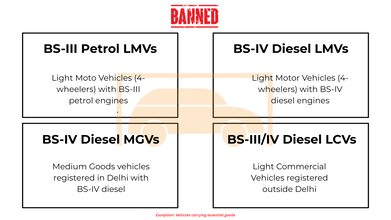
As per the Commission for Air Quality Management (CAQM)'s statement: "Considering the ongoing trend in air quality and to prevent further decline, the sub-committee has decided to implement all measures under Stage III of GRAP – ‘Severe’ air quality (Delhi AQI between 401 and 450) – with immediate effect across the NCR."
Which Zones Are Affected?
The enforcement zones include Delhi and NCR too, including Gurugram, Faridabad, Ghaziabad, Gautam Buddha Nagar.
Are There Any Other Restrictions?
The restriction is not only on the vehicles, but also on dust-generating construction and demolition activities. The restrictions also include:
- Demolition Work
- Excavation or Earthwork, which includes laying sewer, water, drainage, or electrical lines
- Brick or masonry work
- Major welding and gas-cutting operations
- Painting, cementing, plastering, or coating work
- Tile cutting, grinding, and fixing
- Waterproofing and road repair or construction work
- Loading, unloading, or transfer of dust-generating materials
- Movement of vehicles carrying construction materials on unpaved roads
- Transportation of demolition waste
Read More: 1 in 7 Deaths In Delhi In 2023 Were Caused By Air Pollution, Revealed Study
The Delhi Government has also announced that schools up to Class V would be conducted in hybrid mode. Apart from this, all stone crushers and mining operations across NCR has been ordered to shut down.
What Are The GRAP Stages?
GRAP operates on a tiered system, with different stages corresponding to varying levels of AQI. The goal is to implement specific measures at each stage to curb pollution and reduce public health risks. The different stages of GRAP are:
- Stage I: It is triggered when the AQI falls in the range of 201-300, which indicates “poor” to “very poor” air quality.
- Stage II: This happens when the AQI reaches between 301 and 400, reflecting “very poor” to “severe” conditions.
- Stage III: This is implemented when the AQI exceeds 400, which is categorized as “severe” air quality. This stage triggers more stringent measures to reduce pollution levels, with a focus on restricting outdoor activities, vehicle use, and industrial operations.
How Does Pollution Impact One's Health?
Chronic pollution exposure aggravates oxidative stress and systemic inflammation. This means, with every breath you take, you inhale a toxic swamp.
As per Pusan National University, long term air pollution exposure actually triggers allergic immune responses in the lungs. Furthermore, a 2022 study published in the International Journal of Environmental Research and Public Health also shows the negative impact on immune system with alarming and harmful air quality.
As per another 2000 study, published by the British Society for Immunology, people living in areas with higher pollution levels show measurably different immune responses than those in cleaner environment.
Air pollution contains toxins like particulate matter, ozone, carbon monoxide, nitrogen dioxide, and sulfur dioxide. It also includes hazardous air pollutants (HAPs), such as lead, mercury, asbestos, benzene, and other volatile organic compounds. When one breathes this toxic and poisonous air the respiratory system bears the initial brunt of it. The pollutants then damage the delicate tissues lining your airways, and disrupts the barrier that normally prevents harmful substances from entering your body. When this first line of defense is compromised, pathogens find it easier to established infections.
Study Shows Ebola Virus May Persist In Breast Milk For Over 3 Months After Recovery
Credit: Canva
Even after recovery, the deadly Ebola virus (EBOV) can persist for a longer duration — more than three months — in breastmilk, according to a case report.
Ebola virus disease (EVD) is a severe viral illness that has a 25 percent – 90 percent fatality rate.
Ebola in pregnancy raises significant complications ranging from spontaneous abortion to maternal and neonatal death.
In a case report published in the New England Journal of Medicine, a team of researchers from the Republic of Congo and Senegal shared the case history of a 23-year-old woman in whom Ebola was still detectable in breast milk at 14 weeks.
The case reported the rare occurrence of a pregnant woman who survived EVD with no complications, neither to the mother nor the baby. However, the deadly virus was still present in the mothers' breast milk, which cited the potential risk of post-illness transmission to infants.
What Is Ebola Virus Disease?
As per the World Health Organization (WHO), EVD is a rare but severe illness in humans and is often fatal.
People can get infected with the virus if they touch an infected animal when preparing food, or touch body fluids of an infected person such as saliva, urine, feces or semen, or things that have body fluids of an infected person like clothes or sheets.
Ebola enters the body through cuts in the skin or when one is touching their eyes, nose or mouth. Early symptoms include fever, fatigue and headache.
What Was The Case
The woman from the Democratic Republic of the Congo (DRC) contracted EBOV during pregnancy in 2019.
Soon after, she was administered monoclonal antibody therapy and was discharged after three negative reverse-transcriptase–polymerase-chain-reaction blood tests for EBOV.
The woman delivered a healthy baby at 42 weeks of gestation. No evidence of EBOV infection was found in maternal blood, amniotic fluid, vaginal secretions, or the newborn.
Ebola Detectable In Breast Milk At 14 Weeks
Yet surprisingly, the EBOV virus persisted in the placenta and breast milk.
Tests revealed that while the mother’s blood remained negative, viral RNA was still detectable in breast milk at 14 weeks after illness onset. To protect the newborn from transmission, clinicians used the drug bromocriptine to suppress lactation.
As per the World Health Organization (WHO) guidelines, the mother was also isolated from the baby and not breastfed. A prophylactic (preventive) monoclonal antibody was also given to the newborn. During follow-up, the infant exhibited no signs of infection.
Ebola Virus: WHO Guidelines
During the 2018–2020 EVD outbreak in the northeast of DRC, 3,481 confirmed cases were reported. Of these, nearly 60 percent occurred in females, and about 45 percent occurred in children below 18 years of age.
Current WHO guidance recommends that Ebola survivors avoid breastfeeding until viral clearance is confirmed.
The global health body advises women with suspected or confirmed Ebola to immediately stop breastfeeding and be prioritized for diagnostic testing.
Children exposed to Ebola through breast milk
- Must be placed under care,
- Closely monitored for symptoms over 21 days
- Fed with an appropriate breast milk substitute.
- Restarted on breastfeeding after two consecutive negative tests of breast milk.
Meningitis claimed 259,000 lives globally in 2023: The Lancet
Credit: Canva
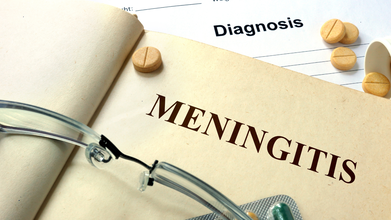
Meningitis – the inflammation of the brain and spinal cord lining – has claimed 259,000 lives worldwide in 2023, according to a new study, published in The Lancet Neurology.
A total of 2.5 million people globally were infected with meningitis, which is also the leading infectious cause of neurological disabilities.
Importantly, children accounted for a third of the deaths, many of which were in Africa, according to research that described itself as the most comprehensive global assessment of meningitis yet.
The study comes amidst a “unprecedented” meningitis outbreak in the UK’s Kent, where two people died, and many were infected.
Meningitis: Achieving WHO 2030 goals
According to the study, global vaccination campaigns since 2000, played a significant role in reducing the number of infections and deaths by bacterial meningitis, in both high-income and low-income countries.
The Global Burden of Disease study led by an international team of researchers led by those from the University of Washington, showed that although mortality and incidence have declined significantly since 1990, progress is insufficient to meet the WHO 2030 targets.
The WHO targets a 50 percent reduction in meningitis infections and 70 percent reduction in deaths by 2030. However, a substantial meningitis burden persists. It also lags behind other vaccine-preventable diseases.
The driving factor are:
- common pathogens such as S pneumoniae and N meningitidis
- emerging non-bacterial pathogens such as Candida spp
- drug-resistant fungi.
Also read: Bacterial Meningitis May Cause Long-term Fatigue, Vision Problems, Raise Suicide Risk: Study
What Is Meningitis?
Meningitis is a serious medical condition that affects the protective membranes covering the brain and spinal cord, the meninges. While fever is not always present, it is usually considered as one of the classic symptoms of meningitis.
It is important to know the varied symptoms, causes, and treatments of meningitis for early diagnosis and proper management of the disease.
Meningitis is an infectious illness that brings about inflammation in the meninges. The most common cause of such inflammation is bacterial or viral infections, though other causes are also possible including fungal, parasitic, or non-infectious causes (autoimmune disease, head injury, or brain surgery).
Meningitis may also be caused by bacterial meningitis, which the Centers for Disease Control and Prevention (CDC) indicates can be so severe and bring about conditions like hearing loss, vision problems, and death if not received on time.
Also read: From Vaping to Worm Attack: 5 Unimaginable Ways to Contract Meningitis
Meningitis: Risk factors
As per the Lancet study, the greatest risk factors for deaths was
- low birthweight
- premature birth
- air pollution (both household and atmospheric).
Streptococcus pneumoniae, Neisseria meningitidis, non-polio enteroviruses, and other viruses were the leading causes of death, while non-polio enteroviruses caused the most cases.
To achieve further reductions in the disease globally, the researchers called for greater efforts, including:
- expanding vaccination programs,
- greater antibiotic stewardship,
- improving access to care,
- strengthening diagnostics and monitoring for meningitis.
Also read: Unique Symptoms Of Meningitis That Caused An Outbreak In Kent University
Common Symptoms Of Meningitis
- Rash
- Headaches
- Neck stiffness
- Fever
- Drowsiness
- Nausea or vomiting
- Increased sensitivity to light.
World Doctors’ Day: Date, Origin And Significance

Credit: Canva
World Doctors’ Day is celebrated every year on March 30 to honor physicians for their dedication and compassion in saving lives and ensuring healthy communities.
Doctors are often regarded as God as they work tirelessly to save lives, even amidst conflicts or pandemics, without counting their own lives.
Often referred to as a noble profession, their mission transcends boundaries and also showcases profound human values rooted in compassion, dedication, and responsibility.
They play a significant role in building resilient, healthy societies and the world.
While there is no universally declared theme to mark the day, several campaigns are held focusing on the well-being and resilience of doctors, especially in the post-pandemic era.
World Doctors’ Day: History
World Doctors’ Day is the same as US National Doctors Day.
It was first observed in 1933 in Georgia and officially recognized in 1990 when George H. W. Bush signed it into law.
The first Doctors' Day was initiated by Eudora Brown Almond, wife of Dr. Charles B. Almond, and was adopted by the Barrow County Alliance.
The day was also observed to mark the anniversary of the first use of general anesthesia in surgery by Dr. Crawford W. Long in Jefferson, Georgia, in 1842.
The idea was then presented to the Georgia State Medical Alliance in 1933 by E. R. Harris of Winder, president of the Barrow County Alliance.
On May 10, 1934, the resolution was adopted at the annual state meeting in Augusta, Georgia.
Later, it was resolved by the Senate and House of Representatives of the US in Congress to designate March 30 as “National Doctors’ Day.”
The symbol for Doctors' Day is often the red carnation, chosen for its color that represents love, charity, and sacrifice — that highlights the profession.
The US reportedly has over 985,000 to 1 million practicing physicians.
World Doctors’ Day: Significance:
The day honors physicians' commitment, service, and contributions to healthcare, often highlighting their role in patient care. Their role is also in medical innovations that have given life to people across the globe.
It also highlights challenges faced by the physician community, like burnout, workforce shortages, and rising health demands.
Doctors are also overburdened with increasing patient load and staff shortages. Some also face workplace violence and safety concerns.
Notably, digital healthcare and evolving technologies have also added pressures and an additional burden to their practice.
Countries Celebrating World Doctors’ Day
World Doctors’ Day is celebrated on March 30 in the US, the UAE, and Australia.
India celebrates National Doctors’ Day on July 1, commemorating the birth and death anniversary of renowned physician Dr. Bidhan Chandra Roy.
- Follow Us :


© 2024 Bennett, Coleman & Company Limited