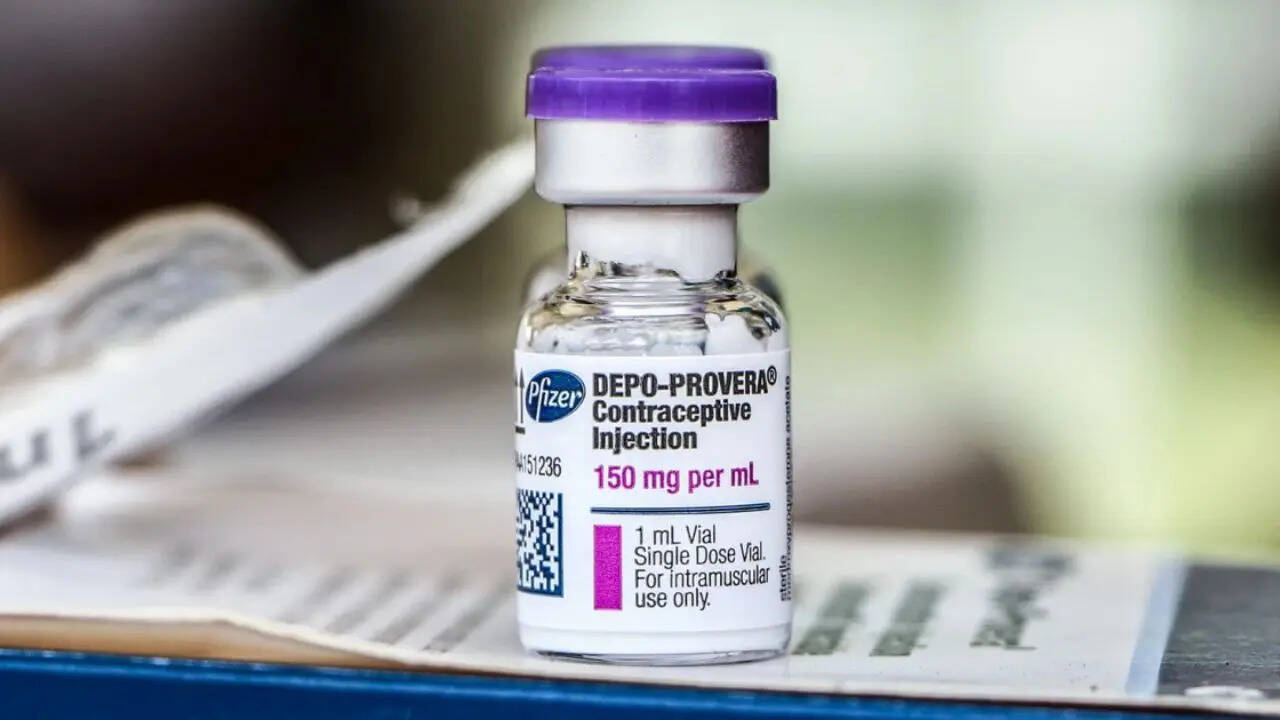
Depo Provera: The Food and Drug Administration approved a label change on Friday for Pfizer’s birth control injection, Depo-Provera, alerting patients to the risk of meningioma, a tumor that develops in the lining of the brain.Pfizer is currently facing a lawsuit from over 1,000 women who allege that the company knew about the risk but failed to warn users.How Depo-Provera WorksDepo-Provera is administered as a progestin injection every three months. The lawsuit highlights studies dating back to 1983 linking progesterone with meningioma, claiming that Pfizer had an “unassignable duty to investigate” and should have examined the potential risks of Depo-Provera much earlier. (Progestin is a synthetic form of progesterone.)According to the Centers for Disease Control and Prevention, roughly one in four sexually active women in the U.S. has used Depo-Provera, with Black women using it at nearly twice the national rate.Depo Provera: Understanding MeningiomasMeningiomas are generally non-cancerous, meaning they do not spread to other areas of the body. However, depending on their size and location, they can still be dangerous. In the U.S., about 39,000 meningiomas are diagnosed annually, though the overall risk remains small, as per CDC.Depo Provera: Pfizer’s Response and FDA ReviewEarlier this year, Pfizer requested a judge dismiss the lawsuit, stating that it became aware of the meningioma risks linked to Depo-Provera in 2023. In February 2024, the company applied to the FDA to add a warning to the injection’s label, also requesting warnings for two lower-dose pills containing medroxyprogesterone acetate (MPA), the active ingredient in the shot, as per NBC News.The FDA denied the request for the pills, explaining that “the findings of the available observational studies alone do not support the addition of a warning on Meningioma risk to medroxyprogesterone acetate (MPA)-containing products.”Pfizer then amended and resubmitted the application in June 2025. In response, the FDA approved a label change this month for two injection versions — Depo-Provera CI and Depo-Subq Provera 104.“We acknowledge receipt of your amendment dated June 12, 2025,” the FDA letter to Pfizer said. The approval “provides for the addition of information related to Meningioma risk” on the product label.Depo Provera: Pfizer’s StatementA Pfizer spokesperson told NBC News that “the label update reflects a recent decision by the FDA to approve the warning, which the agency had earlier denied.”“Pfizer stands behind the safety and efficacy of Depo-Provera, which has been used by millions of women worldwide and remains an important treatment option for women seeking to manage their reproductive health,” the statement added.Lawyers representing the women suing Pfizer said: “For years, Pfizer misled doctors, patients, and the FDA about Depo-Provera’s link to meningiomas, resulting in needless suffering for thousands of women who developed these serious brain tumors. … We applaud the FDA in finally requiring this label change to better inform and protect women.” The FDA did not immediately respond to requests for comment. Elsewhere, warnings about meningioma have already been added to Depo-Provera’s label.In 2024, the European Medicines Agency listed meningioma as a “possible side effect” for drugs with high doses of MPA. That same year, Canada updated the drug’s label to include meningioma under “warnings and precautions,” noting that meningiomas have been reported following long-term use of progestins, including MPA.As per NBC News, in January, South Africa’s regulatory agency recommended updating the MPA drug label to include meningioma risk as well. The judge has not yet issued a ruling in the ongoing lawsuit against Pfizer in the United States.