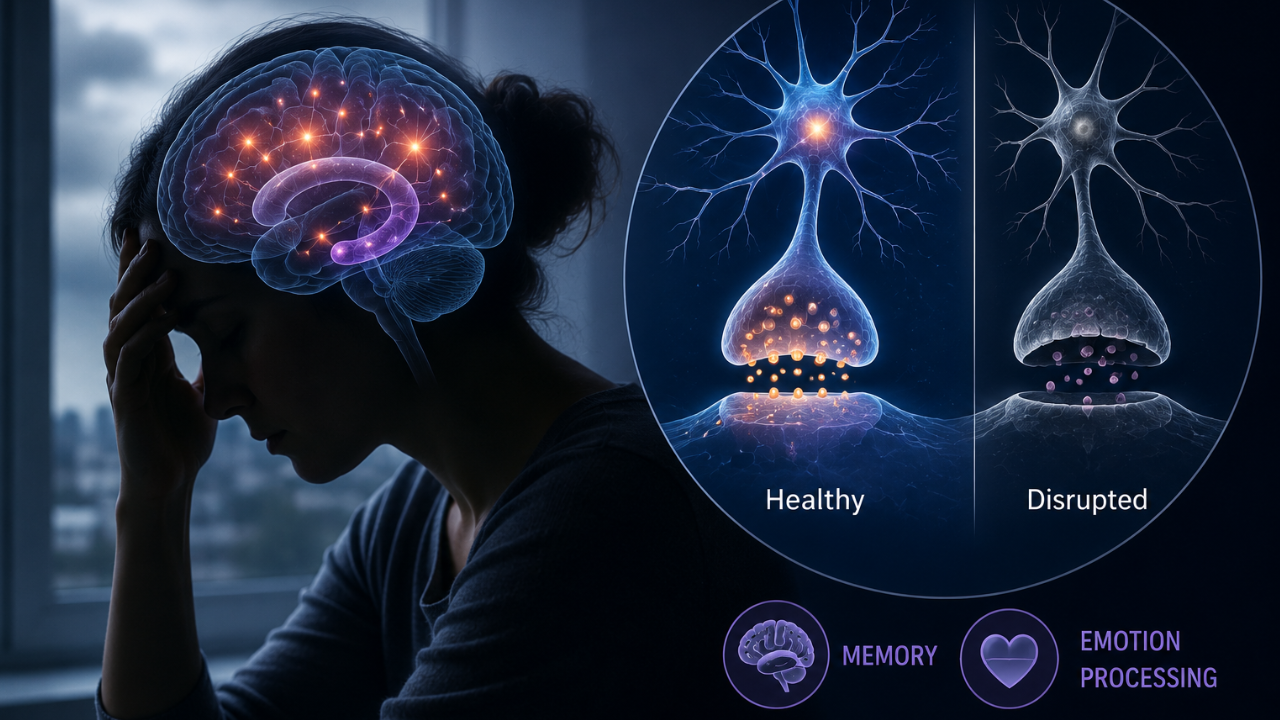
We often believe that depression may just result in changes in mood and behaviour. But a new study has found that major depressive disorder could disrupt production of new brain cells in the hippocampus, a region involved in memory and processing of emotions. The study, published in Nature Medicine, analysed almost 500,000 individual brain cells from people with depression and people without the mental health condition. Researchers found changes not only in the formation of new neurons but also across the wider hippocampal circuit. Depression May Disturb Brain’s Ability To Produce New Neurons In the human brain, most neurons are produced before birth, but the hippocampus is one of the few regions where new neurons continue to develop even during adulthood. The researchers found that this process, known as adult hippocampal neurogenesis, stops in people with major depressive disorder.Depression is viewed largely as a problem involving neurotransmitters such as serotonin. The new findings suggest a much more complex picture involving the brain's ability to adapt to stress and changing environments. Maura Dupont, professor of psychiatry at Columbia University and the study's lead researcher, said, “Without the ability to create new neurons, people with depression may not have the resilience to effectively adapt to the environment." Also read: Sugar Rationing In First 1,000 Days Linked To Lower Depression, Cancer Risk In AdulthoodThe Hippocampus Links Memory With Emotional Responses The hippocampus plays an important role in episodic memory, helping people distinguish between different experiences and connect memories with their emotional context. Researchers say impaired neurogenesis may affect a process called pattern separation, which helps the brain keep similar experiences distinct. For instance, a friend being quiet in your company does not necessarily mean they are upset with you. When the brain has a healthy pattern-separation system, it recognises that as an individual event rather than automatically misconstruing it and linking it to previous experiences of rejection. Dupont said that when this ability is impaired, memories and their emotional associations can become blurred, potentially building the tendency to interpret new experiences negatively.Also read: Lindsay Clancy Trial: What Postpartum Psychosis Really Looks Like, From A Survivor Other Changes In Brain Changes That Extend Beyond Neuron Formation The researchers found molecular changes across the hippocampal circuit, including genes involved in forming connections between neurons, communication between brain cells, energy production and movement of material inside cells. The hippocampus's circuit also showed signs of inflammation and cellular stress in people with depression. This indicates that depression may involve widespread changes in how brain cells communicate and function. What The Findings Could Mean For Depression Treatment? The researchers say the findings could eventually help recognise different physiological effects of depression, helping develop specific treatments according to patients with different molecular structures. Dupont said the team hopes depression could eventually be classified according to its molecular characteristics, similar to how some cancers are classified. However, the findings do not mean that depression can currently be treated by simply increasing the production of new neurons. The complete mechanism of the mental health condition is still not completely understood.