
- Health Conditions A-Z
- Health & Wellness
- Nutrition
- Fitness
- Health News
- Ayurveda
- Videos
- Medicine A-Z
- Parenting
Doctors Call For Stricter Rules to Curb Risks In Hair Transplant, Cosmetic Treatments

Credit: iStock
In the wake of a shocking incident in Uttar Pradesh’s Kanpur, where two engineers allegedly died within 48 hours of undergoing hair transplant surgery by a dentist, the Indian Association of Dermatologists, Venereologists and Leprologists (IADVL) and the Association of Plastic Surgeons of India (APSI) have pressed the need for stricter rules for aesthetic and hair restoration procedures.
The doctors raised concerns about patient safety and called for ramping up training standards, even as many such cases where unqualified medical practitioners performed aesthetic procedures leading to severe infections, loss of sight, and many complications have been documented from across the country.
Traditionally, these procedures were performed by specialists such as dermatologists and plastic surgeons trained under the regulatory framework of the National Medical Commission (NMC).
However, experts said the issue has become more complicated after the Dental Council of India (DCI) allowed MDS dental surgeons, under provisions of the Dentists Act, 1948, to perform certain aesthetic procedures and hair transplantation.
“Aesthetic procedures and dermatology demand additional training. In addition to the MBBS degree, a dermatologist training program requires three years of residency at a postgraduate level in dermatology at certain accredited medical schools,” Dr Vinay Singh, President IADVL said.
He added that the training also includes a condensed curriculum of various skin ailments, hair problems, and advanced procedures in dermatology.
“Allowing professionals without comprehensive medical training in skin diseases, hair disorders, and surgical complication management to perform such procedures could dilute training standards and increase risks for patients,” warned Dr. Rajat Gupta, Senior Consultant Plastic Surgeon, Delhi.
The experts also pointed out that hair transplant is a modern medical procedure and should only be conducted by Registered Medical Practitioners (RMPs) who are specialized in that area.
Also read: Fact Check: Popular Hair Loss Treatment Ingredient Could Trigger Chest Pain
Dr. Aditya Aggarwal, Senior Consultant Plastic Surgery, Medicity Medanta Hospital, shared that the surgery requires knowledge regarding the biology of the skin, the disorders of the hair, how to manage infections, and how to manage complications.
The associations urged the government to issue comprehensive guidelines and ensure strict implementation of existing regulations to curb quackery and safeguard public health.
Further, they advised the patients to verify the doctor’s qualifications and registration with the state medical council before undergoing any skin, hair, or cosmetic treatment.
The public must remain alert and avoid falling prey to misleading advertisements or treatments offered by unlicensed practitioners, the experts said.
Supreme Court Allows 1st Passive Euthanasia For Man In Vegetative State For 13 Years

Credit: iStock
In a landmark judgement, the Supreme Court today allowed passive euthanasia for a 32-year-old man, living in a vegetative state for the last 13 years.
A bench comprising Justice JB Pardiwala and Justice KV Viswanathan allowed the withdrawal of life support for Harish Rana, a resident of Ghaziabad, who has been in a coma and kept alive on tubes for breathing and nutrition after sustaining severe head injuries following a fall from a building in 2013 in Chandigarh.
It is the first known case of a court-ordered passive euthanasia in India, since it was legalised in 2018 and modified in 2023, recognizing the fundamental right to die with dignity.
"Harish Rana, presently aged 32 years, was once a young, bright boy. He met with a tragic life-altering accident after a fall from the fourth floor of his paying guest accommodation. His brain injury left him in a condition of Persistent Vegetative State (PSV) with 100 percent quadraplegia... Medical reports show that his medical condition has not improved in the past 13 years," LiveLaw quoted the bench as saying.
The Court noted that the continuation of his treatment -- Clinically Administered Nutrition (CAN) via surgically installed PEG tubes -- can just prolong his biological existence but will not lead to any therapeutic improvement.
What Is The Case Of Harish Rana?
Harish was a BTech student in Chandigarh who suffered severe traumatic brain injury after falling from the fourth floor of his paying guest accommodation in August 2013.
Since then, he has remained bedridden and dependent on others for all activities of daily life.
Harish's father, the petitioner, first approached the Delhi High Court in 2024, seeking permission for passive euthanasia, but was rejected as the patient was not terminally ill.
The same year, the petitioner knocked on the doors of the Supreme Court, which, though it refused to entertain the plea, directed the Uttar Pradesh government to bear the treatment expenses.
In 2025, the petitioner filed a miscellaneous application in the Supreme Court, noting that Harish's condition had no scope for improvement.
The Court then directed the constitution of a Primary Medical Board led by the District Hospital in Noida to examine his health, as well as a Secondary Medical Board constituted by the All India Institute of Medical Sciences (AIIMS).
After perusing the report, Justice Pardiwala remarked that it's a "sad report" and the man can't continue to live like this. Before passing the final order, the Court met the parents, LiveLaw reported.
The Court has asked AIIMS to provide palliative care, so that the withdrawal of CAN can be given effect to.
To maintain the dignity of death, the apex Court said that the life support must be withdrawn with a tailored plan.
1st Passive Euthanasia: What's New From The 2018 Judgment
In 2018, a five-judge Constitution Bench had recognized and given sanction for passive euthanasia, and living will/advance directives.
Later in 2023, the SC modified the guidelines, noting that withdrawal of life support is permissible only after the approval of the Primary and Secondary Medical Boards.
With the Harish Rana judgment, the apex Court today clarified how passive euthanasia should be applied in cases where a patient’s life is being supported by feeding tubes.
The top Court waived off the reconsideration period of 30 days and noted that the medical treatment, including the CAN administered to the patient, can be withdrawn or withheld.
What is Passive Euthanasia
Passive Euthanasia allows a terminally ill or irreversibly comatose patient to die naturally. It involves deliberately withholding or withdrawing life-sustaining treatments (like ventilators, feeding tubes, or medication). It has been legal since 2018, but under strict guidelines.
In Active Euthanasia, patients are administered a lethal injection to cause death. It is illegal in India and considered an offence.
The Aruna Shanbaug case in 2011 opened the door for passive euthanasia in India for the first time.
The top Court rejected euthanasia in the case of Shanbaug, a nurse at Mumbai's KEM hospital who was in a vegetative state for 42 years after an assault in 1973, as the hospital staff who cared for her for decades did not support stopping treatment.
Shanbaug continued to be under care and passed away naturally in 2015
However, in her case, the court made the judgment allowing for passive euthanasia in certain rare situations under strict conditions.
6 Million People In Delhi Living With Poor Vision: AIIMS Study

Credit: iStock
About 6 million people in India's capital city are living with several vision problems, such as poor distance vision or near vision, according to a recent study by doctors at All India Institute of Medical Sciences (AIIMS), New Delhi.
The study, Dr. Rajendra Prasad Centre for Ophthalmic Sciences at AIIMS, and submitted to the World Health Organization (WHO), also flagged major gaps in eye care services in Delhi, the Times of India reported.
An estimated one-third of the population in the national capital was identified with refractive errors or presbyopia -- conditions that can usually be corrected with a pair of glasses. Globally, 826 million people suffer from presbyopia.
About 70 percent of older adults in the capital city were identified with the problem.
Alarmingly, about 13.1 percent school-going children had refractive errors, Dr. Praveen Vashist, professor and head of community ophthalmology at AIIMS, was quoted as saying.
Gaps In Eye Care
The study showed a lack of access to vision correction. While just 60 percent of people needing distance vision correction could access care, those with near vision correction could access care in over 47 percent of cases.
Further, the doctors found:
- women had the lowest access to spectacles compared to men
- lack of trained eye care workers,
- the affordability of spectacles,
- limited outreach to vulnerable groups -- elderly patients, rural women, and economically weaker populations.
But Dr. Vashisth noted that Delhi currently has only 1,085 ophthalmologists and approximately 489 optometrists.
Further, only 50 community-level vision centers, out of the has 249 eye care institutions in the city were found to be functioning. Moreover, only about 25 percent of children were receiving free spectacles through public health initiatives.
Global Eye Burden
According to the World Health Organization (WHO), at least 2.2 billion people worldwide have near or distance vision impairment. Of these, at least 1 billion cases could be prevented with increased access to eyeglasses and cataract surgeries
The WHO identifies refractive errors and cataracts as the leading causes of vision impairment and blindness.
Vision loss can affect people of all ages; however, most people with vision impairment and blindness are over the age of 50.
Here's how to maintain a healthy vision:
- Eat fruits and veggies, especially leafy greens like spinach, kale, and fish like salmon and tuna, to protect your sight.
- Be physically active, as being overweight or obese can increase risk for diabetes and other conditions that can lead to vision problems.
- If your vision gets blurry, use glasses to help you see better.
- Always wash your hands before putting them close to your eyes, especially if you’re putting in or taking out contact lenses.
- Use protective eyewear while playing a favorite sport or mowing the lawn
- Wear your shades to prevent the sun’s rays from hurting your eyes.
- Give your eyes a break with the 20-20-20 rule: Every 20 minutes, look about 20 feet away for 20 seconds.
- Quit smoking as it can put you at risk of serious eye issues, leading to blindness.
Metal Particle Found In Ibuprofen, Drug Now Recalled
Credits: iStock
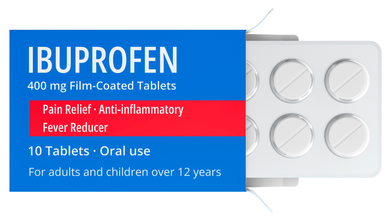
Ibuflam tablets by pharmaceutical manufacturer Zentiva under the brand name Lichtenstein has been recalled. The 600mg tablets of ibuprofen products were recalled due to contamination. As per several media reports, a piece of metal was found in the tablet which triggered the recall. As per the manufacturer, the affected tablet are the 50-tablet packs with the batch number 5R02514.
Zentiva stated that the recall is explicitly directed at wholesalers and pharmacies, as the company confirmed upon request and the recall is not directed on patients. This measure was taken as a precautionary measure and in consultation with the relevant regulatory authorities.
As of now, patients have the option to return packages from the affected batch and receiving a replacement.
Also Read: Leucovorin Approved By FDA But For A Rare Genetic Disease, Not For Autism
How Can You Return And Receive A New Ibuprofen Prescription?
As per Zentiva, the standard procedure of returning packages from the affected batch and receiving a replacement could be availed. For instance, if the package is almost empty, the standard procedure does not need to be followed, as this could potentially be considered a new prescription. However, patients will have the option of returning packages with the batch number.
A Zentiva spokesperson explained, "The possibility of obtaining a replacement through the supplying pharmacy in case of suspected quality defects always exists. Any connection to the recall lies solely in the fact that the suspicion regarding this batch can generally be considered justified."
This is not a case of re-dispensing under the replacement procedure. It is important to note that when a replacement pack is dispensed in response to a quality complaint, the affected medicinal product is not being placed on the market again, but rather a previously prescribed and supposedly defective medicinal product is being replaced.
Read: THIS Alternative Could Help Prevent Gut Damage Caused By Painkillers
What Is Ibuflam Or Ibuprofen?
Ibuprofen is a nonsteroidal anti-inflammatory drug or NSAID that is used to relieve pain, fever, and inflammation. Ibuflam is a brand name which is a combination medication containing ibuprofen and paracetamol or acetaminophen, which is also designed for enhanced pain relief.
As per the World Health Organization (WHO), ibuprofen is on the list of essential medication. The medicine is used by mouth as a syrup or tablet, and could also be applied directly to the skin as a mousse, gel, or spray.
The uses include:
- fever
- inflammation
- headache
- menstrual pain
- common cold
- toothache
- back pain
- arthritis
- sprains
The medicine could have some side effects, which could include pain, diarrhea or constipation, nausea and vomiting, dyspepsia, bloating, dizziness, headache, nervousness, skin rash, tinnitus, edema or fluid retention.
Who Should Not Use Ibuprofen?
Anyone with:
- repeated stomach problems like heartburn
- stomach ulcers
- bleeding problems
- high blood pressure
- heart disease
- kidney disease
- age over 60 years
OR
Anyone who:
- has taken a diuretic
- is using other NSAIDs or pain relief medication
- is using anticoagulants
- is receiving treatment for any serious condition
- has chickenpox or shingles
- has Crohn's disease or ulcerative colitis
- has liver problems
- Follow Us :


© 2024 Bennett, Coleman & Company Limited