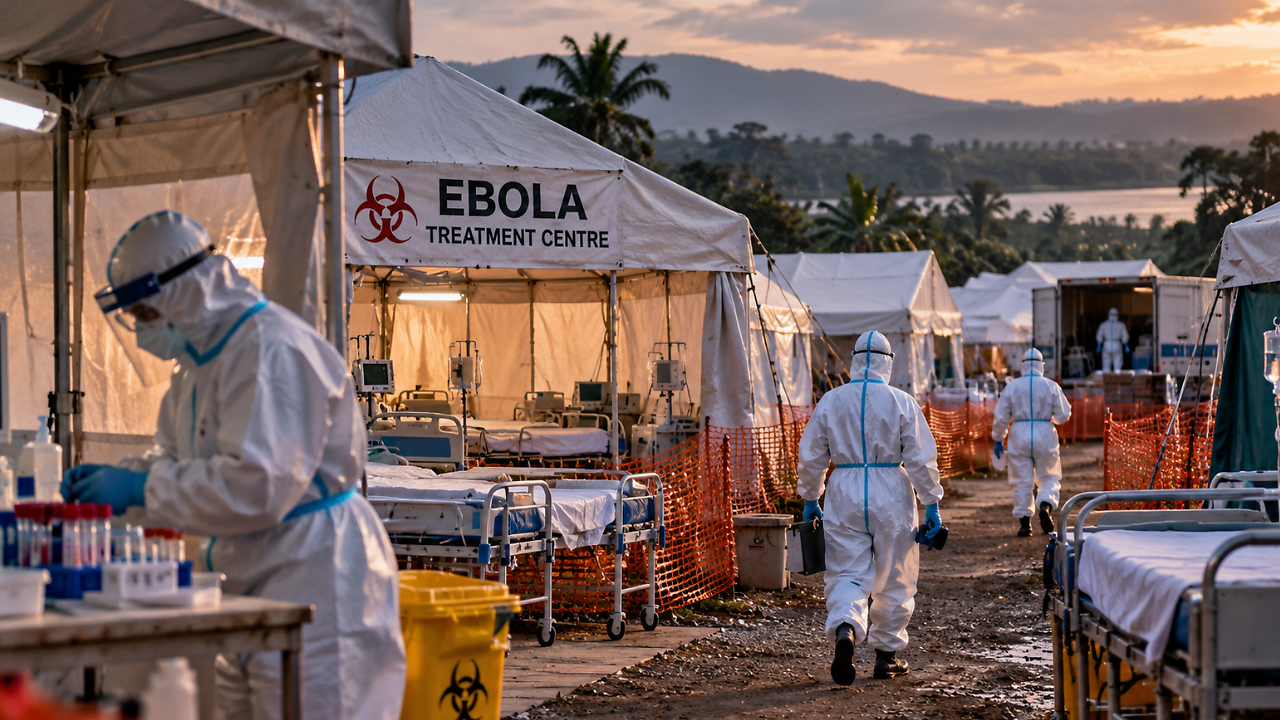
The Democratic Republic of the Congo is actively expanding Ebola treatment capacity as the country battles its worst and fastest-growing Ebola outbreak. But a growing shortage of health workers is threatening the ability to run the new treatment centres and contain and manage transmission and infections.According to the latest figures by Congolese authorities on September 23, the outbreak has across into seven provinces, with 7,773 confirmed cases and 3,759 deaths. The WHO says transmission remains out of control, even though cases are going down in some areas. The situation is particularly grim in North Kivu, where cases increased by 73% over three weeks. At the same time, cases fell by 26% in Ituri and 15% in Haut-Uele between August 31 and September 20, highlighting how differently the outbreak is behaving across provinces. More Treatment Centres May Not Be EnoughThe country has rapidly increased its capacity to treat patients. By September 1, affected provinces had 59 facilities with 1,346 beds, compared with just one nine-bed treatment centre when the response began in May. More than 4,000 additional health workers had also been deployed. But beds and buildings can only help if there are enough people to staff them. According to WHO officials, an Ebola treatment centre can require around 300 healthcare professionals, including doctors, nurses, anaesthetists and hygiene staff. Some newly established centres therefore do not have enough personnel to operate at full capacity. This creates a difficult situation of treatment infrastructure being expanded, but the workforce needed to run it is not keeping pace.Also read: DR Congo Begins Ebola Vaccinations Targeting 20,000 Health Workers As Fatalities Cross 3,500Ebola Pressure On Health WorkersEbola treatment is particularly laborious as healthcare workers must provide intensive care while following strict infection-prevention measures.Patients may require monitoring for dehydration, bleeding and other complications, while staff must work in protective equipment and follow procedures designed to prevent transmission.The response has also been impacted by insecurity, population displacement, movement between communities and a strike by some health workers over unpaid wages. These factors can make it harder to maintain staffing. Early treatment is key as many patients are still reaching healthcare facilities late. WHO previously reported that around 60% of weekly Ebola deaths were occurring in communities rather than treatment centres, pointing to delays in detection and access to care.Also read: Ebola Transmission Falls In Some Areas Of Congo, But Outbreak Still Kills: WHOEarly Treatment Is ImportantEbola can cause fever, weakness, vomiting, diarrhoea and, in severe cases, bleeding and organ failure. The longer a severely ill patient remains without appropriate supportive care, the harder the disease can be to manage. Treatment centres help isolate infectious patients helps break transmission chains.Children are another major concern in the current outbreak. Nearly one in four confirmed cases are children, but they account for almost one in three deaths. Children under five have been particularly vulnerable as more than 60% of confirmed cases in this age group resulting in death, compared to fewer than 30% among adults, according to WHO. Developments In Vaccine & Treatment So Far The outbreak has been identified as being caused by Bundibugyo virus, one of the viruses in the Ebola family. WHO reported a case fatality ratio of 48.3% among confirmed cases in the DRC as of September 7. There is currently no approved vaccine or specific treatment for Bundibugyo ebolavirus, which means, health officials are completely relying on breaking transmission chain and providing prompt medical care to control the spread. But the latest unfortunate developments point to a problem that could make containment even more challenging. The response desperately needs enough trained people, supplies and access to affected communities.As there is currently no vaccine for Bundibugyo virus, health authorities have approved 70,000 doses of Ervebo, vaccine meant for a much familiar Zaire strain of Ebola. Health workers in DRC have begun receiving the Ervebo doses as part of an experimental trial to test if it would work on current Ebola outbreak.