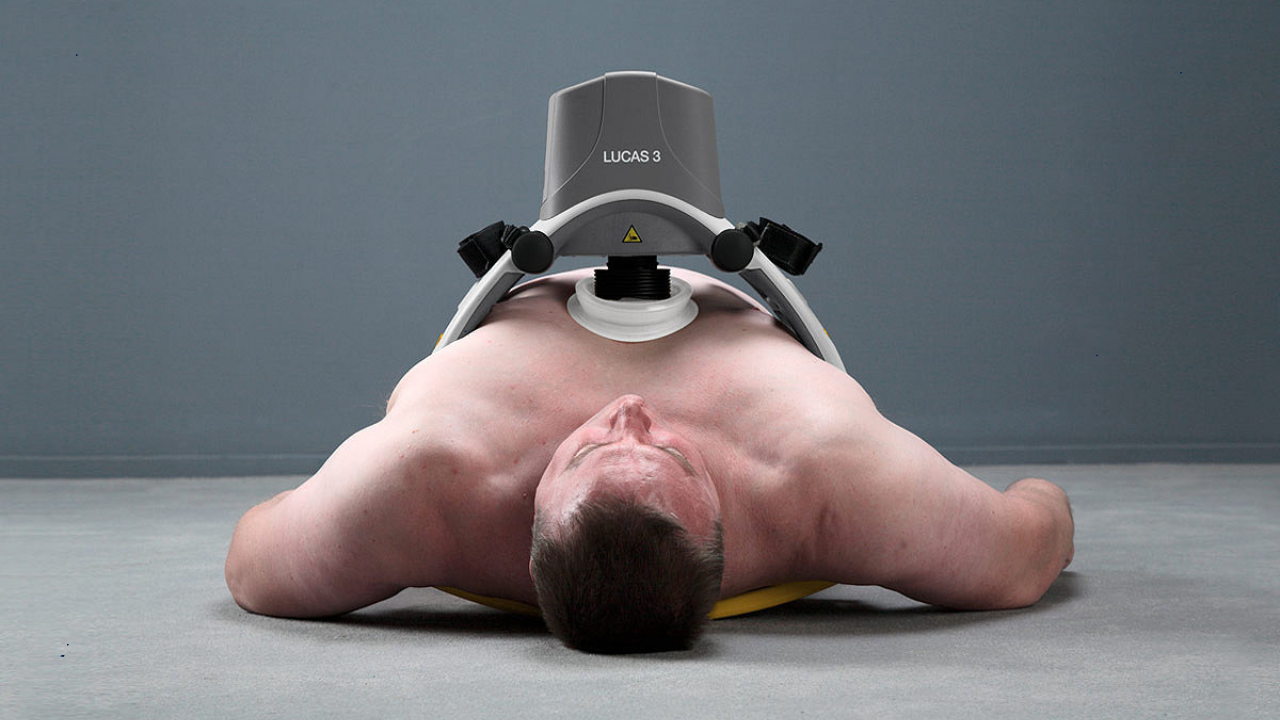
In a remarkable emergency response, Dubai paramedics revived a man who collapsed from a heart attack, earning widespread praise on social media. The man reportedly collapsed suddenly and showed no signs of consciousness or a pulse. People at the scene immediately alerted emergency services, who responded within minutes. The team began cardiopulmonary resuscitation (CPR) using an advanced CPR machine. A video now going viral on social media shows paramedics arriving within minutes and performing CPR using the LUCAS 3 automatic chest compression device. The machine, which delivers high-quality chest compressions more consistently than manual CPR, helped circulate blood to vital organs and revived the man within minutes. “Dubai’s emergency response looks like the future: a man collapses from a heart attack, paramedics arrive within minutes, strap on the LUCAS 3 automatic CPR device, and revive him right there,” a social media user wrote. “If there were a machine like this, it would be a huge help because people wouldn’t have to perform CPR for a long time,” another user added. How The LUCAS 3 Device Saves Lives The LUCAS 3 chest compression system is a mechanical CPR device originally developed by Swedish startup Jolife AB in collaboration with Norwegian inventor Willy Vistung and cardiologist Stig Steen. The device and company were later acquired by medical technology company Stryker in 2016. The device is designed to deliver continuous, high-quality chest compressions while reducing physical strain on caregivers. According to the company, studies have shown that the LUCAS device can improve blood flow to the brain and achieve higher EtCO2 values compared to manual chest compressions. With more than 50,000 devices in use worldwide, including within the Dubai Corporation for Ambulance Services, a patient is reportedly treated using the device approximately every minute, it added. What Is CPR? How To Give CPR?CPR, or Cardiopulmonary Resuscitation, is an emergency life-saving technique used when a person stops breathing or their heart stops beating. Quick action is critical, as CPR can double or even triple a person’s chances of survival. Steps to keep in Mind While Giving CPR Step 1: Check The Surroundings Ensure the area is safe by checking for dangers such as traffic, fire, or falling objects. Step 2: Position The Person Lay the person on their back on a firm surface and open the airway by tilting the head back slightly. Check the mouth for any visible obstruction and remove it carefully if possible. Step 3: Check Breathing Listen for breathing sounds for no more than 10 seconds. If the person is not breathing normally, begin CPR immediately. Step 4: Chest Compressions Place the heel of one hand at the center of the chest, slightly below the nipple line. Place your other hand on top and interlock your fingers. Keep your elbows straight and push hard and fast — about 2 inches deep — at a rate of 100 to 120 compressions per minute. Allow the chest to rise fully between compressions. Step 5: Rescue Breaths After 30 compressions, tilt the person’s head back, lift the chin, pinch the nose shut, and seal your mouth over theirs. Give two rescue breaths, each lasting about one second, while watching for chest rise. If the chest does not rise, reposition the head and try again. Step 6: Repeat The Cycle Continue alternating 30 chest compressions with 2 rescue breaths until the person starts breathing or emergency medical professionals arrive. Key Considerations For CPR CPR should be used in emergencies such as cardiac arrest, drowning, choking, or severe trauma. Always confirm that the person is unresponsive and not breathing normally before starting CPR. CPR is intended for emergency situations. If a healthcare professional is nearby, seek their assistance immediately. Note: This is only for emergency circumstance. If there is a healthcare or a medical professional next to you, it is always advisable to seek for their help.