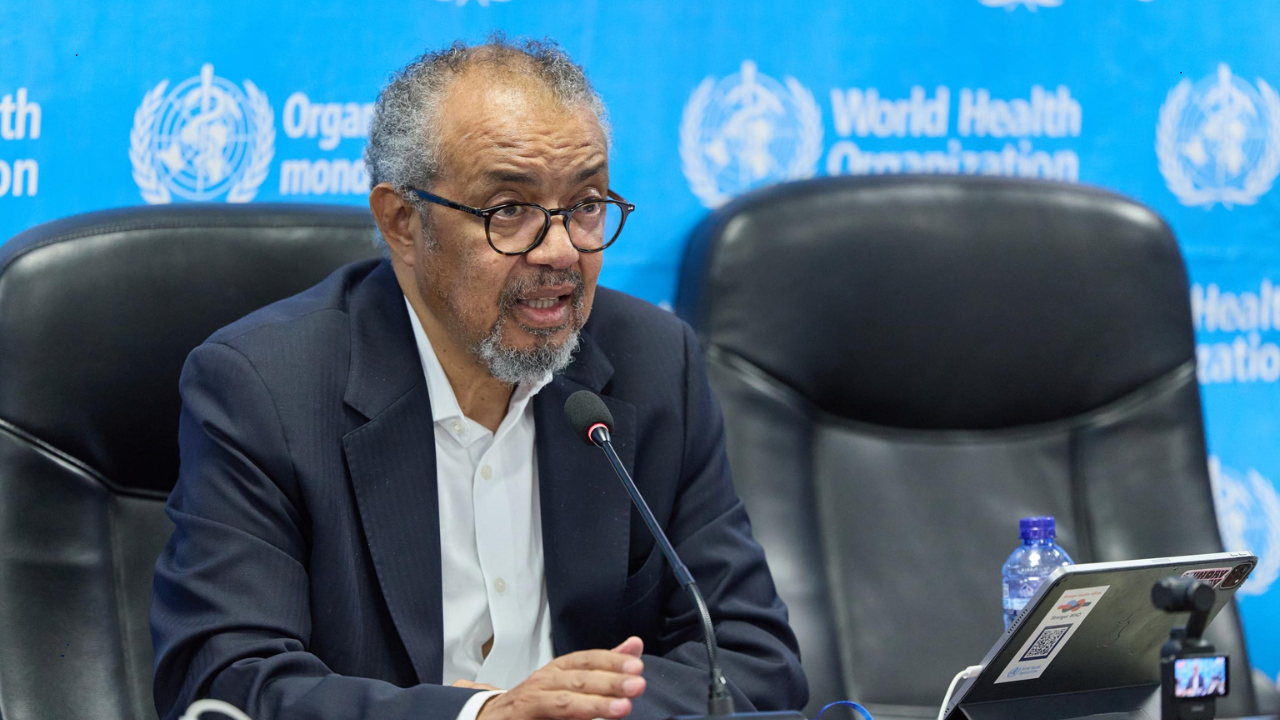
The ongoing Ebola virus disease epidemic in the Democratic Republic of Congo (DRC) is moving faster than any previous outbreak, said WHO chief Dr Tedros Adhanom Ghebreyesus.According to official data, confirmed cases have reached 4,449, with the death toll climbing to 2,061 across five provinces and 53 health zones in the country. However, the number of uncounted cases may be far higher than the reported figure.“It is already the second-biggest Ebola epidemic on record, and it is moving faster than any previous Ebola outbreak. At its current pace, it is on track to eclipse the West African Ebola outbreak of 2014 to 2016,” Tedros said in a briefing.The 2014-2016 outbreak reported at least 28,000 cases and took about eight months to reach 1,000 deaths.Ebola 2026: Big Head Start, Likely to Peak in 6 MonthsTedros noted that the current “outbreak had a big head start, it is still way ahead of us, and we are playing catch-up.”He said this even as reports showed that the disease caused by the rare Bundibugyo virus had been circulating since February and went undetected for months. The WHO declared the outbreak on May 15.Dr Abdirahman Mahamud, WHO’s director for health emergency alert and response operations, said the agency expects the outbreak to reach its peak within six months, AP News reported.“But ... that’s the moderate scenario,” Mahamud said. “There is a one-case scenario where this outbreak may last nine months to 12 months.”Also read: Ebola Death Toll Tops 2,000 In DRC: New Study Reveals Likely Source Of Bundibugyo Virus OutbreakUnknown Chains of TransmissionTedros said about 90% of all cases and 80% of deaths are in the province of Ituri, with sustained transmission in the towns of Bunia, Rwampara, Nizi and Lita.“Most concerningly, we see a high proportion of deaths in communities instead of treatment units, outside of known contact lists,” Tedros said.“That tells us there are chains of transmission we don’t know about, and until we know about – and break – every chain of transmission, we will not stop the outbreak.”Most transmission happens when people have late-stage disease and are not in treatment, or when their bodies are handled after death.Early clinical care and safe and dignified burials are therefore critical for interrupting transmission. Both depend on the trust of affected communities, making community engagement and ownership essential.“There is no other way,” Tedros said, adding that the response is now being scaled up, with the primary goal of interrupting transmission.With partners, WHO is mapping and pooling resources to strengthen community-based surveillance, bring every suspected case into care and reach the 95% contact-tracing target needed to interrupt transmission. Currently, the rate is around 80%.Read More: Ebola Outbreak: Officials To Probe Whether Bundibugyo Virus Is MutatingProgress MadeDespite the challenges, Tedros said significant progress has been made, including:More than 21,000 community health workers have been trained. Treatment centres, safe burial teams, laboratories and community engagement teams are operating across the affected provinces, reaching hundreds of thousands of people.A total of 886 patients have recovered, even without specific therapeutics and vaccines, which are progressing through trials.For the first time, two vaccines specifically designed against Bundibugyo virus have entered Phase 1 safety trials in humans.Two new animal studies of a vaccine against Zaire ebolavirus — the more common species — have shown promising evidence of cross-protection in animals, Tedros said.