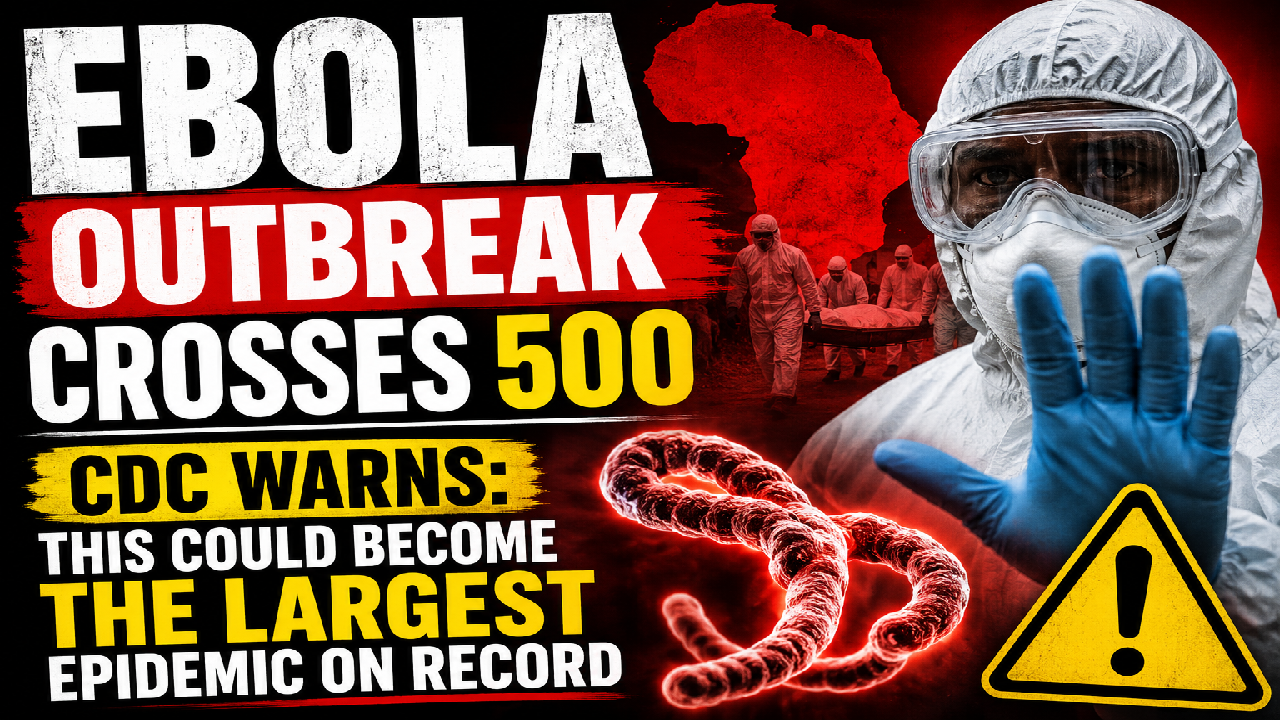
The situation regarding the outbreak of Ebola is nowhere near slowing down, and the World Health Organization (WHO) said that this outbreak of Ebola is far from under control. The outbreak of the disease in eastern Democratic Republic of the Congo (DRC) and neighboring Uganda has already reached the 500 mark.On Saturday, the Democratic Republic of the Congo (DRC) reported that its total number of Ebola cases had increased to 488 from 452 cases and caused 86 deaths. Its neighbor, Uganda, also has reported 19 cases. This time the Ebola outbreak has caused most harm to the Democratic Republic of the Congo (DRC) and during this mayhem its neighboring nation Uganda which is also fighting to contain the disease as it is also seeing surge in cases thus it has completely closed off its western border with DRC. The worsening condition of the situation is clear, as the global health monitoring organization, the World Health Organization (WHO), has already declared the outbreak an international public health emergency. And it's not only the case with WHO, another big name in public health, but the United States' Centers for Disease Control and Prevention (CDC) warned that the Ebola outbreak of this time could swell to become the largest Ebola epidemic to date, and is likely to rival the 2014-2016 epidemic in West Africa.The patient number is still growing as the disease is spreading, and this spread is very hard to contain without an approved vaccine. Though work on the vaccine is in full swing, research on three different vaccines for the Bundibugyo strain of Ebola still needs time, even after being set to be fast-tracked for trials.What Is Ebola?Ebola is a severe and deadly disease caused by a virus mostly found in Africa. The spread of the disease happens through contact with infected body fluids.Some symptoms can indicate a possible infection. This includes fever, headache, weakness, vomiting, diarrhea, muscle pain, sore throat, and unexplained bleeding. This eventually leads to severe complications like bleeding, organ failure, and death.Ebola is a highly lethal viral hemorrhagic fever first identified in 1976. Over the past five decades, it has caused over 30 outbreaks, primarily in Central and West Africa. The virus takes its name from the Ebola River in the Democratic Republic of the Congo (DRC).Three strains of the virus — Ebola virus, Sudan virus, and Bundibugyo virus — have caused the largest outbreaks in Africa. Among them, the Ebola virus is considered the deadliest, with fatality rates reaching up to 90% without treatment.These viruses have repeatedly emerged from animal reservoirs and infected humans in African countries. In the Democratic Republic of the Congo alone, this marks the 17th Ebola outbreak and the third linked to the Bundibugyo strain.