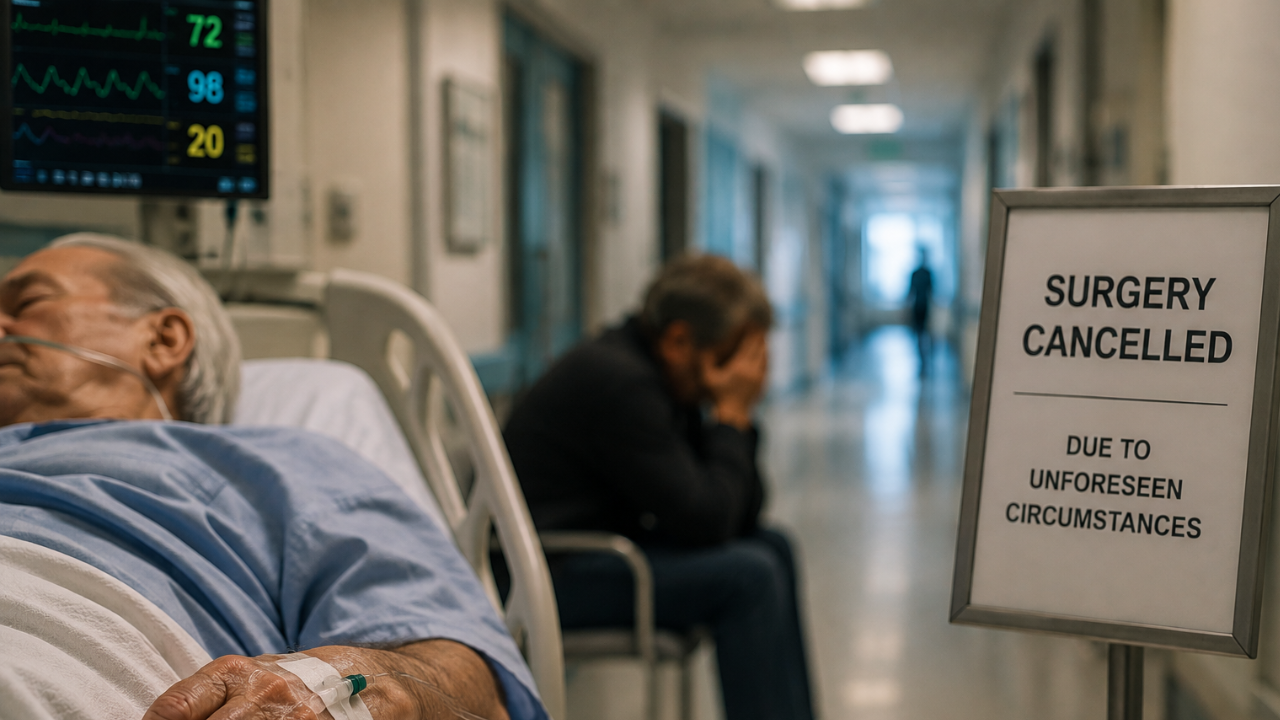
A 62-year-old man in Australia died after his urgent heart surgery was cancelled twice. A state coroner later found that failures in an overworked health system contributed to his death.Petar Josipovic had been diagnosed with moderate-to-severe aortic regurgitation and coronary artery disease. He was placed on the cardiothoracic surgery waiting list at Royal Adelaide Hospital as a Category 1 patient, meaning his surgery was expected to take place within 30 days.However, his operation, initially scheduled for August 14, 2023, was cancelled twice to make room for higher-priority emergency patients. It was eventually rescheduled for August 25.The day before his surgery, Josipovic was rushed to the emergency department after his condition deteriorated and suffered a cardiac arrest. Doctors performed an emergency aortic valve replacement and coronary artery bypass surgery, but he developed severe complications and died about three weeks later in the ICU.Coroner Says His Death Was Linked To Failures In Healthcare SystemSouth Australian State Coroner David Whittle found that Josipovic's death was potentially preventable and called for a sweeping independent review of how cardiac surgery patients are assessed, listed and managed while waiting for operations.The coroner, however, did not attribute the repeated cancellations to individual negligence. “I do not make any finding that the decisions that led to the cancellations were the result of ill-will or lack of due care,” Whittle said.Instead, he said a health system under immense pressure was bound to have systemic failures. He also said that staff were unable to recognise the extent of the patient's deterioration before it was too late.Also read: Stopping Statins After 75 May Not Raise Death Risk In Low-Risk Adults: The Lancet StudyWhy Was An Urgent Cardio Surgery Repeatedly Delayed?The inquest heard that reduced intensive care capacity had put additional pressure on the cardiothoracic service. ICU capacity reportedly fell from 24 beds to 16 following the move to the new hospital site, meaning urgent procedures could be postponed when beds were unavailable.Josipovic's case also highlighted the problem of keeping track of patients whose condition worsens while they remain on surgical waiting lists.The coroner noted that Josipovic had been advised to attend the emergency department on occasions but did not do so. This meant clinicians did not have the opportunity to physically reassess his condition and fully appreciate how much his risk had increased.Also read: More Indians Face Twin Burden of Hypertension and Diabetes After 40: Why Preventive Healthcare Is ImportantCoroner Recommended Urgent Changes Whittle recommended an independent external review of cardiothoracic surgical listing practices, covering the patient's entire medical history from referral and assessment to waiting-list management and hospital resources.He also called for standard guidelines across South Australia's health networks so staff know exactly what advice to provide when patients waiting for surgery report that their condition is worsening.The case has renewed concerns about what happens when hospitals have to balance urgent operations against limited beds and resources. The case has also highlighted an important issue. For patients waiting for time-sensitive procedures, a delay is not always simply a longer wait. In some cases, the patient's clinical condition can change while they remain on the list