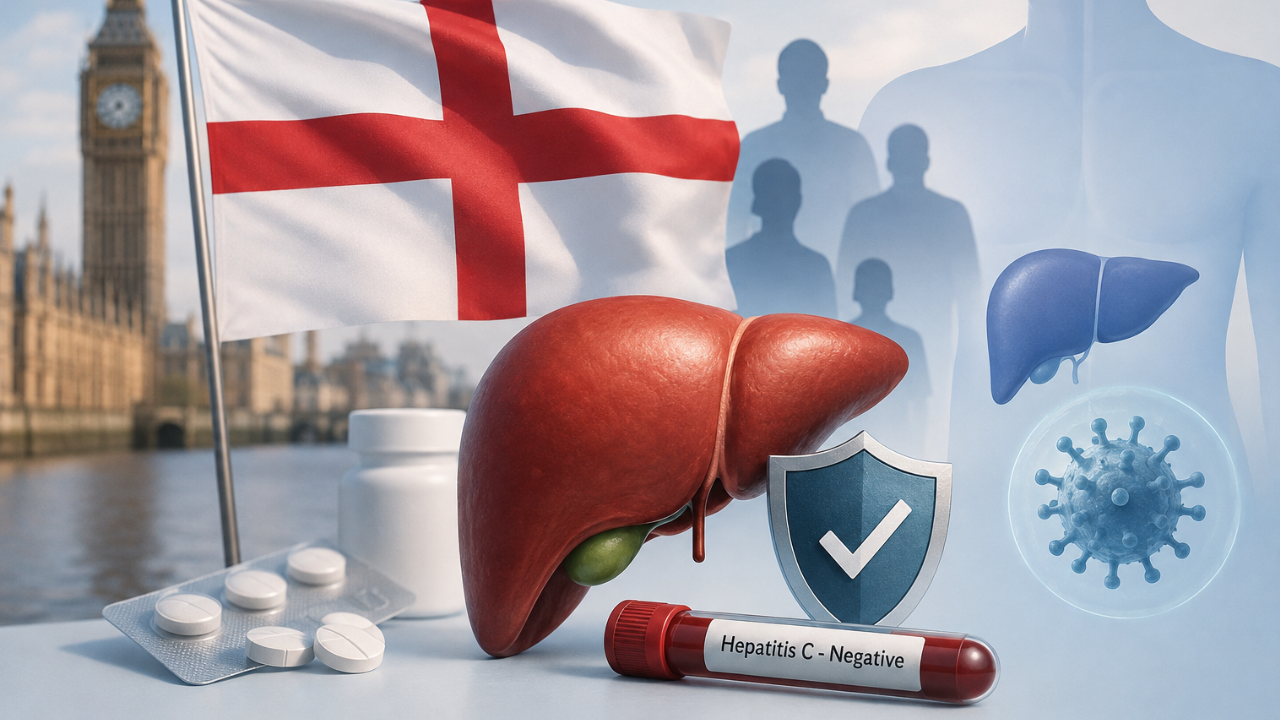
England is on the verge of becoming one of the first countries in the world to eliminate hepatitis C, after more than 100,000 people received the life-saving pioneering antiviral drugs through the NHS that was rolled out in 2015. NHS England said the country has already surpassed the World Health Organization’s target of treating at least 80% of patients diagnosed with hepatitis C. The latest numbers show that 81.5% of people diagnosed with chronic hepatitis C between 2015 and 2024 had started treatment. Professor Frankie Swords, NHS national medical director, said hepatitis C can cause serious complications including liver failure and cancer. She also said that many people may live with the infection for years without knowing they have it. “That’s why the NHS has worked hard alongside public health teams and charities to find and treat hidden cases,” she said, adding that England is now “leading the world” on the path to eliminate the disease.“We are making significant progress towards eliminating Hepatitis C as a public health threat,” said Dr Sema Mandal, Deputy Director – Blood Safety, Hepatitis, STIs and HIV Division at UK Health Security Agency (UKHSA). She added, "The sharp fall in cases since 2015 shows the impact of expanded testing and sustained access to modern curative treatments, and the commitment of health services and community partners across England."“Treating over 100,000 people in just 10 years is a remarkable achievement and brings England closer than ever to becoming one of the first countries in the world to eliminate this disease as a public health threat,” Mandal said. UK's Public Health Milestone Also read: How Chronic Hepatitis Quietly Progresses To Liver Cirrhosis: Why Early Action Can Save Your Liver Hepatitis C is a blood-borne virus that primarily affects the liver. If the infection becomes chronic and remains untreated, it may lead to cirrhosis, liver failure and liver cancer. But hepatitis C differs from many other chronic viral infections as it can be cured. Since 2015, England has significantly expanded access to direct-acting antiviral medicines. These tablets are generally taken for just 8 to 12 weeks and can clear the virus in more than 90% of the patients. An estimated 50,200 adults were living with chronic hepatitis C in England in 2024, down 61.1% from an estimated 129,000 in 2015. Deaths linked to hepatitis C have also fallen, with NHS England reporting a 36% reduction over the past decade. Testing Still Remains Crucial The biggest challenge for the health officials right now is finding people who do not know they are infected with hepatitis C. The UKHSA estimates that 84.6% of people living with chronic hepatitis C had been diagnosed between 2015 and 2024. While the number is is encouraging, it still below the WHO target of 90%. Past or current injecting drug use remains the most important risk factor in England. People who received blood transfusions or blood products before widespread hepatitis C screening was introduced are also considered at risk. Elimination does not mean that hepatitis C will disappear completely. Under WHO criteria, it means reducing transmission, illness and deaths to very low levels while maintaining strong testing, treatment and prevention systems in public health. The progress is especially significant because the world is currently far away from WHO’s 2030 viral hepatitis elimination targets. WHO estimates that about 47 million people were living with hepatitis C globally in 2024, while around 240,000 people died from hepatitis C-related causes.