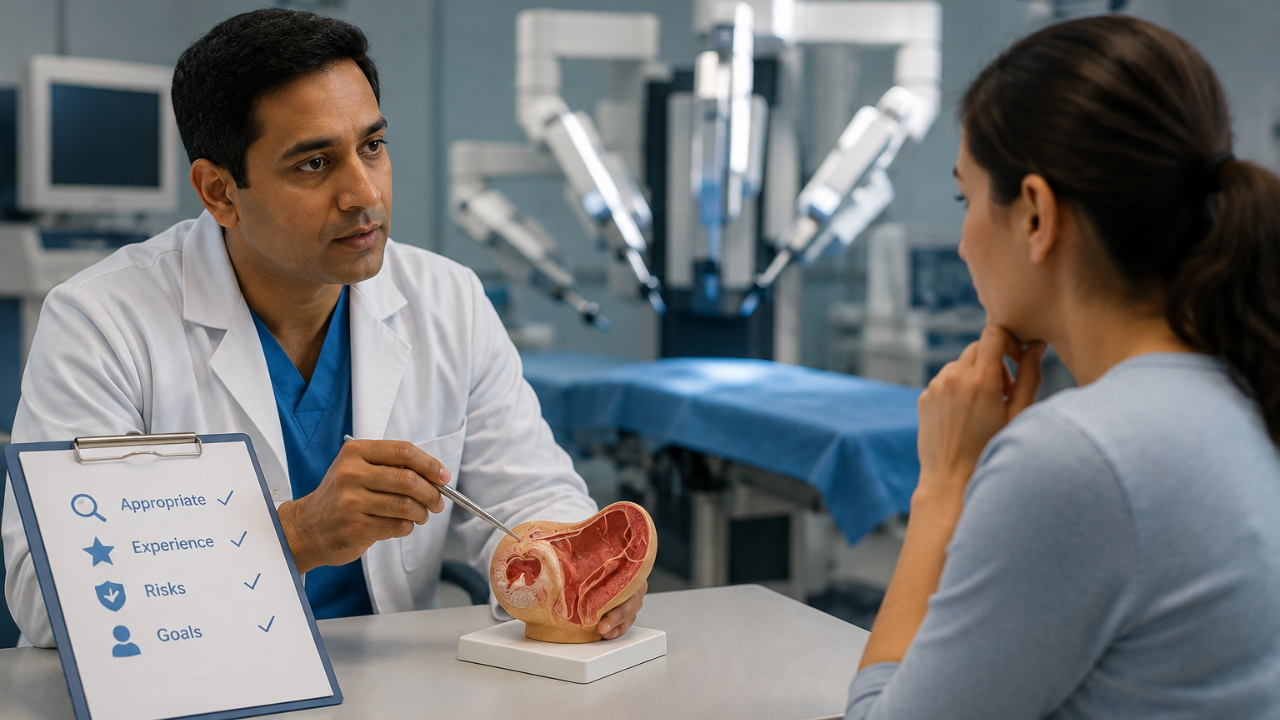
Robotic surgery has rapidly become one of the most talked-about advances in modern medicine. Yet, for many patients, the technology remains misunderstood.The first thing to know is that the robot does not perform the operation. Every movement is directed by the surgeon. The robotic platform translates the surgeon’s hand movements into highly precise, tremor-filtered movements inside the body while providing magnified three-dimensional vision and greater instrument dexterity.The real question, therefore, is not whether robotic surgery is better. It is whether it is the right choice for a particular patient, procedure and surgeon.Where Robotic Surgery Can Make A Difference?Robotic surgery is an evolution of minimally invasive surgery. Its greatest value is seen in technically demanding procedures that require precise dissection, complex suturing or surgery in confined anatomical spaces, such as the pelvis or around delicate nerves and blood vessels.For many routine operations, conventional laparoscopy may achieve equally good outcomes. Technology should support clinical judgment, not replace it.Patients should also recognise that outcomes depend far more on the experience of the surgical team than on the robotic system itself. Successful robotic surgery requires specialised training, structured credentialing and a coordinated operating theatre team.Choosing an experienced surgeon can therefore be more important than choosing a hospital simply because it owns a robotic system.Also read: 18-Year-Old In Critical Condition After Acidic Substance Allegedly Given Instead Of Anaesthetic During SurgeryMaking Robotic Surgery More AccessibleAnother important development is that robotic surgery is becoming more accessible. Indigenous platforms are helping expand advanced surgical care beyond a handful of metropolitan hospitals by making robotic programmes more viable for a wider range of healthcare institutions.This gradual decentralisation means patients in Tier II and Tier III cities can increasingly access advanced minimally invasive surgery closer to home, reducing the need to travel long distances for specialised treatment.Also read: Osteoporosis Drugs Offer New Hope For Back Pain By Blocking Disc Mineralisation: StudyCould Robotic Surgery Work Across Long Distances?Innovation is also extending beyond the operating room. Robotic telesurgery, demonstrated successfully using Made-in-India robotic platforms, has shown that expert surgeons can operate across vast distances using secure digital networks.While widespread adoption will require robust infrastructure and regulatory frameworks, the technology represents an important step towards improving access to specialised surgical expertise.Also read: Surgeon Barred From Practice After Connecting Wrong Parts of Patient’s Bowels During Emergency SurgeryWhat Should Patients Ask Their Surgeon? Patients should look beyond the hype and ask informed questions:Is robotic surgery appropriate for my condition?What experience does my surgeon have with this procedure?What are the expected benefits?What are the limitations and risks?Would conventional laparoscopy or open surgery be equally suitable?With indigenous platforms helping decentralise robotic surgery, advanced care is becoming more accessible beyond major metros. The technology has also demonstrated the potential of interhospital telesurgery, enabling expert surgeons to operate across distances and potentially helping bridge gaps in access to highly skilled surgical expertise.Ultimately, the future of surgery will not be shaped by machines alone. It will be shaped by skilled surgeons using intelligent technology to deliver safer, more precise and equitable patient care.