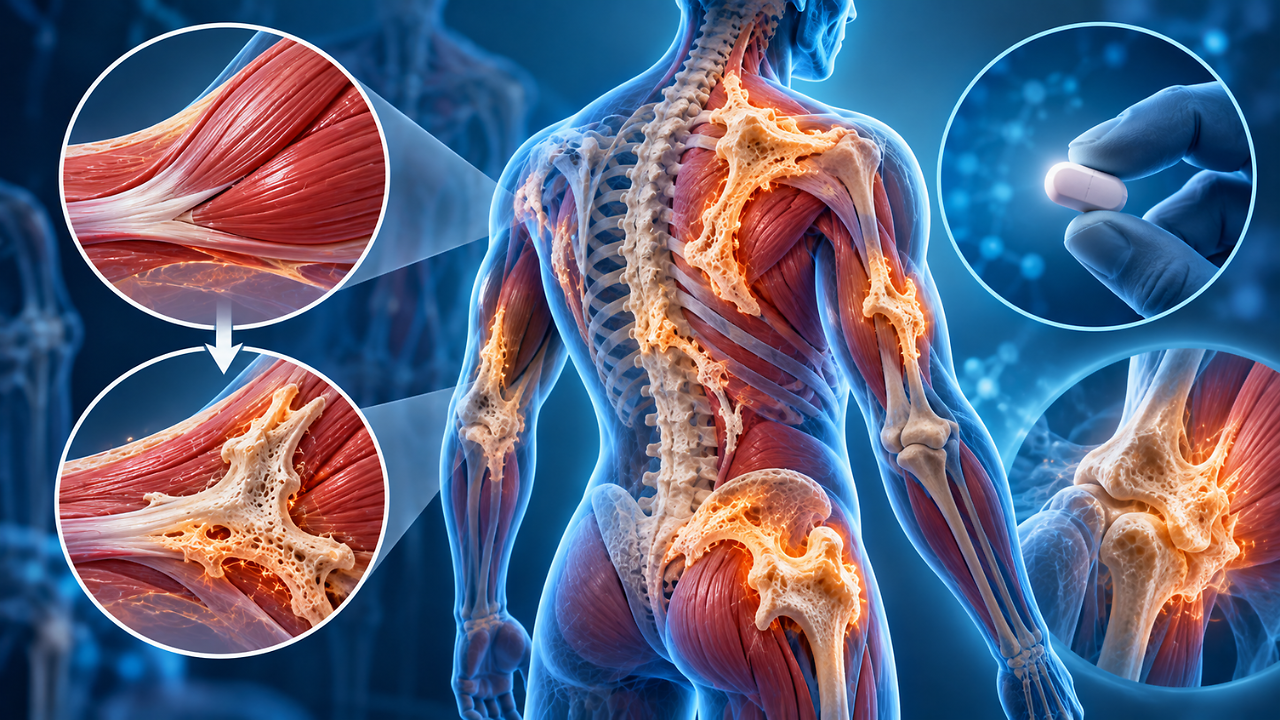
reaImagine developing a strange medical condition in which an injury or even a minor fall may trigger a process that may gradually turn muscles, tendons and ligaments into bone. This is what fibrodysplasia ossificans progressiva (FOP), one of the world’s rarest genetic disorders, looks like. The US Food and Drug Administration recently approved a new treatment option for FOP called Atebrioz (zilurgisertib), a once-daily pill developed by Mirum Pharmaceuticals. Adults and children aged 12 years and above with FOP are eligible for this treatment. It is designed to reduce the formation of new bone outside the skeleton. What Is Fibrodysplasia Ossificans Progressiva? FOP is a rare genetic disease in which connective tissues like muscles, tendons and ligaments gradually turn into bone. The abnormal bone formation is known as heterotopic ossification, meaning bone starts to develop in places where it should not. Over time, this can pose restriction in movement, cause deformities and lead to severe disability. The condition could affect quality of life significantly as well as shorten life expectancy. FOP is usually diagnosed in childhood. According to Mirum, around 300 people in the US and about 900 worldwide are known to have the condition.Also read: New RNA Therapy For ALS, The Disease Stephen Hawking Had: Patient With Rare Motor Neuron Disease Improves Why Does The Body Starts Making Bone In The Wrong Places? FOP is caused by mutations in a gene involved in bone growth, especially the ACVR1 gene, which produces a protein called activin A receptor type-1, or ALK2. In people with FOP, this pathway becomes abnormally active. As a result, the body can start producing bone within soft tissues. This process can occur in episodes called flare-ups. Trauma, surgery or other triggers can sometimes provoke inflammation and subsequent abnormal bone formation. The problem is that once mature bone has formed in these tissues, it can permanently restrict movement.Also read: Rare Pregnancy Infections Linked To 3-Fold Higher Autism Risk: What Is TORCH? More About The New Drug Atebrioz contains zilurgisertib, an oral drug that blocks ALK2, the protein that is abnormally active in most people with FOP and triggers bone formation outside the skeleton. The aim is not to remove bone that has already formed. Instead, the treatment is designed to reduce the formation of new abnormal bone. FDA’s approval was based on a randomised, placebo-controlled trial involving 63 people with FOP. Participants received either zilurgisertib or placebo for 24 weeks, followed by an extension period. At week 24, patients receiving Atebrioz had an average 3.2 cm³ decrease in the volume of newly formed abnormal bone, compared to a 24.6 cm³ increase in the placebo group. The FDA said the difference supported the drug’s effectiveness in reducing new heterotopic ossification.Also read: Claude AI Discovers Novel CRISPR-Like Enzyme System: What Are The Implications For Gene Editing? Symptoms & Treatment Of FOP The disease can vary between individuals, but abnormal bone formation can progressively restrict movement. People with FOP may develop difficulty moving their neck, shoulders, spine, hips and other joints as new bone forms around them. The condition can eventually affect mobility substantially. Extra bone formation can also interfere with everyday activities and contribute to severe disability. Another characteristic feature is that people with FOP are often born with abnormalities of the big toes, which can help doctors recognise the rare condition early. Atebrioz is not the first FDA-approved treatment for FOP. The FDA approved Sohonos (palovarotene) in 2023 as the first treatment for the disease. More recently, the FDA approved Pasatru (garetosmab-grts) in August 2026, making Atebrioz the third FDA-approved treatment for FOP. The newer options differ in how they target the abnormal bone formation.