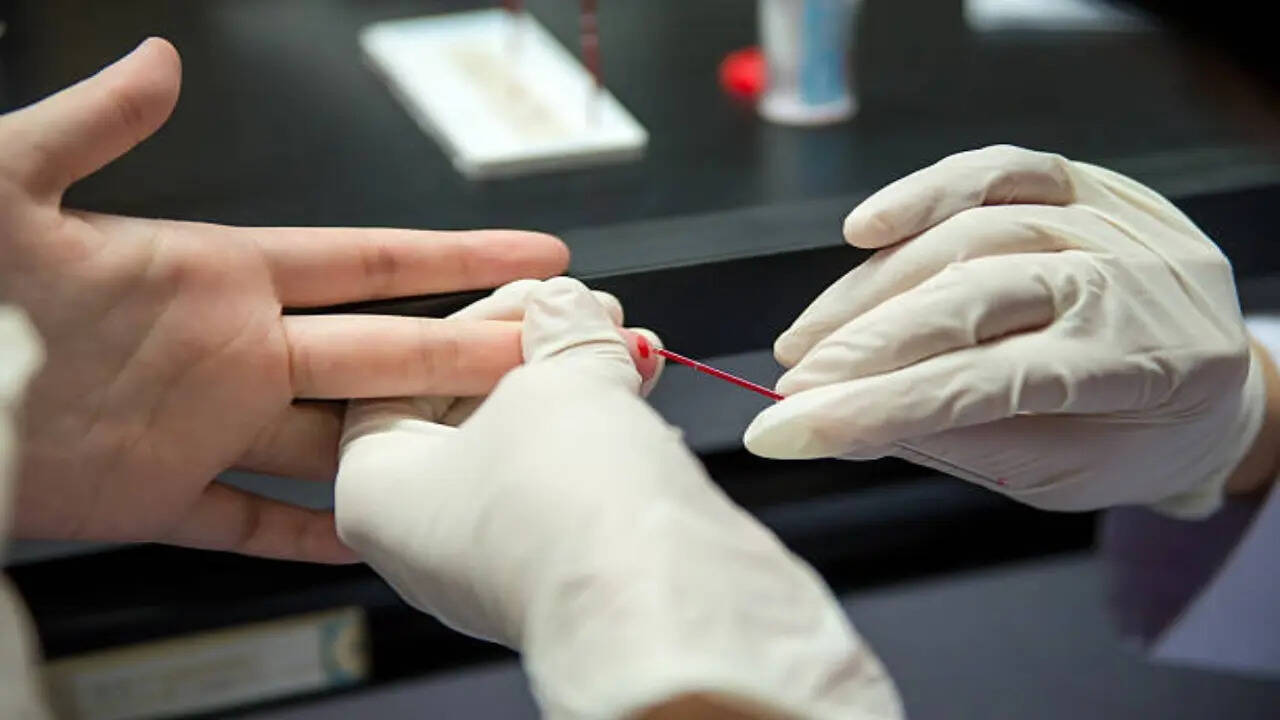
World Malaria Day is observed on April 25 every year - on this day, experts spread awareness about malaria, an infection caused by the bite of the female Anopheles mosquito. Its symptoms include extremely high fever, headaches, chills, and fatigue. However, ahead of or during the monsoon season, people often get confused between viral fever and malaria due to similar symptoms. As a result, the infection is diagnosed late. On this occasion, Health and Me interacted with experts to learn more about the tests that one must take for malaria diagnosis.An increase in the number of patients presenting at diagnostic centres with very high fevers has been attributed to people assuming they have a seasonal virus; however, when these patients present later, they often have life-threatening complications. According to the World Health Organization, over 280 million cases of viral infections worldwide were reported last year, making the clinical distinction between malaria and viral diseases increasingly deceptive.Which tests to take for malaria diagnosis?Dr Divya C, Microbiologist at Neuberg Anand Reference Laboratory, said, “Diagnostic testing has also transformed from the traditional microscope to more advanced diagnostic techniques, such as dual-target RDT (rapid diagnostic test), which detects HRP2 and Pf-LDH antigens. The RDT may not be able to detect some infections with lower numbers of malaria parasites circulating in the patient’s bloodstream. Therefore, all negative RDTs must be followed by microscopy to confirm the result.”The expert went on to say that molecular PCR tests are now the preferred tests for cases with low parasite density or asymptomatic carriers, as they can detect fewer than 10 parasites per microlitre of blood with high levels of sensitivity. Some leading laboratories that perform PCR testing are also including AI-assisted digital microscopy as a supplement to the process, reducing human fatigue and providing significantly more precise results than a manual smear could.What happens when malaria is diagnosed late?The risk of “waiting to see” if malaria develops after the initial temperature spike is that, unlike most other viral fevers, malaria infects human red blood cells; the consequence of waiting can be organ failure or cerebral complications within 48–72 hours after the initial symptomatic temperature spike.It is recommended that any patient with cyclic chills, excessive sweating, or fatigue should be tested based on differential diagnosis, as India moves towards becoming malaria-free by 2027. There is a short 15-minute diagnostic window to determine whether a patient can be treated without complications or is at risk of dying from malaria if it is missed.Dr Praveen K Bharti (Scientist G), Director, ICMR–National Institute of Research in Tribal Health (NIRTH), Jabalpur, said, “We need testing to catch malaria early, but we also need the right kind of tests. Traditional tests often miss low-density, mixed, and asymptomatic infections. These are not minor gaps. As India advances towards its malaria elimination goals by 2030, point-of-care molecular tests for malaria diagnosis that can detect low-density, hidden reservoirs of infection will prove to be the key differentiator.”