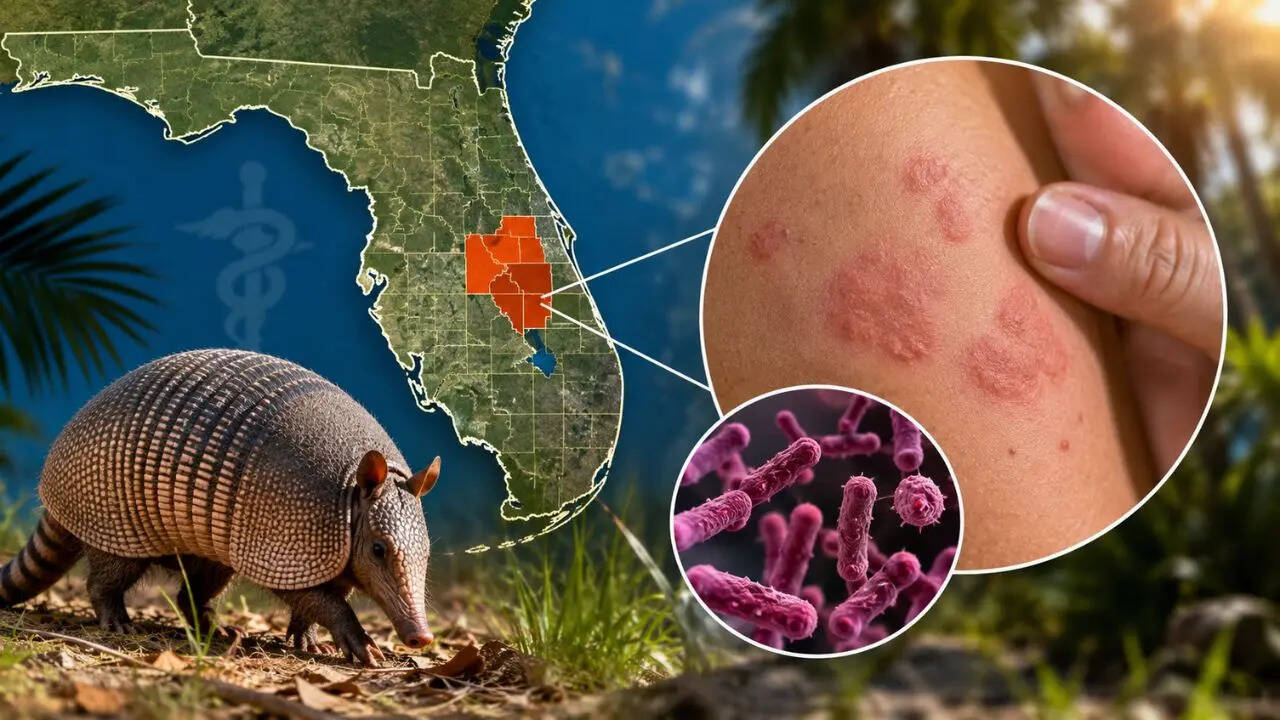
Florida is once again reporting an increase in Hansen's disease (leprosy) cases, renewing attention to a disease that got eradicated decades ago. While the infection remains rare in the United States, health officials say Florida continues to report one of the country's highest numbers of locally acquired cases, with recent infections concentrated in several Central Florida counties. According to the Florida Department of Health, 17 cases of leprosy had been reported statewide through mid-July 2026, with multiple cases identified in Brevard, Lake, Orange, Seminole, Sumter, and Volusia counties. Local health experts say the disease is uncommon but not unexpected in Florida, where environmental and wildlife factors contribute to its persistence. Why Does Leprosy Still Exist In Florida?Also read: WHO Declares Australia Free Of Trachoma: All About The Irreversible BlindnessUnlike many parts of the world where leprosy is associated human-to-human transmission, Florida has a unique risk factor: wild nine-banded armadillos.Research has shown that armadillos are natural reservoirs of Mycobacterium leprae, the bacterium that causes leprosy. Humans may become infected after frequent contact with infected armadillos or contaminated soil where the bacteria may persist. Experts emphasize that not every armadillo carries the bacteria.Scientists also believe Florida has become endemic for leprosy, meaning the disease is now established locally rather than being introduced through international travel. Increasing numbers of patients have reported no history of foreign travel or known contact with someone diagnosed with leprosy, suggesting local transmission is still prevalent. All About LeprosyAlso read: Chile Becomes The First Country In Americas To Eliminate Leprosy, Says WHOLeprosy, also known as Hansen's disease, is a chronic bacterial infection caused primarily by Mycobacterium leprae. The disease mainly affects:SkinPeripheral nervesEyesUpper respiratory tract liningIf diagnosed early, it is completely curable. Delayed treatment, however, can result in permanent nerve damage, muscle weakness, and disability. How Does It Spread?Contrary to longstanding myths, leprosy is not highly contagious. Health experts say the infection usually spreads through prolonged, close contact with untreated individuals, likely via respiratory droplets. Casual interactions like shaking hands, hugging, sharing meals, or sitting next to someone do not typically spread the disease.The illness also has an unusually long incubation period, often taking 2 to 20 years before symptoms appear, making it difficult to identify exactly where and when an infection occurred. Early symptoms may include:Pale or reddish skin patches with reduced sensationNumbness in the hands or feetTingling or nerve painMuscle weaknessThickened peripheral nerves Because symptoms develop gradually, many patients are diagnosed only after nerve damage has already begun. Experts advise avoiding unnecessary handling of wild armadillos and seeking medical evaluation for persistent numb skin lesions, especially after possible exposureAlthough leprosy is curable, its persistence in Florida highlights how infectious diseases can survive in animal reservoirs even after becoming rare in humans. Public health experts say improving awareness among both doctors and the public is essential for early diagnosis, timely treatment, and preventing permanent disability.