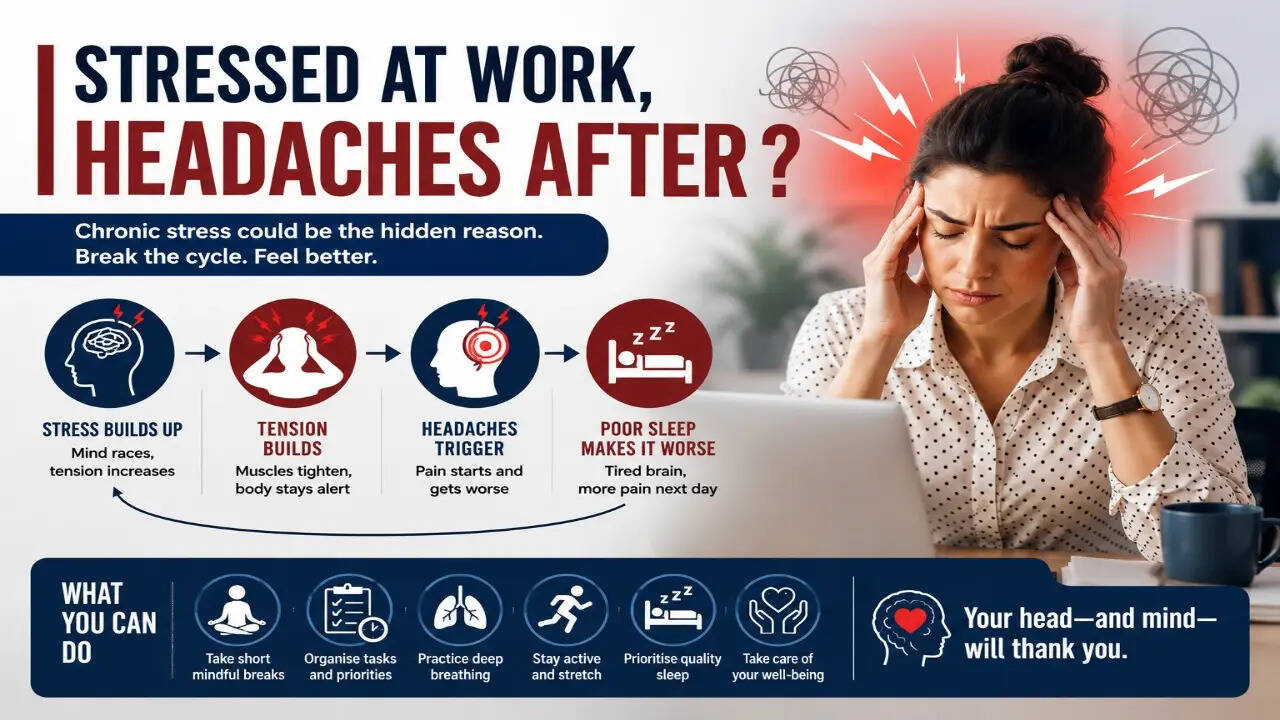
Most people often wrap up their day at work with a sense of stress and severe exhaustion. But if you are part of the group that experiences severe headaches after office hours, it could be because of one common habit that may be causing you discomfort — chronic stress. When the mind keeps racing all day long because of deadlines, tension, and pressure, even during breaks, it leaves behind a sense of urgency. And that sense of urgency does not mitigate or come to an end when the day ends.Why does stress build up even after work?Several times, there are difficult or unpleasant situations at work — it could be because of unfinished tasks and conversations that play and replay in the mind. The nervous system, therefore, gets overburdened, thereby leading to headaches. According to doctors, a lot of corporate employees experience this pain after a day at their high-pressure jobs. And while it may sound like something that is out of your control, there is something that you can do.How to deal with chronic stress after work?Stress inherently is not bad for you, but only if it occurs in short bursts. In that case, it can improve performance, focus, and may even prepare the body to handle challenges. Problems, however, arise when stress becomes chronic. As a result, the nervous system starts to process both pain and stress at the same time, and while one is built to be highly adaptable, stress starts to respond to external and internal factors. When the brain continues to receive signals without getting ample time for recovery, the body enters a state of prolonged alertness.In a sensitised state, situations that would otherwise be interpreted as minor may even get ignored. This can increase heart rate and muscle tension, thereby putting the nervous system into a fight-or-flight mode. In cases of constant headaches, sensitisation can lower the pain threshold. Consequently, headaches begin and become much harder to stop. Over time, this constant activation can disrupt the body's natural balance and create an environment for headaches to worsen.Chronic stress and migrainesChronic stress acts as a trigger for migraines — it can even worsen the discomfort. The neurological system of people experiencing migraines is more responsive to changes in hormones, environmental factors, and sleep patterns. Constant exposure to a stressor, therefore, can drive the severity and frequency of migraines. To make matters worse, muscle tension in the shoulders, neck, and scalp can also trigger headaches. Extended periods of sustained concentration and sitting can cause headaches later in the day.Can sleep help reduce stress headaches?Chronic stress has a debilitating impact on sleep quality as well. People who feel persistently wired at the end of the workday struggle to fall or stay asleep. As a result, the brain fails to recover properly. Poor sleep can therefore worsen the stress cycle, leading to headaches the next day as well. The loop is difficult to break, and excessive fatigue building up over time can make you feel overwhelmed. Over time, this loop leads to a decline in productivity, focus, and the ability to solve problems.