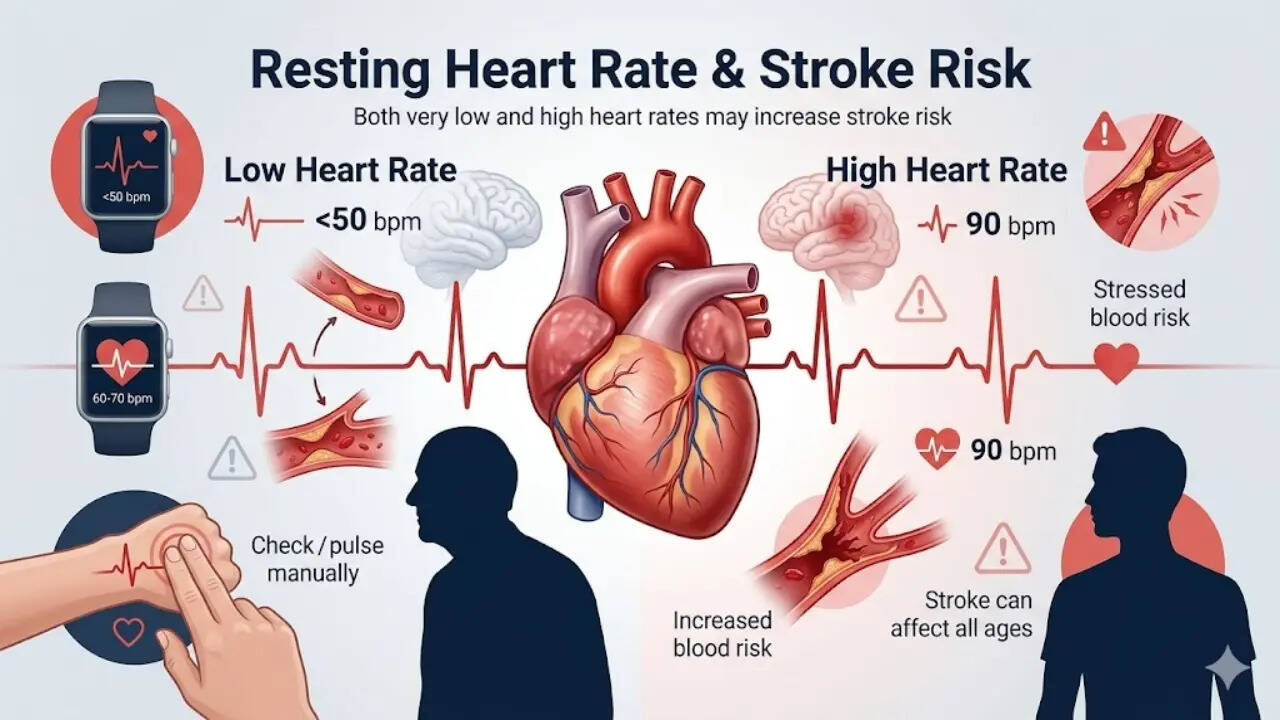
Stroke is a medical emergency that can lead to long-term disabilities if not diagnosed in time. Yet, many do not realise that a high resting heart rate could be linked to a higher risk of stroke. Once a concern for the elderly, stroke can now occur in young people as well, and doctors say that this is a worrying trend. Now, findings from a large study indicate that a low resting heart rate could be just as bad when it comes to stroke risk, challenging the common perception that fewer heartbeats per minute guarantee good heart health. But how can you be certain of your heart rate?Also Read: Hantavirus Outbreak Explained: WHO Confirms Evacuation of 3 Suspected Cases Amid Rising Death Toll What do doctors say about stroke risk and heart rate?The common idea, according to doctors, is that a higher heart rate is linked to a higher stroke risk. However, the relationship is not linear. Researchers presented the results at the European Stroke Organisation Conference. They stated that they had identified that people who were at a relatively lower risk of stroke had a heart rate between 60 and 70 beats per minute. Resting heart rate refers to the number of times the heart beats in a minute when the body is at rest, such as when sitting or lying down. The normal heart rate for adults is 60 to 100 beats per minute.For this, researchers analysed 460,000 people in the UK Biobank, aged 40 to 69 years. Experts monitored participants for an average of 14 years and, during that time, recorded over 12,000 stroke cases. When compared with people whose heart rate was in the middle range, researchers noted that people with a heart rate of 90 had a 45 per cent higher risk of stroke. Surprisingly, people with a heart rate of less than 50 had a 25 per cent higher risk of stroke. This was even after scientists adjusted for other stroke risk factors, such as blood pressure, age, and atrial fibrillation.Also Read: Just One Psilocybin Mushroom Use May Lead to Lasting Positive Brain Changes, Study FindsDoes low heart rate also spike stroke risk?When the data was broken down by stroke type, a low heart rate was linked to ischaemic stroke risk, a condition caused by blocked blood circulation to the brain. It is the most common type of stroke. A higher heart rate, on the other hand, was linked to both ischaemic and haemorrhagic strokes, the latter characterised by bleeding in the brain. A low heart rate can lengthen pauses between heartbeats, reducing steady blood flow to relatively smaller brain vessels and making blockages more likely. The symptoms are:Shortness of breathDizzinessChest painFaintingConfusionLight-headednessA higher heart rate can also increase stress on blood vessel walls, making them more prone to bleeding. However, researchers say that most of this is still hypothetical — a low heart rate could still be indicative of fitness in people who work out regularly. Doctors say that a low heart rate is a good way to measure heart disease risk. While the findings are observational, it cannot be conclusively said that a high or low heart rate can directly lead to a stroke. More research is required in this area before a conclusion can be reached.