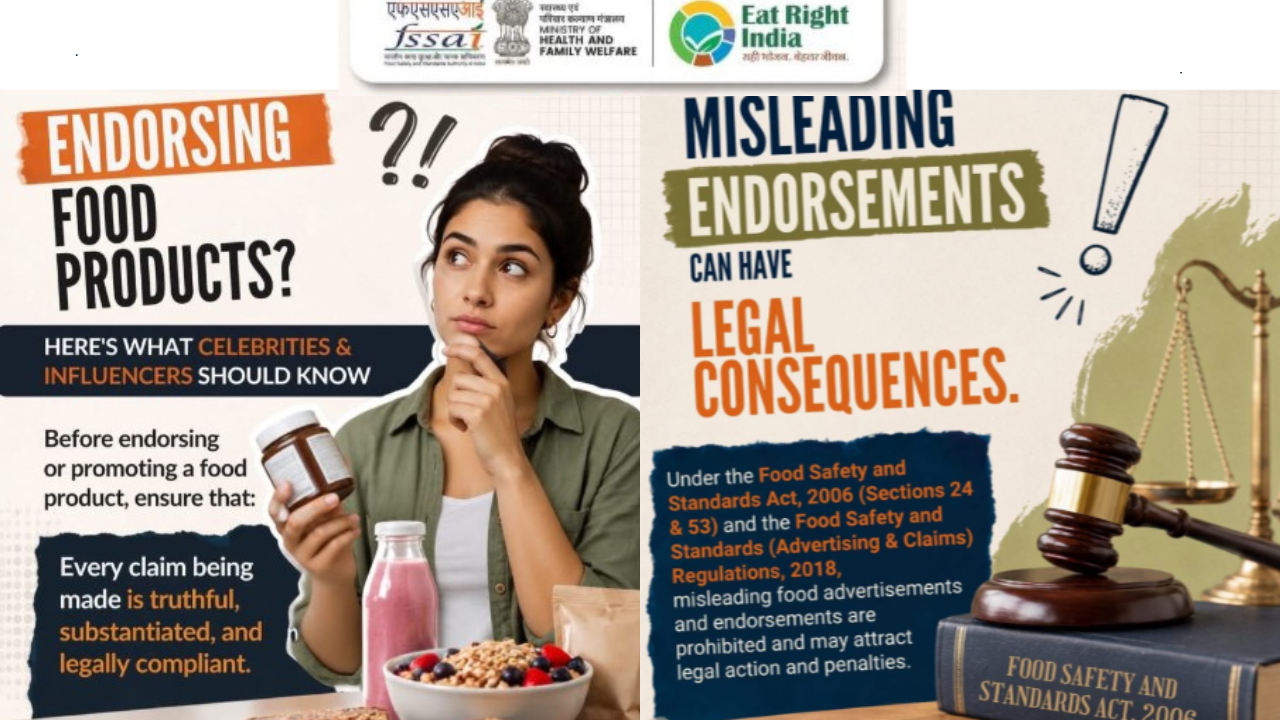
Amid a crackdown on manufacturers selling unsafe food products, the Food Safety and Standards Authority of India (FSSAI) has now turned its attention to food claims such as “immunity booster” and “nutrient-rich” endorsed by celebrities and social media influencers.The regulator’s move seeks to curb misleading promotions and cautions influencers and celebrities against endorsing food claims that are not verified or substantiated. It also warned of legal action in case of non-compliance.“With great influence comes great responsibility! Before endorsing a food product, ensure that claims are truthful, verifiable & compliant with the law. Promoting misleading or unverified food claims can attract legal consequences. Verify before you amplify,” FSSAI said in a social media post.FSSAI Asks Influencers To Verify Food ClaimsWith millions of followers, celebrities and digital creators have become an increasingly popular channel for brands marketing health drinks, protein supplements, snacks and packaged foods.“When you say ‘boosts immunity’, ‘rich in nutrients’, consumers trust you. Make sure every claim deserves that trust,” FSSAI said.The food regulator asked influencers to verify that every claim made by a brand is:TruthfulScientifically substantiatedCompliant with food safety regulationsFSSAI warned that misleading food advertisements and endorsements can have legal consequences.Under the Food Safety and Standards Act, 2006, and the Food Safety and Standards (Advertising and Claims) Regulations, 2018, misleading food advertisements and endorsements are prohibited and may attract legal action and penalties.Also read: Why Indian Doctors Are Seeking A Ban On Junk Food Ads And Mandatory Warning Labels On Packaging?FSSAI Steps Up Food SafetyIn recent weeks, FSSAI has acted against or scrutinized products and companies over misleading claims, hygiene and food-safety violations, non-compliant ingredients, labelling issues and failure to meet prescribed standards.The action has covered packaged foods, liquor, edible oils, sweeteners and high-caffeine beverages. The latest move involves tightening packaging rules for pan masala.New Pan Masala Packaging RulesUnder the new Food Safety and Standards (Packaging) Amendment Regulations, 2026, notified on August 10, pan masala packaging can no longer use plastic-based materials, plastic laminates, aluminium foil or metallised layers.Pan masala can now be packaged in materials made of paper, paperboard, cellulose and other naturally derived materials, provided they are completely free from plastic and synthetic polymers. Tin and glass containers are also allowed.The decision follows an earlier draft notification issued by FSSAI in April, which proposed adding specific packaging materials for pan masala to the food packaging regulations.Why Is FSSAI Targeting Pan Masala Packaging?Read More: World Organ Donation Day 2026: Too Old Or Too Sick To Donate Organs? Doctors Bust Key Myths Pan masala sachets have traditionally relied heavily on plastic and foil materials as they are lightweight, inexpensive and shield the contents from moisture.However, such multilayer plastic packaging is difficult to recycle and contributes to persistent plastic waste. The new rules push manufacturers towards packaging made of paper and other naturally derived materials that will not harm the environment.This does not mean that pan masala itself is safer to consume. Pan masala, particularly products containing tobacco or areca nut, continues to be harmful. The regulation is primarily about packaging standards and waste.