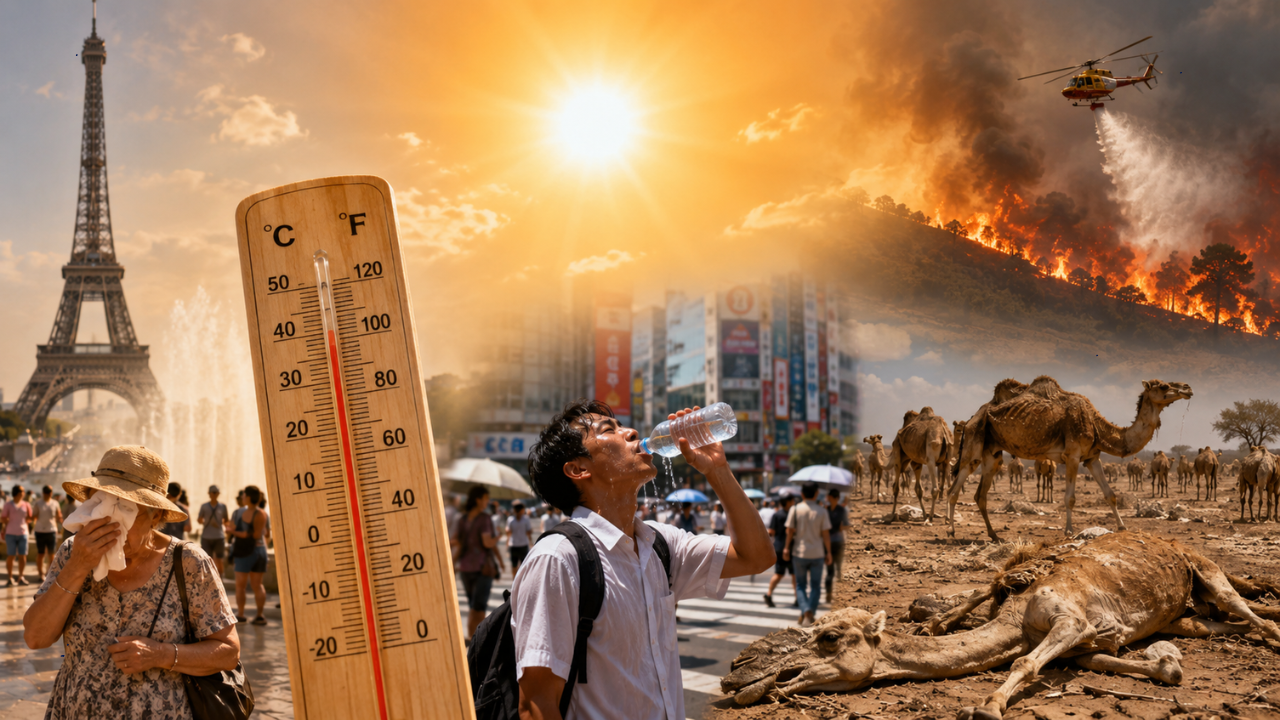
A relentless heatwave is sweeping across parts of Europe, Asia, and Africa, pushing temperatures to dangerous levels and triggering widespread disruptions.While France and Japan are battling scorching conditions and issuing health alerts, extreme heat in parts of Africa has reportedly killed camels, highlighting the growing human, environmental, and economic toll of intensifying climate extremes.In addition, countries including Spain, Italy, Greece, Portugal and Germany are also battling extreme heat and wildfire threats, while climate change is worsening wildfire risks in the US and Canada.France Records Excess DeathsA deadly heatwave in France in late June led to 5,764 excess deaths, according to updated data released by the country's public health agency.The revised analysis found that 21,674 people died between June 17 and July 2, compared with the 15,910 deaths normally expected during the same period—a 36% increase in mortality.Also read: World Brain Day: Climate Change Is Not Just Harming The Planet, It Could Also Be Affecting Your BrainJapan Heatwave Leaves 14 DeadJapan is also grappling with extreme temperatures. More than 450 people were taken to hospitals for heat-related illnesses in a single day in Tokyo—the highest daily figure since records began 16 years ago, emergency services said.The update comes as the country endures a heatwave that has killed at least 14 people over the past week.UK Issues Heat Health AlertsThe UK has issued yellow heat health alerts across central and southern England, with temperatures forecast to reach 30°C (86°F).The UK Health Security Agency (UKHSA) warned that the heat is expected to cause minor impacts on health and social care services while increasing risks for vulnerable people. The alerts remain in effect through Sunday as parts of the country continue to experience prolonged dry weather and drought conditions.Read More: Europe Heatwave Causes 10,000 Excess Deaths; England, Wales Record 2,700 More FatalitiesCamels Struggle To Survive Extreme HeatCamels, long regarded as the "ships of the desert," are also struggling with extreme heat in Africa.The BBC reported that camel shepherds in Ethiopia's Afar region have observed blisters on camels' feet, watery eyes, and skin burns caused by scorching sand.Research from Somalia found drought-related camel mortality affected nearly 46% of camel-owning households, while another study from Algeria reported a significant rise in camel deaths during summer heatwaves.Scientists say prolonged heat and drought cause stress, dehydration, disease, and reduce access to water and vegetation essential for camel survival.Europe Continues to Break Heat RecordsAccording to the Copernicus Climate Change Service (C3S), June 2026 was the hottest June ever recorded for western Europe and the second warmest globally.The World Meteorological Organization (WMO) said the heat has continued into July, fuelling wildfires in France and the Iberian Peninsula. Spain's Fabra Observatory recorded 40.5°C on July 8, the highest temperature in more than a century of observations."Heatwaves like this are what we expect to see in a changing climate," said John Kennedy, head of climate information at WMO."In the 50 years since the historic heatwave in 1976, Europe as a whole has warmed by around two degrees. It's one of the fastest warming continents and extremes of temperature have increased too."Why Heatwaves Are So DangerousHeat is often called the "silent killer," with an estimated 489,000 heat-related deaths each year between 2000 and 2019."Prolonged exposure over several days, particularly when temperatures remain high at night, means the body enters each new day already stressed," said Lachlan McIver, Health Advisor at the WHO-WMO Climate and Health Joint Office.According to scientists, climate change is driving increasingly severe heatwaves. A recent study by the Potsdam Institute for Climate Impact Research found that warming ocean waters account for 50–64% of the increase in land heatwaves globally.