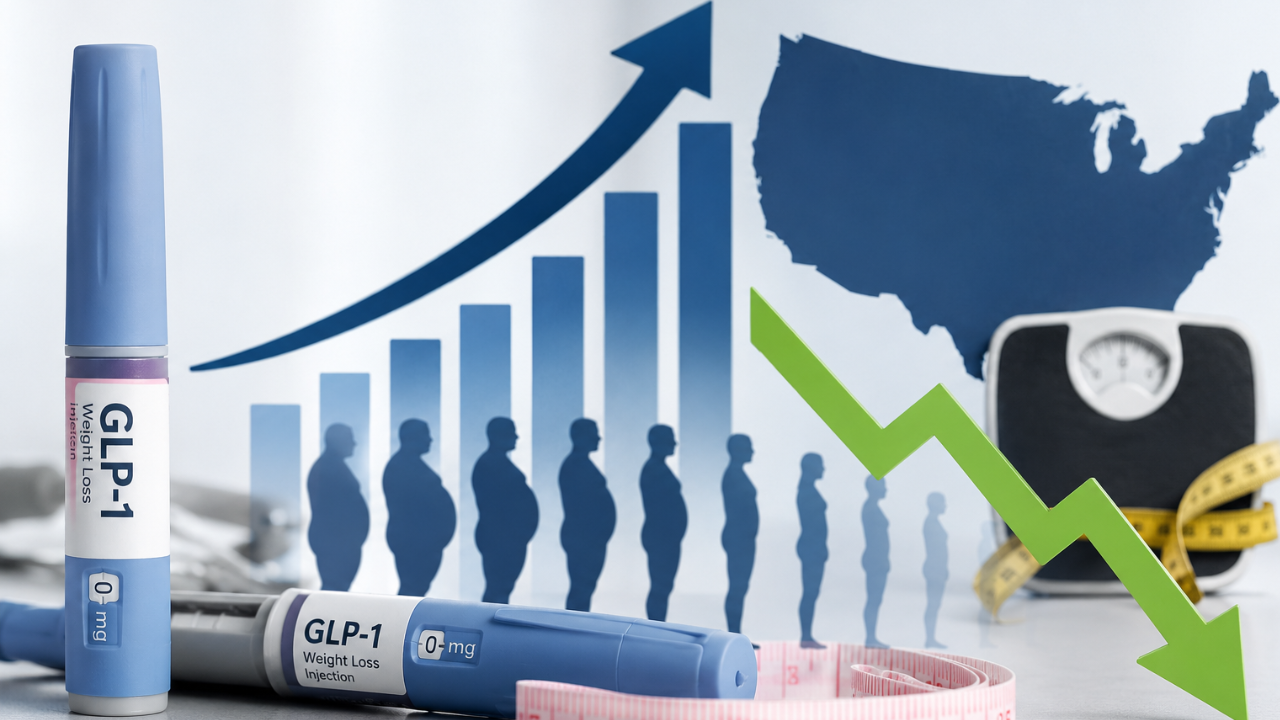
The popularity of GLP-1 weight-loss medications in the United States has reached its highest level yet. A new survey shows that nearly one in 10 American adults now takes the drugs to lose weight. At the same time, the country's obesity rate shows a steady decline. Experts say the survey does not prove that one trend is directly causing the other. GLP-1 Weight-Loss Drug Use At An All-Time High In The US GLP-1 drugs, including medications such as semaglutide and tirzepatide, were originally developed to treat type 2 diabetes but have become increasingly popular for managing obesity after studies showed they could help people lose significant amounts of weight. According to Gallup's latest National Health and Well-Being Index, 11% of U.S. adults currently use a GLP-1 medication for weight loss. In 2024, this number was just 3%. The survey also said that 15% of adults have tried a GLP-1 medication at some point, compared to the 6% from two years ago. The survey also found that 91% of Americans have heard of GLP-1 weight-loss drugs, up from 80% in 2024. The growing visibility of the medication reflects widespread media coverage, celebrity endorsements, and broader acceptance by patients and healthcare providers.Also read: Serena Williams Lost 34 Pounds With The Help Of A GLP-1 Drug But It’s Not Ozempic Obesity Rate Has Been Steadily Declining The Gallup report also found that the adult obesity rate in the US has fallen to 36.4% in 2026, down from a record 39.9% in 2022. The decline follows a similar trend seen last year, when obesity rates also dropped after years of steady increases. Researchers noted that the decrease in obesity has occurred alongside the rapid rise in GLP-1 use. However, they said that the findings show an association rather than proof that the medications are responsible for the decline in obesity. Other factors, including lifestyle changes, healthcare access, fitness consciousness, and others may also be contributing. Despite the decline in obesity, the percentage of Americans who have diabetes has remained relatively stable at around 13.5% since 2023, according to Gallup. Researchers said this is not unexpected because diabetes is a lifelong condition. Even if people lose weight or improve their blood sugar control, they typically continue to be diabetic once diagnosed. US Medicare To Cover GLP-1 Drugs For Weight Loss This is another move that will add to the popularity of GLP-1 drugs in the US. From July 1, people in the US will be able to access GLP-1 drugs for weight loss through a new pilot program, offered by the federal health insurance program Medicare. Slated to be operational for 18 months, the program will last till the end of 2027. Until now, Medicare covered GLP-1 medications like Ozempic only for certain conditions like diabetes, but not for weight loss. The initiative aims to make these high-cost weight-loss medications more accessible to eligible candidates. Eligible beneficiaries will be able to access the following GLP-1 weight-loss medications: Novo Nordisk's Wegovy injections and tablets Eli Lilly's Foundayo tablets Eli Lilly's Zepbound KwikPen The medications will be covered only when prescribed for weight management and when beneficiaries meet the program's medical eligibility criteria.