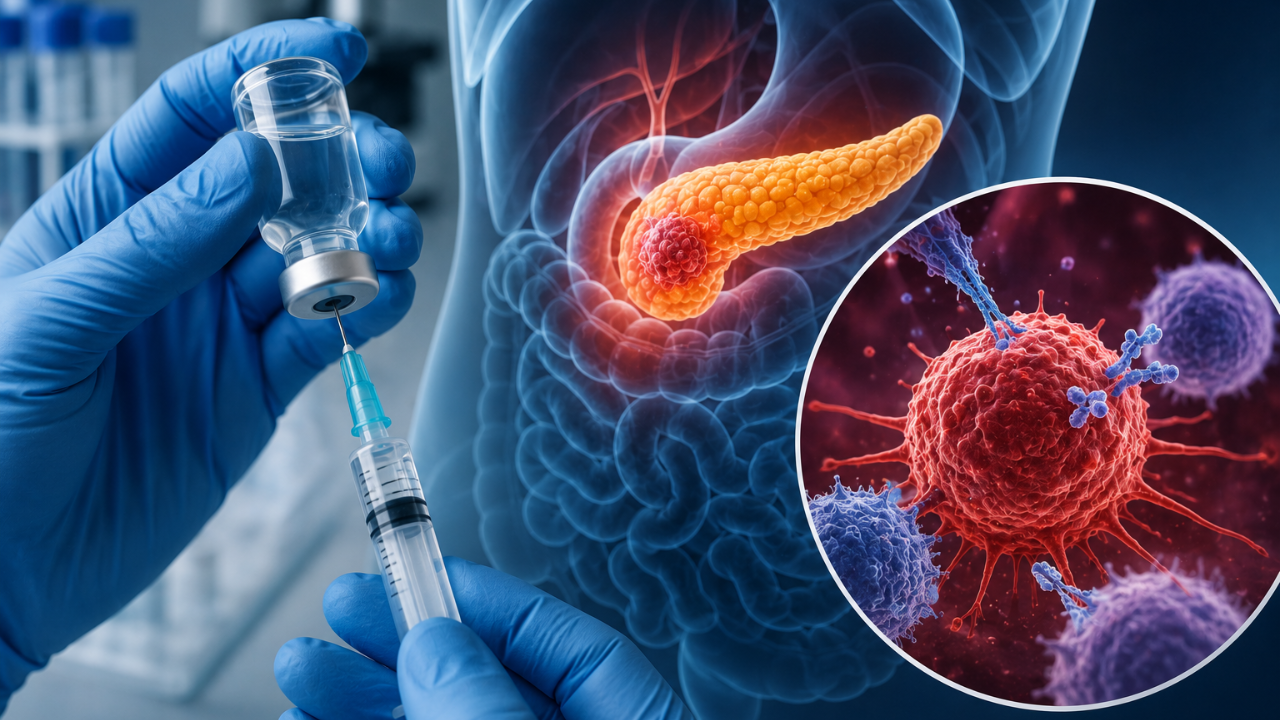
In an early trial, scientists are testing the possibility if a vaccine could intercept pancreatic cancer, one of the deadliest cancers in the US, at an early stage and prevent it from becoming invasive. The trial involves people who were considered at high risk of pancreatic cancer and already had small abnormalities, like cysts, in their pancreas.The experimental vaccine, called mKRAS-VAX, is designed to train the immune system to recognise mutated KRAS proteins, which are found in most pancreatic ductal adenocarcinomas, the most common type of pancreatic cancer. The findings, published in Cancer Discovery, offer an intriguing new approach in which instead of waiting for pancreatic cancer to appear and then treating it, researchers are attempting to intercept the disease at its earliest stages.How Does The Vaccine Work?Also read: UK Set To Implement Stricter Protocol For Prostate Cancer Testing; Who Is Eligible To Get Tested?Pancreatic cancer often develops gradually from precursor lesions. Some of these lesions can contain mutations in the KRAS gene, which can drive the development of the disease.The mKRAS-VAX vaccine contains synthetic peptides targeting six common KRAS mutations. The goal is to teach T cells to recognise cells carrying these abnormal proteins and destroy them before they progress into cancer. Unlike traditional vaccines against infections, this is a therapeutic cancer vaccine, meaning it is designed to stimulate the patient's immune system against targets related to cancer.Findings From The Early Trial Also read: Following A Western Diet? Changes In Your Gut Bacteria Could Increase Colon Cancer RiskThe Phase 1 study involved 20 people who had either a family history or genetic predisposition to pancreatic cancer and had a pancreatic abnormality detected on imaging.The vaccine produced mutant-KRAS-specific T-cell responses in 18 of the 20 participants, or 90%. These immune responses persisted for as long as two years. Researchers also saw an intriguing change in pancreatic cysts.At a median follow-up of 16.5 months, 37.5% of participants experienced cyst reduction or complete resolution. Among a comparable group of unvaccinated people, the figure was 6.8%. None of the vaccinated participants had developed pancreatic ductal adenocarcinoma during the study follow-up. However, this does not prove that the vaccine prevents pancreatic cancer.The study was small, early-stage and primarily designed to examine safety and whether the vaccine could generate an immune response.“We are very excited about these results,” pancreatic cancer vaccine researcher Elizabeth Jaffee said. More About Pancreatic Cysts Pancreatic cysts are relatively common and most do not become cancerous. But some types can be precursors to pancreatic cancer, which makes them an important for surveillance.The researchers are interested in whether vaccination could intervene during this window, before malignant cells are formed.That is particularly significant because pancreatic cancer is notoriously difficult to detect early and remains one of the deadliest cancers.The long-term ambition is to develop a vaccine to prevent pancreatic cancer but researchers are not there yet.Jaffee described the field as “nascent” and said she is “cautiously optimistic,” while emphasising that these small Phase 1 studies are not designed to establish whether the vaccines improve survival or prevent cancer. Larger Phase 2 studies will be needed to determine whether the early immune responses translate into meaningful clinical benefits.