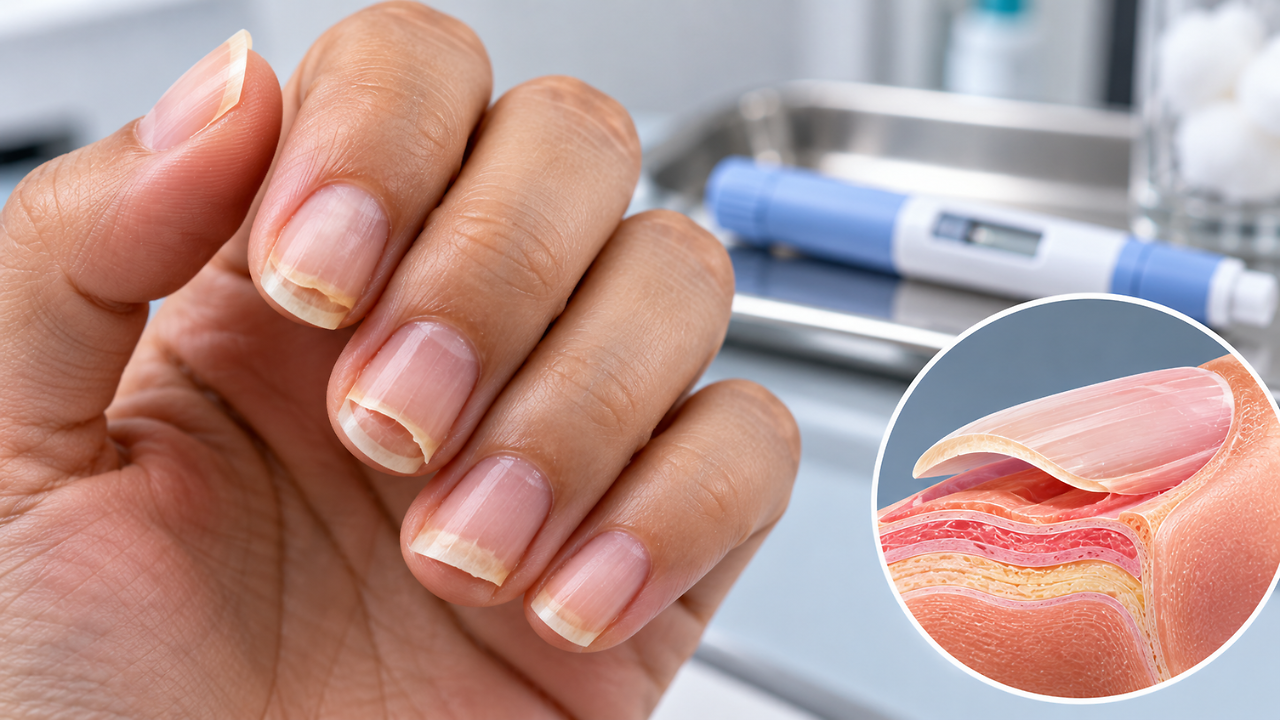
The boom in GLP-1 drugs for diabetes and obesity management is not without its drawbacks. From vision loss to hair fall, researchers are increasingly assessing the side effects of popular weight loss medicines, which include semaglutide (Ozempic and Wegovy) and tirzepatide (Mounjaro and Zepbound). Recently, a new side effect among GLP-1 users was reported which entails detachment of the nails. Experts believe that using weight loss injections may cause the patient’s fingernails to fall off, raising fresh concerns about the short as well as long-term side effects of these medicines. Risk Of Fingernails Falling Off In GLP-1 Users Nail detachment, clinically known as onycholysis, is a condition in which nails separate from the skin underneath it. A new study has found that the risk of fingernails falling off in people taking GLP-1 receptor agonists was almost four times more common than non-users. The findings were presented at the European Academy of Dermatology and Venereology (EADV) Congress 2026. Researchers, led by Dr. Charles Taïeb, found that 39% of GLP-1 users reported nail detachment, compared to 9% of people in the comparison group. Overall, 66% of people taking GLP-1 drugs experienced at least one nail disorder. Apart from nail falling off, nail discolouration was also seen frequently among users, affecting 46% compared to 17% of non-users. Researchers described this as the first controlled study specifically examining the possible effects of GLP-1 receptor agonists on nail health.Also read: New Experimental Drug May Preserve Muscle Mass During Weight Loss From Ozempic Could Your Nails Be Affected By GLP-1 Weight Loss Drugs? GLP-1 medicines like semaglutide and tirzepatide reduce appetite, which can lead people to eat way less than they normally do. Rapid or significant weight loss can sometimes affect the body's supply of protein and other nutrients needed for healthy hair and nail growth. But the increased number of nail detachment cases seen among GLP-1 drug users could not be solely attributed to weight loss. “Until now, nail changes associated with GLP-1 therapies had essentially been anecdotal,” said study author Dr Charles Taïeb. “Our findings show a clear association, but they also underline an important point: not everything that happens during GLP-1 treatment is necessarily caused by the treatment itself.” The researchers stress that the study cannot establish that GLP-1 receptor agonists caused changes to the nails. Around half of users already had nail problems before the treatment began. After adjusting dermatological conditions and nutritional deficiencies, the strength of some associations reduced. However, nail detachment and nail discolouration remained around two to three times more frequent among users after adjustment. Dermatologists already recognise that GLP-1 treatment can cayuse brittle nails and slower nail growth, especially in people who lose substantial weight loss. The American Academy of Dermatology notes that these effects may occur alongside other changes to the skin and hair.Also read: 2 Indians Charged In US Over Fake Ozempic Scheme: How To Spot Counterfeit GLP-1 Drugs Hair Loss Was Also Reported By 50% Of GLP-1 Users A companion study also identified unusual changes on the hair and scalp among GLP-1 users. Unusual hair loss was reported by 50% of GLP-1 users compared to 34% of controls. The study also reported loss of hair volume or density affected 42% versus 19% among controls. Hair loss after the treatment was also more than twice as common among users, i.e. 26% among users compared to 12% in non-users. Redness of the scalp was also around three times more frequent. Study author Dr Bruno Halioua explained, “This suggests that what is happening on the scalp may go beyond the classical shedding seen after rapid weight loss and involve an inflammatory component.” The author added, “Scalp inflammation was the rule rather than the exception, which clinicians do not currently look for and which may be treatable. Taken together, our findings suggest that factors beyond weight loss alone may contribute to the hair, scalp and nail changes observed among GLP-1 users.” He also said that these changes could be temporary and that one should not stop the treatment without discussing it with their doctor. “These changes are frequent, usually benign, and are not a reason to stop an effective treatment on one’s own initiative,” he said. “Anyone who notices hair shedding, an itchy or red scalp or nail changes should mention it to their doctor rather than discontinue therapy.”