
- Health Conditions A-Z
- Health & Wellness
- Nutrition
- Fitness
- Health News
- Ayurveda
- Videos
- Medicine A-Z
- Parenting
Harish Rana, India’s First Passive Euthanasia Case, Dies at AIIMS
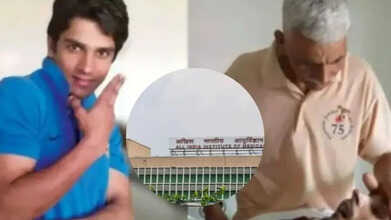
Harish Rana passed away on Tuesday at AIIMS Delhi. (Photo credit: iStock)
New Delhi: Harish Rana, India's first person to receive legal approval for passive euthanasia, passed away at AIIMS, New Delhi, on Tuesday evening, PTI reported. This comes after the Supreme Court allowed the withdrawal of the life-support system, thereby putting an end to an emotional chapter for the family. He had been in a vegetative state for over 13 years, with almost no hope of recovery. Doctors, after the Supreme Court's approval, removed the life-support tubes, thereby allowing him to die naturally. Passive euthanasia refers to withholding or withdrawing life-support treatment for a patient with little or no hope of recovery, allowing him or her to die naturally.
The apex court had granted permission for this on March 11 this year, thereby allowing the withdrawal of medical intervention under Article 21 to keep him alive. The Article gives the right to live with dignity. After the verdict, Rana was moved to AIIMS Delhi, where doctors followed a legally approved procedure to discontinue artificial life support.
Who is Harish Rana?
Harish Rana was a BTech student at Panjab University. In 2013, he reportedly fell from the fourth floor of a paying guest accommodation and suffered a traumatic brain injury. This left him 100% disabled and in a vegetative state. He required round-the-clock medical attention for survival and was being fed through a PEG (percutaneous endoscopic gastrostomy) tube. Doctors had been treating him for the past few years while maintaining that there were almost no chances of recovery.
A decade of suffering
For Harish Rana, the suffering last over a decade - 13 years of suffering silently. Hailing from Ghaziabad, for him it all began after a catastrophic fall from the fourth floor. Since then, he was in a coma unable to communicate or move apart from involuntary gulps and raqre flickering of his eyes. His parents approached the judiciary to put an end to the endless cycle of pain that their son could not even express. On March 11, the Supreme Court granted Rana hte right to 'die with dignity', thereby marking a first-ever case of passive euthanasia. The verdict allows doctors to remove support tubes that keep a patient in a vegetative state. On March 16, at AIIMS, Rana received an emotional farewell and was removed from life support.
Harish Rana Taken Off Food And Water Support For Over 10 Days; Waiting For Passive Euthanasia
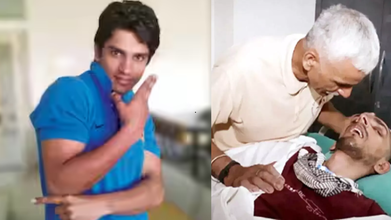
Harish Rana, the 32-year-old resident from Ghaziabad who had been in vegetative condition for the last 13 years is now waiting for his last few moments. A landmark judgment allowed for passive euthanasia in Rana's case. This means without any active intervention, he will be able to exercise his right to die with dignity. As a result he has been taken off ventilator and other life support systems and shifted to a normal bed. His water tube was removed along with a cap being placed on his feeding tube. Health and Me had previously reported on how AIIMS Delhi has prepared to conduct India's first passive euthanasia.
Also Read: Harish Rana, India’s First Passive Euthanasia Case, Dies at AIIMS
However, it has been over a week since Rana's food and water supply has been cut off. Reports note that he, along with his parents are facing anxiety after he has been denied food and water for over a week.
On March 23, it marks 10 days since Rana has been shifted to AIIMS. Doctors note that every minute Rana spends in AIIMS is crucial for him, and special care is being taken to ensure he does not suffer during this time. His condition is being monitored and doctors are still administering medications to soothe his brain.
A Landmark Judgment For India's Long Debate In Euthanasia
Manish Jain, who represented Rana in Supreme Court and played a key role in securing legal aid for him told NDTV that when the verdict was being announced the entire court was packed. "From the courtroom to the gallery, there was a crowd everywhere, everyone was eagerly waiting to see what the Supreme Court would decide. Both judges became emotional while delivering the verdict; the expression was clearly visible on their faces... I was very disappointed myself. But the family felt that if the verdict came in their favor, it would be a great relief for the patient."
He told the media outlet that when the verdict was being announced the entire court went silent for 10 to 15 minutes and everyone was emotional.
Before the verdict was delivered, both judges met with Harish's family and obtained information from the doctor about every aspect of the case.
Jain describes the verdict saying: "I lost even after winning". He said he had seen Harish himself a several times and knew that he was going through a lot of pain. "13 years is no small thing," he notes. "The way his parents and family cared for him is beyond words. But now the only solace is that the court also understood the situation and gave a verdict that will set an example in the history of the country's judiciary."
What Happened To Harish Rana?
It was in 2013 when he suffered severe head injuries after he fell from the fourth floor from his PG accommodation while he was studying at Panjab University. He had been bedridden ever since, and survived on feeding tube. His father filed a petition seeking passive euthanasia under the guidelines Supreme Court had laid down in 2018 under Common Cause judgment. This is the second time the parents have approached the apex court.
In 2024, the court also suggested that Rana could receive home-based care with support from the Uttar Pradesh government. The home-based care includes periodic visits by doctors and physiotherapists. The court suggested that in case home care was not feasible, he could be moved to Noida's district hospital. However, his parents have noted that his condition continued to worsen. Family advocate Rashmi Nandakumar also informed the bench that "nothing seems to be working out".
"He is falling ill quite often and is repeatedly admitted to hospital," she said. The advocate further added that the family only sought passive euthanasia, which is withdrawal of treatment, and not any active intervention.
Justice Pardiwala also read medical reports and observed, "Just look at the condition of the boy. It's pathetic."
Recent court ruling on this case involves a bench comprising Justice JB Pardiwala and Justice KV Viswanathan that allowed the withdrawal of life support for Harish Rana, a resident of Ghaziabad, who has been in a coma and kept alive on tubes for breathing and nutrition after sustaining severe head injuries following a fall from a building in 2013 in Chandigarh.
Perez Hilton Spent 21 Days In Hospital After Taking Medication on an Empty Stomach
Credits: Instagram
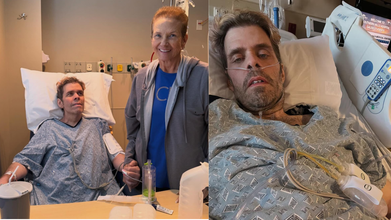
Perez Hilton thanked doctors and nurses after his care at the Southern Hills Hospital in Las Vegas. He was hospitalized for 21 days after he experienced complications with the medicines he was taking for flu. In a video, he said, "My stupidity landed me in the hospital;". The celebrity blogger explained that he was taking medications on an empty stomach that led to serious health complications.
Also Read: Harish Rana Taken Off Food And Water Support For Over 10 Days; Waiting For Passive Euthanasia
What Happened To Perez Hilton?
He posted a video on March 23 on his YouTube channel and said, "It was the worst and best thing that's ever happened to me". The 48-year-old, whose real name is Mario Armando Lavandeira Jr, and goes by Perez Hilton said that he had flu for "about a week" and started to take his medications to get better.
However, the biggest mistake he did was taking those medications on an empty stomach. Though, he shares that he has never had food before any of his medications.
Turns out, the medications were hard on his stomach and intestines. After a week of taking the medications on an empty stomach, he developed an ulcer, a perforation and sepsis that led him to be admitted in a hospital with intense stomach pains.
“The first few days were a lot of pain and constant tests,” Perez recalled. “Because they couldn't find where the perforation was.” He added: “Eventually, after five days, I ended up having laparoscopic surgery. Surgery where they don’t cut you up, but they miraculously make these incisions.”
He aid that surgeons used cameras to "literally flip around all of my organs, trying to find the perforation first. Then after flipping around all of my organs, washing me our 'cause I had so much infection in there. So much infection". He also said that his lungs had to be drained out and that his body "kept falling apart". He was also put on heart medication because his "heart got out of control".
Also Read: World Tuberculosis Day 2026: Theme, Origin, And Significance
Due to his long hospital stay, he developed another infection and for two weeks he could not eat normal food. “It was such a slow process,” Perez shared. “Two weeks of just sickness and then another week of getting better before I was released. The last week was hell, because I had already been in the hospital two weeks by then.”
How Is Perez Hilton Now?
Perez is now at home and would continue to receive his medication intravenously through a PICC line in his arm for 10 days. He said it is more effective than oral medications. “When I saw my kiddos—who had visited me—but when we got home we had the biggest, most cathartic group hug. And tears and tears and tears. They were so worried for their dad," he said.
He also said that he learned from his experience of being hospitalized and hopes that his video works as a "cautionary tale" to those who are watching. He said, "I hope this video can be a cautionary tale to some of you. Take medication with food. That's very important. Take medication with food. Don't have it on an empty stomach. Don't end up like me in the hospital for 21 days.”
World Tuberculosis Day 2026: Theme, Origin, And Significance
Credits: Canva
Every year on March 24, World Tuberculosis (TB) Day is observed. According to the World Health Organization (WHO) data, 10.7 to 10.8 million people fell ill with TB, globally in 2023-2024. This has made TB the world's top infectious killers. While many countries have been able to successfully reduce the cases of TB, there has been resurgence of the disease in Indonesia, Myanmar and the Philippines. While in the United States and in high-income European nations, the infection levels remain low, however, the disease has not been fully eradicated.
Also Read: Harish Rana Taken Off Food And Water Support For Over 10 Days; Waiting For Passive Euthanasia
World Tuberculosis Day 2026: Theme
This is why, this year's theme is 'Yes! We can end TB!' As per the WHO, this is a bold call to action and a message of hope that affirms that it is possible to get back on track and turn the tide on the TB epidemic, even in a challenging global environment. With decisive country leadership, increased domestic and international investment, rapid uptake of new WHO recommendations and innovations, accelerated action, and strong multisectoral collaboration, ending TB is not just aspirational - it is achievable.
World Tuberculosis Day 2026: Origin
The Centers of Disease Control and Prevention (CDC) notes that it was on March 24, 1882, when Dr. Robert Koch announced the discovery of Mycobacterium tuberculosis, the germ that causes tuberculosis (TB). A century later, in 1982, the global health community recognized March 24 as World TB Day.
In 1882, the disease killed one in seven people in the US and Europe, however, Koch's discovery was significant in the elimination of TB disease.
Also Read: Perez Hilton Spent 21 Days In Hospital After Taking Medication on an Empty Stomach
The CDC also notes that TB germs may have been around as long as 3 million years. During ancient times, TB had several names, for instance, it was called:
- "Phthisis" in ancient Greek,
- "Tabes" in ancient Latin, and
- "Schachepheth" in ancient Hebrew.
- During the Middle Ages, health care providers referred to active TB disease of the neck and lymph nodes as "scrofula."
- In the 1700s, people referred to TB disease as "the white plague" due to the pale complexion of people with TB disease.
- In the 1800s, people called TB disease "consumption." In 1834, Johann Schonlein named the disease "tuberculosis."
- In 1909, Clemens von Pirquet invented the term "latent TB infection" to refer to inactive TB.
World Tuberculosis Day 2026: Significance
World TB Day is held annually on March 24 to raise awareness, mobilize funding, reduce stigma, and accelerate global efforts to end the tuberculosis epidemic. This disease kills thousands daily and is thus a critical call for action on prevention and treatment is important.
World Tuberculosis Day: What Is TB?
As per a Singapore Government Agency Website called Communicable Disease Agency or CDA, TB is an infectious airborne disease caused by Mycobacteirum tuberculosis.It primarily affects the lungs but can also affect other parts of your body, such as the brain, lymph nodes, kidneys, bones, and joints.
The disease is transmitted through the air when an infected person coughs or sneezes and usually requires close and prolonged contact with an infectious individuals. It cannot spread through touch or kissing.
Common Symptoms Of TB
- Persistent cough (two weeks or more)
- Persistent fever
- Coughing blood or sputum
- Night sweats
- Weight loss
- Fatigue
- Loss of appetite
- Chest pain
- Follow Us :


© 2024 Bennett, Coleman & Company Limited