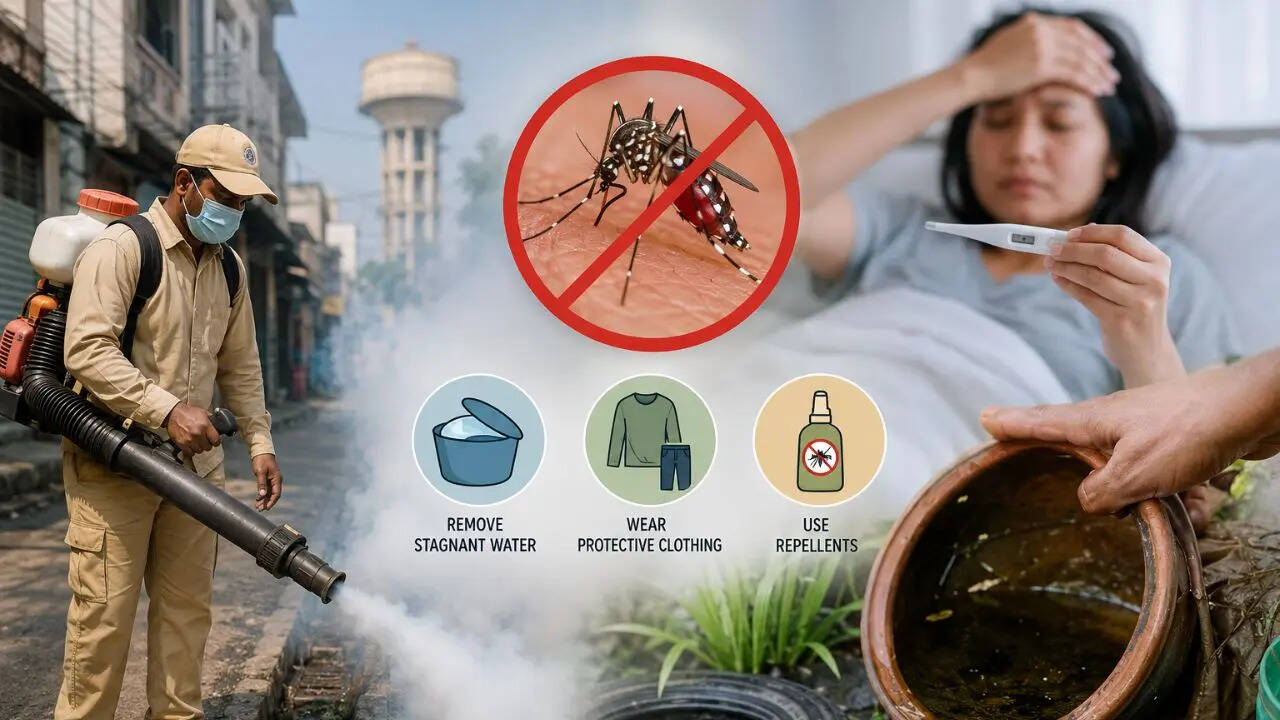
The Ludhiana health department has increased surveillance and prevention efforts after a bunch of new cases of malaria and dengue were reported in the district. Health officials have stepped up inspections, awareness campaigns, and anti-larval operations, urging residents to eliminate stagnant water and seek medical attention at the first sign of fever. Increase In Dengue And Malaria Breeding SitesAlso read: Monsoon Playbook for Parents: Common Home Mistakes That Increase Infection Risk in Children According to recent reports, extensive door-to-door inspections are being carried out across residential areas, schools, and public spaces to identify mosquito breeding sites. During these inspections, dengue mosquito larvae were found in several homes, prompting authorities to issue notices to property owners and instruct them to immediately remove stagnant water. The department said these inspections are part of an ongoing strategy to reduce mosquito breeding before cases increase further during peak monsoon season. Proactive Strategy To Prevent Increase In InfectionsAlso read: From Heavy Floods To Extremely Humid, How Mumbai's Extreme Weather Can Impact Your Health? The move comes after Ludhiana experienced a difficult mosquito-borne disease season last year. Official data showed the district recorded 128 malaria cases, including one death, and 538 dengue cases with one fatality, making early intervention a priority this year. Health authorities say that increasing temperatures combined with intermittent rainfall have created favourable conditions for mosquitoes to multiply rapidly, making community participation essential in preventing another surge. Officials are stressing that dengue and malaria are transmitted by different mosquitoes and require slightly different prevention strategies. Dengue is spread by the Aedes mosquito, which breeds in clean, stagnant water found in coolers, flower pots, buckets, discarded tyres, and rooftop water tanks. These mosquitoes are most active during the daytime. Malaria, on the other hand, is transmitted by Anopheles mosquitoes, which usually bite from dusk until dawn. Eliminating breeding sites remains the most effective way to reduce the spread of both diseases. How To Protect Yourself In Monsoon? Doctors advise residents to watch for symptoms such as high fever, severe headache, body aches, joint pain, chills, nausea, vomiting, excessive fatigue, or skin rashes. Anyone experiencing persistent fever should avoid self-medication and seek medical care promptly.Early diagnosis helps prevent complications, particularly in severe dengue cases where warning signs such as abdominal pain, persistent vomiting, bleeding gums, or difficulty breathing require immediate hospitalization. Health experts recommend practising a combination of personal protection and environmental control: Empty and scrub water coolers, flower pots, buckets, bird baths, and other water containers at least once every week. Keep overhead tanks, drums, and storage containers tightly covered. Remove discarded tyres, plastic containers, coconut shells, and other objects that can collect rainwater. Wear full-sleeved clothing, especially during peak mosquito activity. Use mosquito repellents, coils, vaporizers, or insecticide-treated bed nets where appropriate. Install window and door screens to reduce mosquito entry. Cooperate with municipal fogging and anti-larval spraying teams when they visit your locality. Public health officials say that preventing mosquito breeding at the household level remains the strongest defence against dengue and malaria. While health officials and their teams continue surveillance for containment, they emphasize that success depends on active community participation in keeping homes and neighbourhoods free of stagnant water.