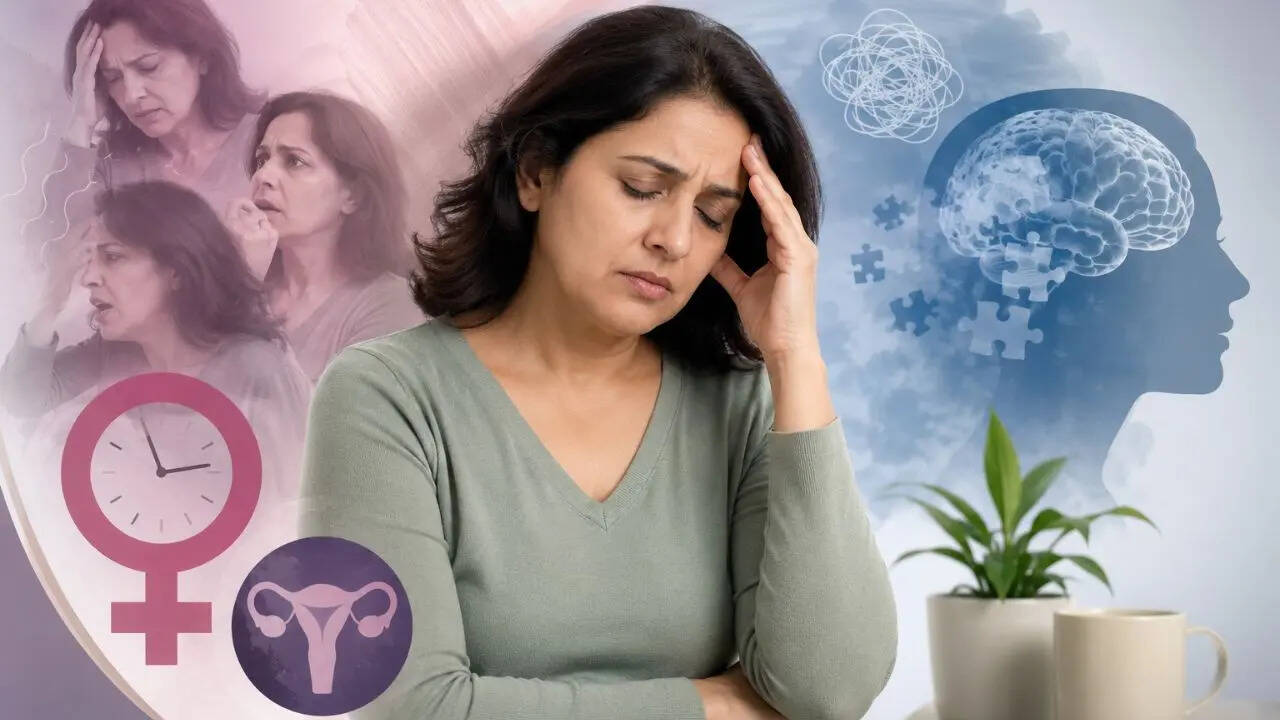
People think of menopause as just hot flashes and irregular periods, but menopause is more than that. Perimenopause and menopause can bring a host of emotional and cognitive shifts for many women, including mood swings, anxiety, easily irritated, trouble sleeping, or having what some refer to as “brain fog.”What Is Perimenopause?Perimenopause is the period leading up to menopause that can last anywhere from two to eight years. This is when hormonal changes take place, especially a drop in estrogen. These hormonal changes also impact neurotransmitters like serotonin and dopamine that are essential for mood, memory, sleep and emotional wellness. Consequently, a woman can suffer from forgetfulness, lack of concentration, mental tiredness, low energy levels, dry skin, loss of libido and less productivity.Brain Fog During Menopause Also read: Shamita Shetty’s Endometriosis Diagnosis Sparks Concerns About Risks Of Delayed DetectionBrain fog can be a frustrating and overwhelming experience during menopause, particularly if a woman is juggling her career, family, ageing parents and personal obligations. Many women suffer from anxiety symptoms, even if they have no mental health background. Hormonal changes, poor sleep and stress can exacerbate these symptoms. But not all symptoms are due to the menopause or "normal ageing". Thyroid disorders, vitamin deficiencies, depression and other medical problems can have similar symptoms. Therefore, if symptoms start to impact life, work, relationships or emotional wellbeing, it is important to seek medical advice and have a proper health check-up.How To Manage It? Perimenopause and menopause are not diseases. Even though they are a natural part of women's lives like puberty, they should not be made to suffer silently. Nowadays, there is great awareness, research and treatment to manage the situation better than before. Management is often comprehensive, and may involve lifestyle modifications. Regular exercise, balanced nutrition, stress management and healthy sleep patterns. In a few instances, you may additionally be suggested to take Menopausal Hormone Therapy (MHT). As more research is done and preparations of lower doses and greater safety, earlier misconceptions about hormone therapy are gradually decreasing. Medically, women can make a difference in their quality of lives and manage menopause with greater physical, mental and emotional wellness with early recognition and timely intervention.By Dr. Nidhi Sharma Chauhan, Gynaecologist, Saifee Hospital