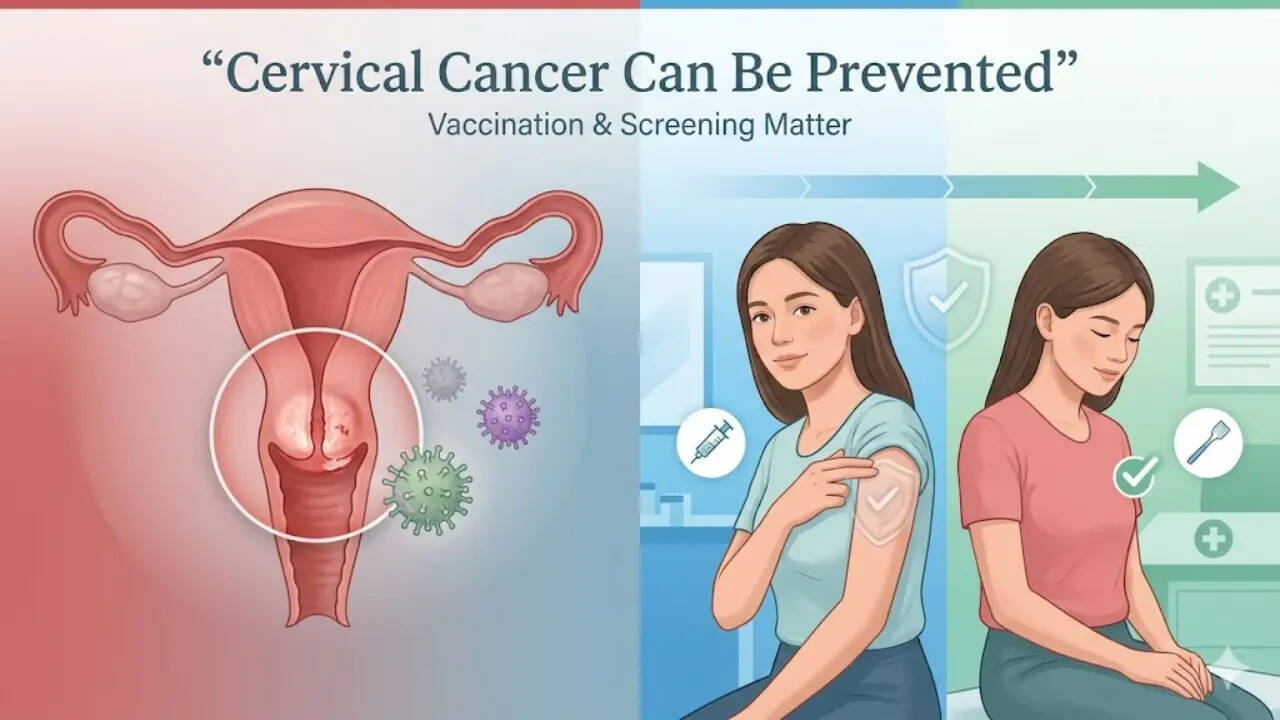
Cervical cancer is a slow-developing cancer that occurs in the lower part of the uterus. It is caused by a persistent HPV infection, which usually occurs in women in their prime. Some of the symptoms of cervical cancer include pelvic pain and abnormal bleeding. Experts say that timely detection through a Pap smear or prevention with an HPV vaccine can make a difference. However, according to a study published in The Lancet, high-income countries are on the right track to eliminate cervical cancer.What causes cervical cancer?The study published in The Lancet notes that high-income countries are on the right track towards cervical cancer prevention through vaccination and screening. By 2048, low- and middle-income countries will see only slight reductions over the next century. As a result, the gap between regions will likely widen dramatically. Experts have found that 99 per cent of cervical cancer cases are linked to infection with human papillomaviruses (HPV), a virus that is transmitted through sexual contact.Preventing cervical cancerCervical cancer, according to experts, can be prevented through the HPV vaccine and regular screenings. The elimination target set by the World Health Organization is fewer than four cases per one lakh women. Every country, as per the WHO, must meet the ‘90-70-90’ targets by 2030. This means 90 per cent HPV vaccine coverage among girls by the age of 15, 70 per cent of women screened between the ages of 35 and 45, and 90 per cent of women with pre-cancer and cancer treated. This would be considered being on track for cervical cancer elimination in the coming century.Researchers note that reaching the WHO targets for screening and vaccination, for HPV elimination, or for introducing universal vaccination with high coverage, is essential for the elimination of cervical cancer. This could help bridge global inequalities in disease management. Achieving the 90-70-90 goal can avert 37 million cancer cases by the next century, thereby accelerating progress in eliminating the disease. The model, however, suggests that most countries are unlikely to reach the target without increasing investments in this direction.The research modelResearchers proposed five HPV-centric prevention strategies. Under a status quo model, cervical cancer incidence could decline by 23 per cent, consequently leading to inequalities in disease management. Experts found that achieving 90 per cent vaccination coverage in low- and middle-income countries would reduce inequalities and help eliminate cancer. Research authors also noted that recent advancements, such as single-dose vaccines at a lower cost, could accelerate cervical cancer elimination worldwide.Global efforts from international agencies and governments are also important. A September 2022 study published in The Lancet Oncology found that a single-dose cervical cancer vaccine with lasting protection and 90 per cent coverage could prevent 78 per cent of cancer cases in India.