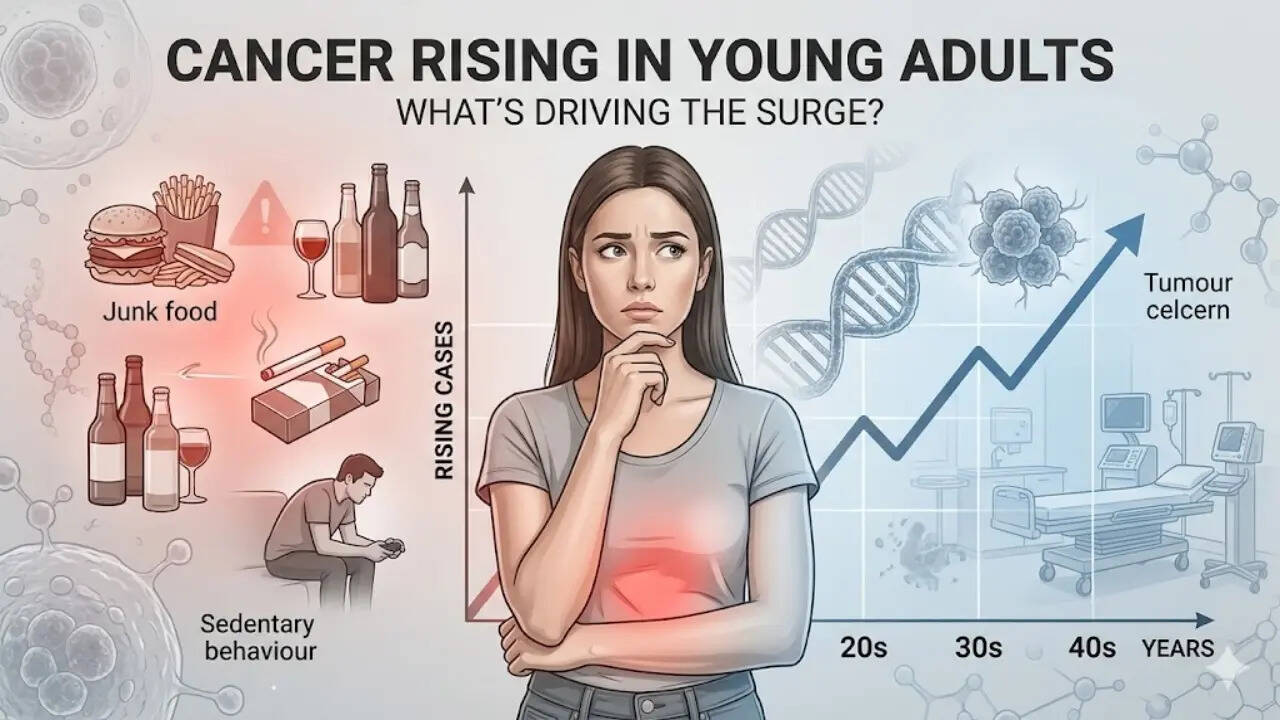
Eleven forms of cancer are becoming increasingly common among young people in England. Experts at the Institute of Cancer Research and Imperial College London stressed that cancer among younger people is still rare, and that everyone can reduce their risk by simply switching to a healthier lifestyle. However, why tumours have started to develop in people in their late teens, or in their 20s, 30s and 40s, remains unclear. The study further shows that the reasons behind rising cancer cases are elusive. However, this research does indicate a decade-long pattern of people becoming overweight.Why does one develop cancer?A team of scientists worked towards understanding why a person develops cancer. They examined national trends in lifestyle and cancer to identify patterns. Researchers found that cases of the following types of cancer were rising:LiverKidneyThyroidBowelMultiple myelomaWomb liningMouthOvarianBreastGallbladderPancreaticResearchers found that breast and bowel cancers are common among younger adults, with 11,500 cases in a year, while gallbladder and pancreatic cancers were much rarer. It was also noted that ovarian and bowel cancers were exclusively being reported in young people, whereas the other nine were increasing in adults as well. The study by the Institute of Cancer Research and Imperial College London also analysed behavioural patterns known to raise cancer risk.Researchers also found patterns related to alcohol intake, smoking levels, red and processed meat consumption, and diets low in fibre. These factors play a role in cancer development, but do not conclusively explain why cancer rates are increasing. Century-old tumour patterns, however, may explain why younger people are getting bowel cancer.How to check for bowel cancer risk?The report suggested that the only factors that align with an increased risk of cancer are obesity and being overweight, both of which have been on the rise since the 1990s. Extra fat tissue can alter hormones such as insulin, which can increase cancer risk. For instance, in the case of bowel cancer, for every 100 extra cases, 20 could be attributed to excess weight, while 80 remain unexplained. Researchers also note that it is important to prevent all cancers, not just the additional cases. It is estimated that nearly 40 per cent of cancers worldwide can be prevented through appropriate lifestyle choices, such as quitting smoking.How to reduce cancer risk?Quitting smoking and avoiding alcohol are among the simplest and most well-known ways of reducing cancer risk. However, experts say that other measures can also help. Maintaining a healthy body weight and staying physically active are simple ways to reduce cancer risk. Researchers also emphasise that while cancer rates are rising among younger people, the risk of tumours remains significantly higher in older age groups.Researchers found that one in 1,000 people aged 20, 30 and 40 are diagnosed with cancer every year, compared to one in 100 among older age groups aged 50, 60 and 70. The search for other risk factors continues. Inflammation, sweetened drinks, gut bacteria, and air pollution must be addressed in time to reduce cancer risk. It is also being investigated whether improvements in cancer detection are contributing to earlier diagnoses in younger individuals.The study’s findings are published in the BMJ Oncology.