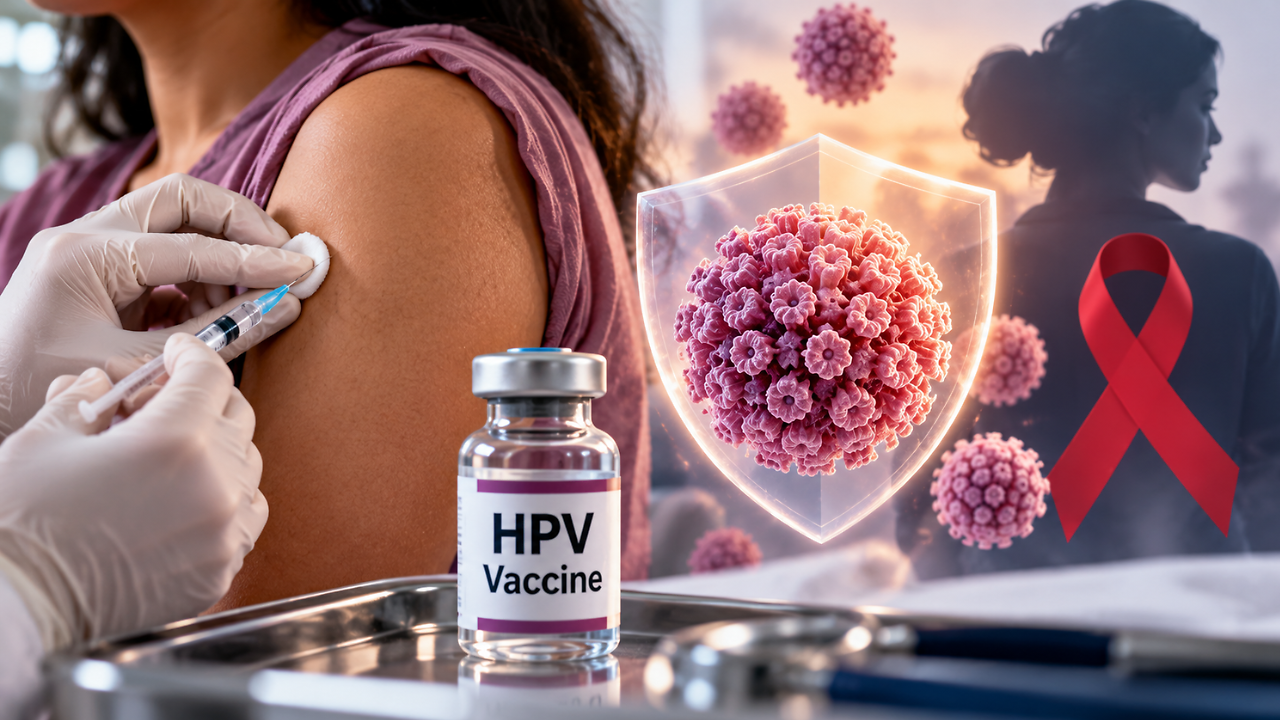
Women living with HIV are six times more likely to be infected with HPV. They are also twice as likely to die from invasive cervical cancer. Hence, a recent study published in The Lancet HIV has sparked hope after it found that HPV vaccine can provide long-term safety to women living with HIV. Emphasising on the importance of HPV vaccination among women in this sub-section, the study followed women with HIV for 9 years after they received HPV vaccine, becoming the longest study that analyses how this vaccine works in this population. Until now, researchers had limited evidence about how this vaccine's efficacy on women with HIV. About The HPV Vaccination Study On Women With HIV Also read: India-Made HPV Vaccine CERVAVAC Gets WHO Prequalification: Serum InstituteA team of researchers from the UBC Faculty of Medicine followed 293 Canadian women with HIV through 14 HIV and gynecological treatment clinics across the country. They found that the vaccine evoked a strong immune response that persisted for a long time. The rates of HPV infection and genital warts were very low among women who received all the three doses did not already have the strains of HPV targeted by the vaccine. Additionally, no participants developed serious precancerous changes to the cervix caused by those HPV strains. Maintaining an undetectable HIV viral load was also crucial for sustaining HPV antibody levels over time, according to the researchers. The finding highlighted the importance of continued access to appropriate HIV treatment and care. “We’ve known for some time that HPV vaccines are safe and highly effective, but we didn’t have long-term evidence to show how lasting that protection is for women living with HIV,” said first author Dr. Elisabeth McClymont, assistant professor in the UBC Faculty of Medicine’s department of obstetrics and gynaecology and department of pediatrics. “Our findings are incredibly reassuring. Even in a population whose immune systems can be affected by HIV, vaccination provided strong protection against HPV infection and cervical cancer for many years.” Worldwide HIV Burden In Women Also read: H. pylori, HPV Among Five Infections Behind 1 In 8 Cancers Worldwide: LancetThe findings have significant relevance globally as almost 20 million women and girls are living with HIV worldwide. It is also uneven as regions like sub-Saharan Africa face a heavier burden with limited access to cervical cancer screening and treatment. “Cervical cancer is preventable, yet it continues to take lives in Canada and around the world, particularly in places where HIV rates are higher and access to screening and prevention is limited,” said senior author Dr. Deborah Money, professor and head of the UBC Faculty of Medicine’s department of obstetrics and gynaecology. “We now have concrete evidence that HPV vaccination works very well for women living with HIV over the long term. Making this vaccine more accessible and acceptable for those who need it most can help us prevent unnecessary deaths and move closer to eliminating cervical cancer globally.” HPV & Cervical Cancer Most cervical cancer cases are caused by infection from oncogenic types of human papillomavirus (HPV). HPV is a common sexually transmitted infection which can affect the throat, skin, genitals, and anal region. Persistent HPV infection may lead to precancerous changes in the cervix, which if left untreated, is most likely to result in cervical cancer within a span of two decades. Women with HIV, with weakened immune systems, may develop cervical cancer within 5 to 10 years. According to the World Health Organisation, cervical cancer is the fifth most diagnosed cancer forms among women. In 2024, more than 600,000 cases and 280,000 deaths were reported. The health body emphasises on prevention through HPV vaccination and regular screening.