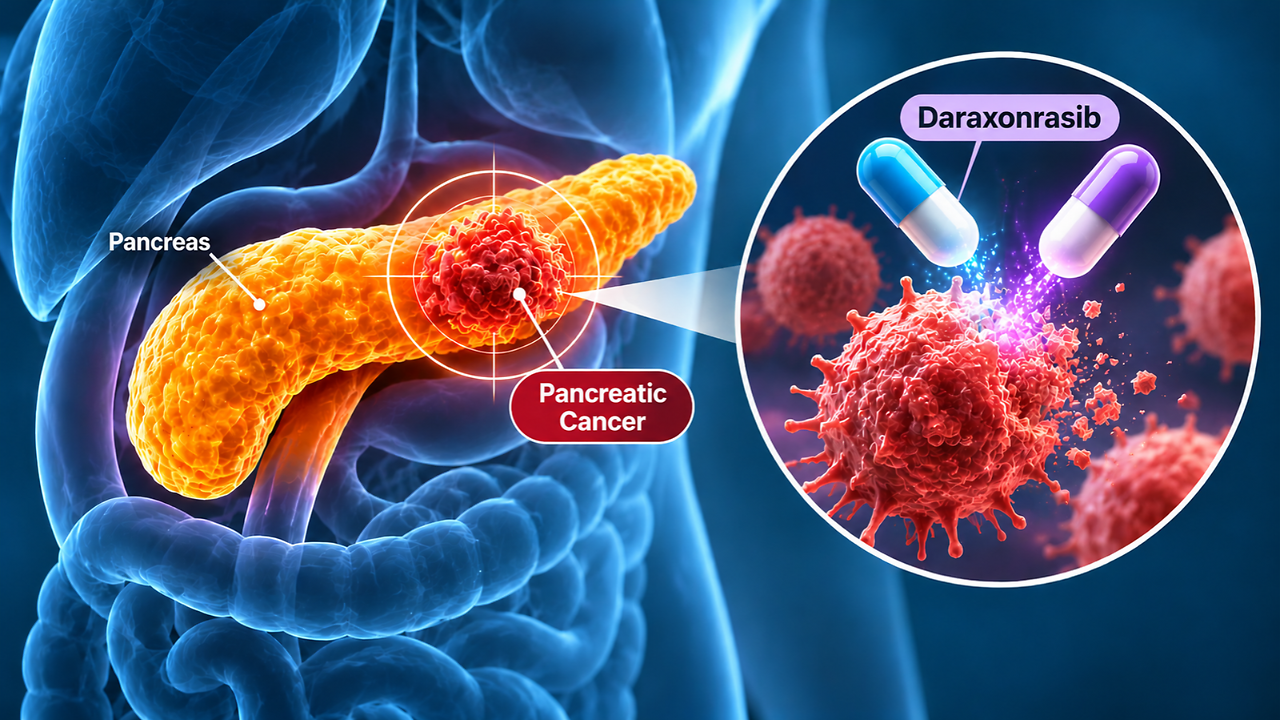
In what can be described as a major breakthrough, a new treatment combination has shown tremendous promise in advanced pancreatic cancer treatment. A recent early-stage clinical trial showed that the combo shrank tumours in more than 60% of patients and controlled disease progression in 90% of patients.The findings raise hope for pancreatic cancer, which is often diagnosed late as well as has limited treatment options. Despite positive outcomes, larger trials are needed to establish how much the treatment improves survival.More About The Pancreatic Cancer Treatment TrialAlso read: Experimental Vaccine For Blood Cancer Cuts Death Risk By 41% In Trial: How Does It Work?The combination includes daraxonrasib, an experimental targeted cancer drug, alongside two chemotherapy medicines, gemcitabine and nab-paclitaxel. The updated results from the Phase 1/2 RMC-GI-102 trial were presented at the EORTC-NCI-AACR Symposium on Molecular Targets and Cancer Therapeutics in Barcelona.The study involved 61 patients with metastatic pancreatic adenocarcinoma who had not previously received treatment for their metastatic disease. Participants received the combination and were followed for a median of 18.3 months.A 90.2% control in disease was reported, meaning the cancer either shrank or remained stable. The objective response rate, which measures tumours that shrank significantly or disappeared, was 60.7%. This included complete responses in 8.2% of patients, whose tumours were no longer detected.Median progression-free survival was 12.8 months, meaning patients lived a median of nearly 13 months without their cancer progressing or dying. The estimated proportion of patients alive at one year was 76.6%.Dr Wungki Park, a gastrointestinal medical oncologist at Memorial Sloan Kettering Cancer Center in New York, who presented the findings, said “this is the closest to cure”. He also said that he had never seen so many tumours disappear in patients whose cancer had spread.He also said, “We are beginning to see not only a higher percentage of tumour response rates, but also deeper responses and a near doubling in the duration of disease control, which may eventually translate into longer survival."He added, “The median follow-up is 18 months. Just imagine, in an average of 18 months your disease just disappears on the CT scan … that’s closest to complete remission … it’s incredible.”How Does The New Drug Combination Work?Also read: Daraxonrasib: Europe Approves First RAS-Targeted Drug For Metastatic Pancreatic CancerDaraxonrasib, also known as RASONQUE, targets RAS, which drives cell growth. Mutations in RAS, especially KRAS, can keep these growth signals on, allowing pancreatic cancer cells to multiply uncontrollably.The drug is designed to inhibit active RAS proteins and disrupt the signals that cancer cells depend on for growth and survival. Researchers are combining it with chemotherapy to attack the cancer through different mechanisms.Gemcitabine interferes with cancer cell DNA synthesis, while nab-paclitaxel disrupts microtubules, structures essential for cell division. Combining these drugs with targeted RAS inhibition could produce more sustained responses.A Major Breakthrough Also read: Health Canada Warns Against Faulty Radon Detectors: How The Invisible Gas In Your Home May Cause Lung CancerPancreatic cancer remains one of the most difficult cancers to treat once it has spread beyond the pancreas. Many patients are diagnosed at an advanced stage, when surgery may no longer be possible.The RAS signalling mechanism has long been considered a challenging target for cancer treatment. The development of drugs capable of fighting this has therefore opened a new avenue of research, especially pancreatic cancers driven by RAS mutations.The trial's response rates and duration of disease control are encouraging. However, it was a small, open-label study without a chemotherapy comparison group. Researchers cannot determine yet how much of the benefit came from daraxonrasib rather than chemotherapy or whether the combination will significantly extend survival. Daraxonrasib is being investigated in larger clinical trials to determine its effectiveness and safety. A Phase 3 trial, RASolute 303, is comparing daraxonrasib alone, daraxonrasib combined with gemcitabine and nab-paclitaxel, and chemotherapy alone in patients with previously untreated metastatic pancreatic cancer.These results will help establish whether the promising early findings translate into a meaningful improvement in survival and whether the combination could become a new treatment option.