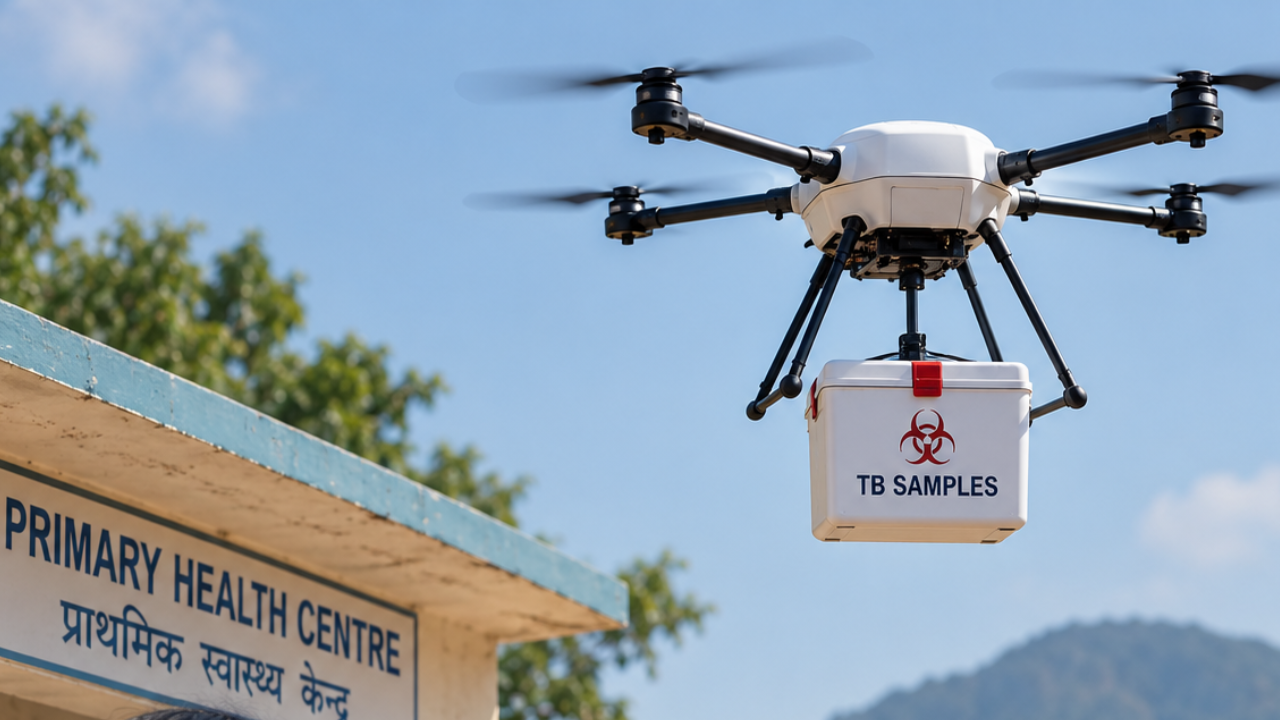
In a breakthrough that could transform tuberculosis treatment (TB) in rural India, researchers from the Indian Council of Medical Research (ICMR) have demonstrated that drones can dramatically speed up the transport of TB samples, helping patients receive a diagnosis faster and significantly reducing the cost of treatment. ICMR Uses Drones To Transport Patient Samples Published recently in the International Journal of Tuberculosis and Lung Disease Open, the ICMR’s i-DRONE initiative is a pilot project conducted in Telangana’s Yadadri-Bhuvanagiri district. The study is based on whether drones could transport sputum samples from remote health centres to TB diagnostic laboratories more efficiently than conventional road transport. Researchers found that the turnaround time for TB diagnosis fell drastically from 15 days to just five days after drones were used to transport patients' sputum. The average time taken for diagnosis also dropped from 16.6 days to 6.9 days, helping patients seek TB treatment and care much earlier, which is a crucial factor in preventing disease progression and containing transmission. ICMR also achieved a significant reduction in patients’ expenses. According to the study, the average out-of-pocket expenditure fell from Rs 9,451 to just Rs 90.90. The savings came primarily from eliminating repeated trips to distant diagnostic centres, reducing travel costs, wage losses, and other indirect expenses that often discourage people from seeking timely care. The savings in patients’ costs primarily came from avoiding multiple trips to the diagnostic centres, wage losses, low travel costs, and other indirect expenses that often discourage patients from seeking timely care.Also read: What Was The Pseudo-Tuberculosis Like 'Syndrome K' Saved Thousand Lives During World War II?How Was The Study Conducted? The year-long study is based on 840 patients, including 206 before the drone programme and 634 after its implementation. Instead of relying on road transport, healthcare workers collected sputum samples at the health facilities located in villages.Drones then flew the samples directly to district TB laboratories, avoiding delays due to poor roads, difficult terrain, and limited public transport availability. “The intervention demonstrated a significant reduction in the turnaround time and improved access to TB diagnosis in rural and remote Indian settings,” the researchers wrote. The study also found that the speed of reporting improved substantially. Before drones were used, more than 90% of patients waited longer than two days to receive their test results. After the intervention, most patients received their reports within a day, allowing TB treatment to begin much sooner.Bridging The Gap In Accessibility Apart from faster diagnosis and low costs, researchers believe this technology could help overcome one of the biggest barriers to TB care - accessibility. In several remote regions, patients often delay getting tested as travelling to district and city hospitals means losing a day’s wages, paying for transport, or arranging a family member to accompany them. Drone transport takes away a significant part of that burden from patients. Healthcare workers who were interviewed during the project were also optimistic about using drone services and technology for other diseases beyond tuberculosis. According to a companion feasibility study, many believed the same network and technology could eventually help transport blood samples, vaccines, medicines, and diagnostic specimens for other time-sensitive diseases.