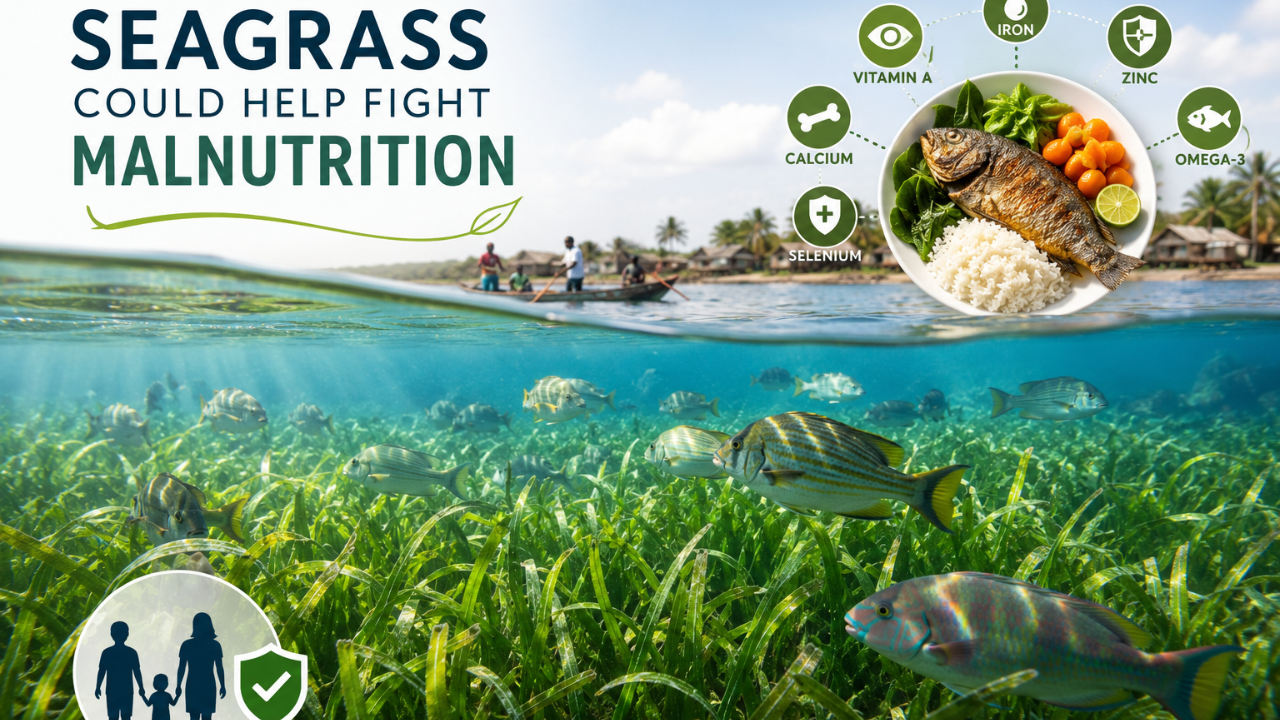
The vast underwater meadows of seagrass beneath the surface of the ocean may help fight one of the world's biggest public health challenges - malnutrition. A new study published in Cell Reports Sustainability has found that fish living in seagrass ecosystems are significantly richer in essential nutrients than those found on nearby coral reefs. It highlighted the critical role these habitats could play in improving nutrition for millions of people living in coastal regions. How Was The Study Conducted? Researchers from Stockholm University and Project Seagrass examined fish communities across 20 seagrass meadows and 20 coral reefs along a 3,000-kilometre stretch of the East African coastline, spanning Kenya to Mozambique. These regions are home to communities that depend heavily on fishing for food and income, while also facing persistent challenges related to poverty and undernutrition. Rather than focusing on individual nutrients, scientists evaluated fish as complete food sources. They measured six nutrients that are vital for human health - calcium, iron, zinc, selenium, vitamin A, and omega-3 fatty acids.Also read: Eating Toxin-Tainted Seafood May Pose Serious Health Risks: Study What Did The Study Find? The findings showed that fish communities living in the seagrass meadows were 1.6 times more nutritionally dense than those living around nearby coral reefs. Dr. Benjamin Jones, Chief Conservation Officer at Project Seagrass and lead author of the study said, “Fish don't nourish people one nutrient at a time. They come as a package. A single fish contains iron, zinc, calcium, selenium, vitamin A, and omega-3s. We wanted to understand which habitats produce fish with the best mix of these nutrients.” The nutritional advantage became even more striking when researchers focused on the fish species most consumed by local communities. For the three key food fish species studied, seagrass meadows provided more than eight times greater nutritional support than coral reefs. Species like rabbitfish and parrotfish, which are widely eaten in East Africa, were found to thrive in these underwater grasslands. The findings challenge the traditional emphasis on coral reefs as the primary marine habitats supporting food security. While coral reefs remain biodiversity hotspots, the researchers argue that seagrass ecosystems deserve equal recognition for their contribution to human nutrition and sustainable fisheries. Environmental Benefits Beyond nutrition, seagrass meadows provide many environmental benefits. They act as nurseries for commercially important fish, stabilize coastlines, filter pollutants, improve water quality and store vast amounts of “blue carbon”, fighting climate change. Despite covering just 0.1% of the ocean floor, they store up to 18% of the ocean's carbon and support more than one-fifth of the world's largest fisheries. However, these ecosystems are disappearing at an alarming rate due to coastal development, pollution, fishing industries and climate change. Scientists warn that protecting the seagrass meadows is essential not only for marine biodiversity but also for safeguarding food security and public health. The researchers stated, “If we want healthy oceans that feed healthy people, we need to protect the habitats that make this possible.”