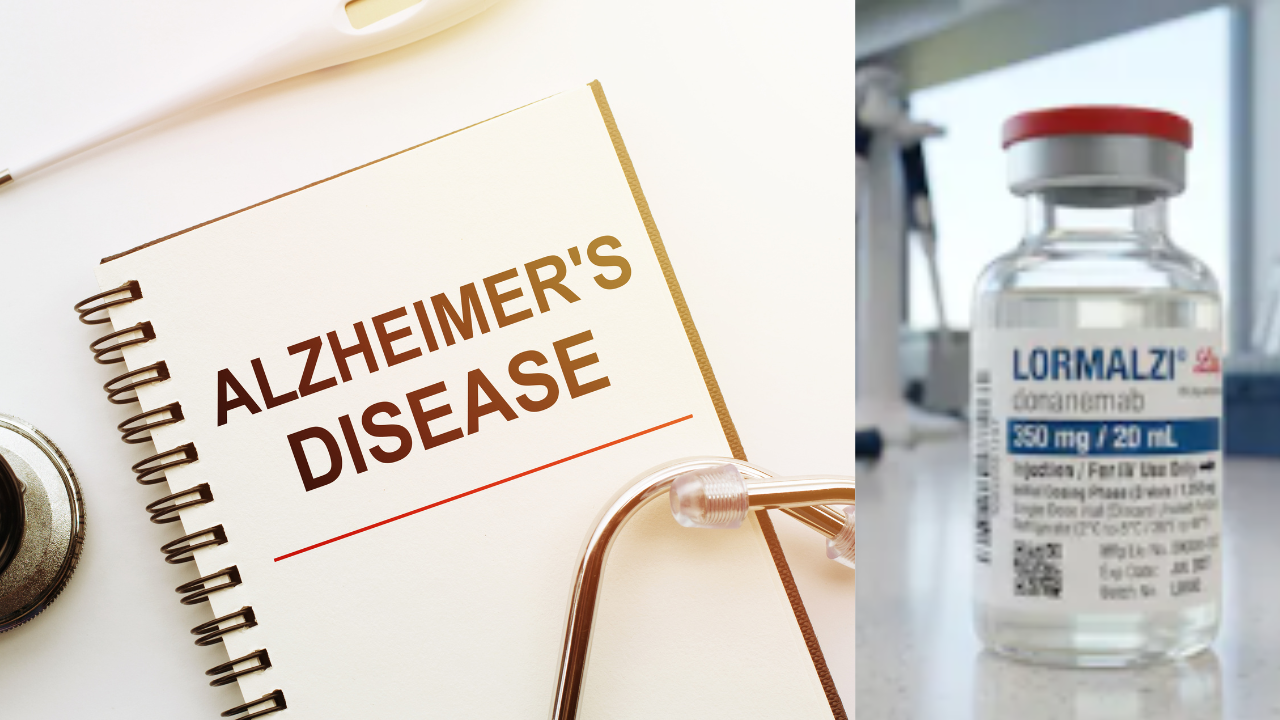
Eli Lilly has launched Lormalzi, the Indian version of the US FDA-approved donanemab, for the early treatment of Alzheimer’s disease in the country. The drug can also be used for people with mild cognitive impairment and mild dementia.Dementia affects around 8.8 million people in India, and Alzheimer’s accounts for the majority of cases. The number is expected to nearly double by 2036.The once-monthly therapy, administered as an intravenous infusion, targets amyloid plaques in the brain and may help slow disease progression in selected patients with mild cognitive impairment or early dementia.“For 35 years, Lilly has been a global pioneer advancing research of therapies and diagnostics for people with Alzheimer’s disease,” said Winselow Tucker, President and General Manager of Eli Lilly India. He added that Alzheimer’s imposes a major emotional and economic burden on patients, caregivers, and healthcare systems.What Is Lormalzi?Lormalzi is a monoclonal antibody therapy designed to target amyloid-beta plaques in the brain — one of the hallmark features associated with Alzheimer’s disease.The drug works by helping the immune system remove these abnormal protein deposits, which are believed to contribute to memory loss and cognitive decline.The FDA approved the therapy in 2024 under the brand name Kisunla. Globally, Kisunla is sold in countries including the US, Japan, and parts of Europe.Lormalzi: Who Can Get The Treatment?Donanemab is best suited for people with:Early symptomatic Alzheimer’s diseaseMild cognitive impairment (MCI) due to Alzheimer’sMild Alzheimer’s dementiaAmyloid-positive patients (confirmed by amyloid PET/CSF or blood biomarkers)It is not meant for those who have already progressed to advanced stages.Moreover, while the drug can dissolve the build-up of amyloid-beta protein in the brain, it cannot reverse the damage that has already occurred.Lormalzi: How Much Does It Cost In India?Eli Lilly has priced Lormalzi at Rs 91,688 for a 350 mg vial in India. Reports suggest the treatment duration may extend up to 18 months, potentially making it expensive for many patients.Lormalzi’s Safety And Efficacy: Are There Any Side Effects?Clinical trial data from Eli Lilly’s Phase 3 TRAILBLAZER-ALZ 2 study showed that donanemab slowed cognitive and functional decline.The study, involving 1,736 patients — 860 of whom received the infusion every four weeks until amyloid clumps cleared — found that donanemab slowed cognitive decline in early Alzheimer’s patients by 35.1 per cent over 76 weeks.However, the drug is known to cause amyloid-related imaging abnormalities (ARIA), including swelling or bleeding in the brain, most of which are asymptomatic. The study showed that 24 per cent of participants experienced ARIA involving brain swelling, while 19.7 per cent experienced brain bleeds. Three treatment-related deaths were also reported.Symptoms may include headache, confusion, visual disturbances, and, in rare cases, seizures. Hence, MRI monitoring is essential during treatment.Notably, the risk may be higher in people with APOE ε4 carriers and patients on blood thinners, Dr. Sudhir Kumar, neurologist at Apollo Hospitals, Hyderabad, shared in a post on social media platform X.Lecanemab vs LormalziLeqembi (lecanemab) is not yet formally registered or widely marketed for general sale in India. While it is on track for introduction in the country, the Alzheimer’s therapy can reportedly be accessed through specialised import channels (Named Patient Supply) with a valid prescription.Lecanemab is a disease-modifying therapy for early Alzheimer’s disease, administered via intravenous infusion every two weeks to slow cognitive decline.In contrast, donanemab is administered once every four weeks.Additionally, treatment with donanemab can be halted after a certain level of amyloid protein clearance is achieved, with patients in the study switching to placebo thereafter.“In the absence of amyloid PET imaging, which is currently not available in India, the evidence-based approach is to treat patients with donanemab for 18 months,” the company said.How Does The Treatment Work?“Donanemab is a newer anti-amyloid antibody designed to slow progression of Alzheimer’s disease by clearing amyloid plaques from the brain,” Dr. Sudhir said.He noted that “donanemab represents an important scientific advance because it targets underlying Alzheimer pathology rather than only symptoms”.According to an Eli Lilly spokesperson, treatment in India is expected to continue for 18 months (76 weeks) in most patients because amyloid PET imaging, often used internationally to assess plaque clearance, is not yet widely available in India.Treatment may be stopped earlier if:Serious safety concerns developPatients experience adverse effectsThe disease progresses to moderate Alzheimer’s diseaseLormalzi: Is It A Cure For Alzheimer’s?Dr. Sudhir stated that “not all dementia patients benefit”. He added that Lormalzi “is not a cure; it does not reverse established dementia”.“The benefit is modest, but clinically meaningful in selected patients.” He also stressed the need for carefully selecting patients for the therapy.“Lifestyle measures, cognitive engagement, vascular risk control, sleep, hearing correction, and caregiver support remain extremely important,” Dr. Sudhir said, adding that “Alzheimer’s care is still much more than a single drug”.