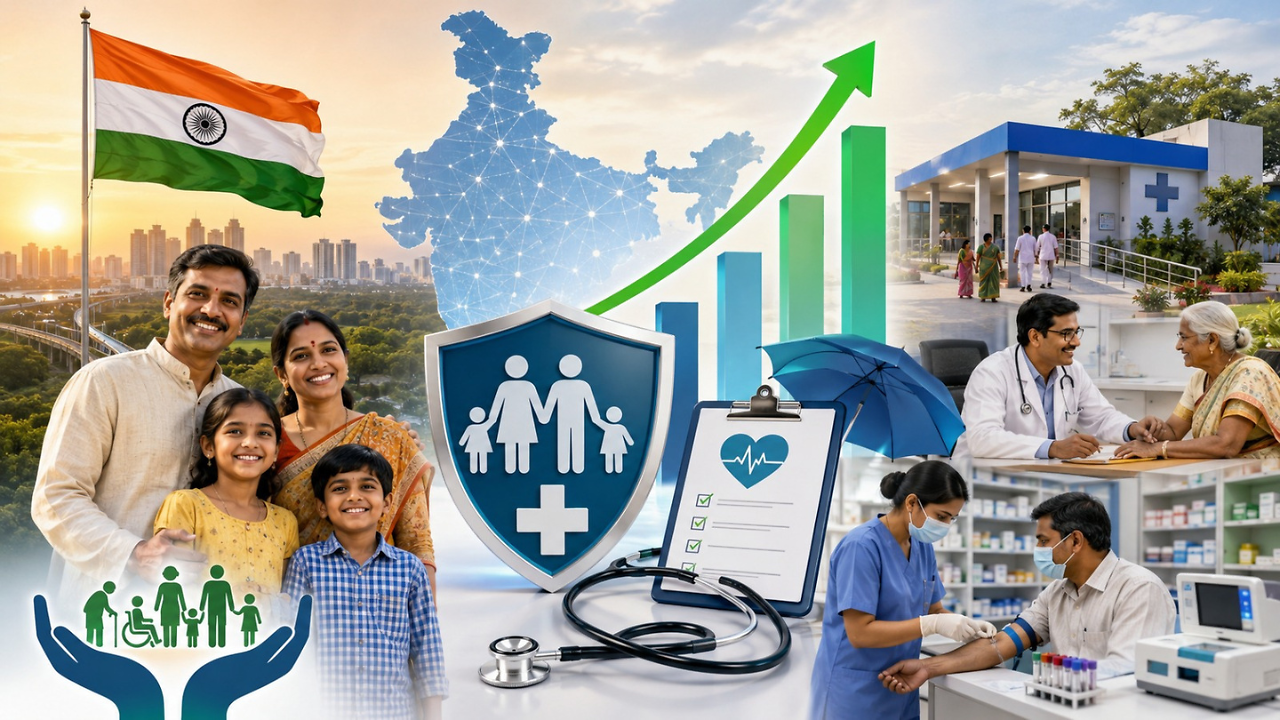
India’s social security expenditure on health nearly doubled as a share of Total Health Expenditure, rising from 6% in 2013–14 to 11% in 2023–24, according to the Union Health Ministry. The spending, estimated to have crossed Rs 1 lakh crore, aims to protect individuals and families against the financial risks associated with medical treatment. This growth has been led by whopping contributions of the government's flagship health insurance schemes such as Ayushman Bharat – Pradhan Mantri Jan Arogya Yojana (AB PM-JAY), state-specific health insurance schemes, social health insurance and medical expenditure for government employees. Private health insurance expenditure also increased, rising from 3.4% of Total Health Expenditure in 2013-14 to 10.2% in 2023-24. Government Health Expenditure Triples In A Decade According to the National Health Accounts (NHA) Estimates for India 2023-24, released by the Ministry of Health and Family Welfare, India’s government health expenditure nearly tripled over the past decade, increasing from Rs 1,29,778 crore in 2013-14 to Rs 4,14,196 crore in 2023-24. The government’s share of Total Health Expenditure (THE) increased by 14.9 percentage points over the decade, representing a rise of nearly 52%. The report also highlighted an increase in per-capita government health expenditure and a decline in households’ out-of-pocket spending on healthcare. “A healthier India. Lower financial burden. Stronger healthcare for all!” Union Health Minister JP Nadda said in a post on X while sharing the data. "The National Health Accounts 2023–24 tell a powerful story of India’s healthcare transformation over the last decade," he added. Per-Capita Government Health Spending Rises 184% In A Decade Per-capita government health expenditure increased by 184% over the decade, nearly tripling from Rs 1,042 in 2013-14 to Rs 2,959 in 2023-24. Spending crossed Rs 2,000 in 2019-20, reaching Rs 2,014, and rose further to Rs 2,328 in 2020-21. The highest per-capita expenditure was recorded in 2021-22 at Rs 3,169, driven by emergency COVID-19 spending. It subsequently declined by 12.1% to Rs 2,786 in 2022-23 before increasing by 6.2% to Rs 2,959 in 2023-24. The year-on-year growth rate peaked at 36.1% in 2021-22. Among the years that recorded an increase, the lowest growth was 6.2% in 2023-24. “These are not just numbers. They reflect a decade of sustained efforts to make quality healthcare more affordable,” Nadda said. He attributed the progress to initiatives such as Ayushman Bharat and Ayushman Arogya Mandirs under Prime Minister Narendra Modi. He also highlighted expanded access to free medicines and diagnostics as part of efforts to strengthen healthcare delivery. "Our commitment is simple: No family should have to choose between its health and its financial well-being. A Swasth Bharat is the foundation of a Viksit Bharat!" Nadda said. Public Investment In Primary Healthcare Triples Public investment in primary healthcare also nearly tripled over the decade, rising from Rs 50,010 crore in 2013-14 to Rs 1,52,771 crore in 2023-24, according to the NHA estimates. Out-Of-Pocket Health Expenditure Falls The share of out-of-pocket expenditure (OOPE) in Total Health Expenditure declined from 64.2% in 2013-14 to 42.7% in 2023-24, a drop of 21.5 percentage points. This indicates that households are paying a smaller share of overall healthcare costs directly, while other financing sources, including government spending and health insurance, account for a larger share. Government Initiatives Expanding Access To Affordable Healthcare The Ministry also highlighted several initiatives aimed at improving access to affordable healthcare across the country. These include: Free Drugs and Diagnostics Initiatives Pradhan Mantri National Dialysis Programme Pradhan Mantri Bhartiya Janaushadhi Pariyojana Affordable Medicines and Reliable Implants for Treatment (AMRIT) pharmacies.