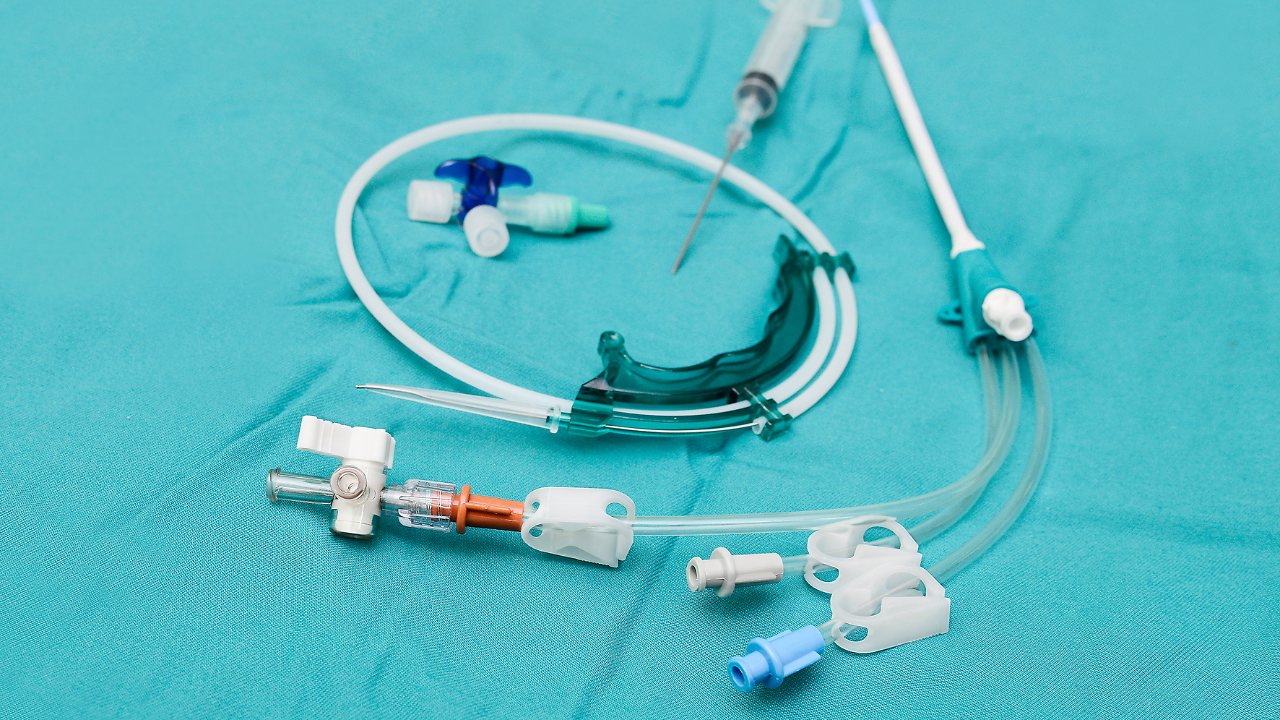
India’s medical industry has backed Maharashtra Food and Drugs Administration (FDA) Commissioner Tukaram Mundhe’s concerns about the sharp gap between procurement prices and maximum retail prices (MRPs) of several medical devices and hospital consumables, with patients ultimately bearing the burden.IV Set: At Rs 11.05, MRP Rs 325In a post on social media platform X, Mundhe said the most expensive part of a hospital bill may never touch the hospital, but patients bear the brunt as they have the least information to evaluate, compare prices, or seek alternatives.This is because “a patient admitted for care has no way of knowing whether the price on a medical consumable reflects its actual cost or a markup fixed long before it ever reached the ward," said the IAS officer, who has previously led several food safety enforcement measures in the country. He flagged the information gap as a core public health issue.He shared how a survey of hospital consumables in Maharashtra found an IV infusion set with a trade price of Rs 11.05 carrying a printed MRP of Rs 325, a markup of 2,841%. A syringe procured at Rs 6.75 carried an MRP of Rs 57.20, while a catheter procured at Rs 29.41 carried an MRP of Rs 310.He noted that “the MRP is often fixed upstream by manufacturers and distributors, disconnected from the trade price by a wide, unexplained margin. The result is a system where the party bearing the cost has the least information to evaluate it”.Also read: High Sugar, Salt Or Fat? India May Mandate Red Hexagon Labels On Food Packs Experts Call For Scientific Costing“Piecemeal assessment of pricing will not serve any purpose. Hospitals get reimbursed under CGHS and PMJAY for procedures at below operating cost. We do not look at that. It is time that we carry out a scientific costing exercise on delivery of healthcare,” Dr Girdhar Gyani, AHPI Director, told HealthandMe.“Patients deserve fair prices, not 2,800% markups, and ethical manufacturers deserve a level playing field and a fair opportunity to provide affordable, fair-priced medical devices,” added Rajiv Nath, Forum Coordinator, Association of Indian Medical Device Industry (AiMeD).Maharashtra FDA Flags Regulatory Gap Mundhe also flagged the structural regulatory gap. He noted that “scheduled medicines are capped under the Drugs (Prices Control) Order, 2013. Most medical devices and consumables are not leaving both the pricing and the information around it almost entirely unmonitored”.He called on the Department of Pharmaceuticals and the NPPA to “review” these findings and lay down “clear guidelines on the permissible gap between trade procurement price and declared MRP”.“It's a step toward closing not just a pricing gap, but the information gap patients are left to bear alone”.Industry Seeks Fair Pricing PolicyWelcoming the timely intervention by Mundhe, AiMeD said it has consistently cautioned that the current regulatory framework under the Drugs (Prices Control) Order, 2013 is inadequate for medical devices.“Patients, who cannot bargain or choose devices, are left vulnerable to inflated MRPs, while ethical manufacturers and importers are forced to either play within a distorted system or exit the market. This situation penalises both consumers and responsible suppliers, eroding trust and competitiveness”, it said.AiMeD has long advocated for a Fair Pricing Policy tailored to medical devices, with transparent trade-margin caps based on ex-factory or landed import prices. Such a system would ensure affordability for patients, encourage ethical competition and strengthen the “Make in India” vision.