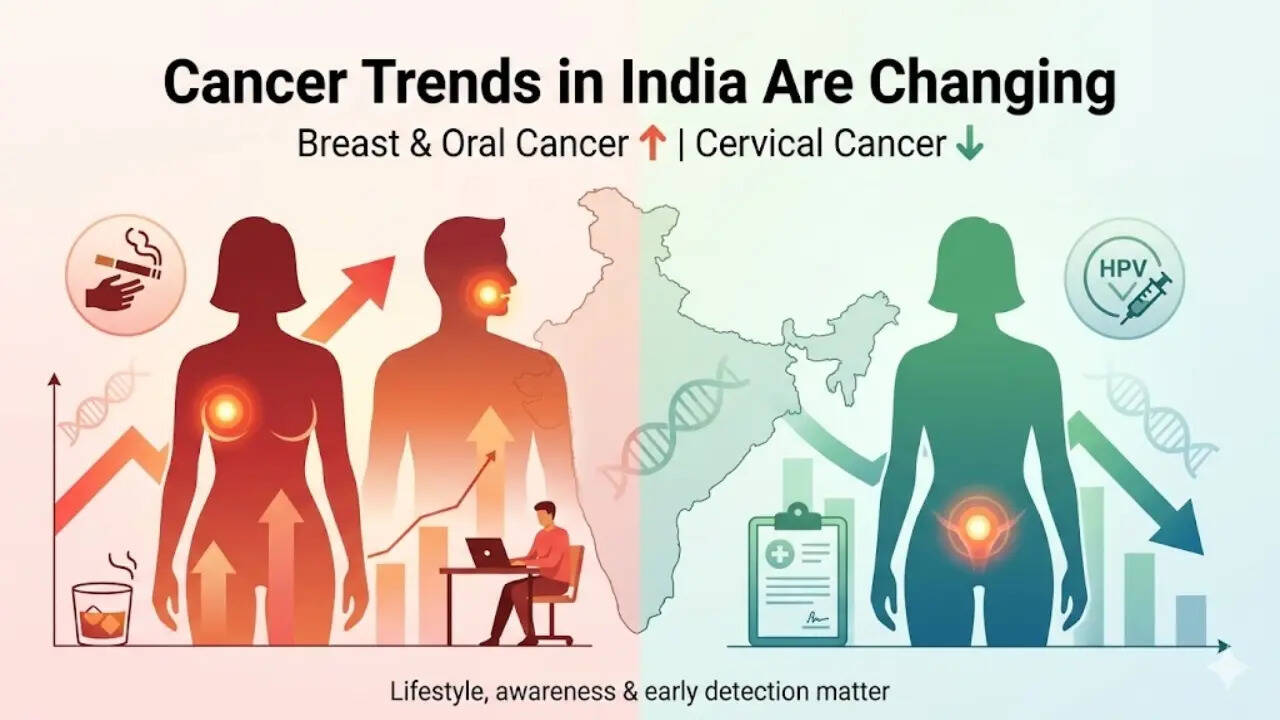
A new analysis by researchers at the Indian Council of Medical Research (ICMR) points to a mixed picture when it comes to cancer trends in India. While cases of breast cancer and oral cancer in men have been steadily rising over the years, cervical cancer has seen a sharp decline—one of the few clear positives in the data.Cancer pattern in IndiaThe study, published in the Journal of Public Health, looked at patterns across G20 countries over roughly two decades. Researchers used a method that helps separate the effects of ageing from broader social and behavioural changes. In simple terms, it allowed them to see whether cancer risk itself is increasing, or if higher numbers are just a result of people living longer.For India, the rise in certain cancers is difficult to ignore. Breast cancer cases have been increasing by around 1.8 per cent each year, while oral cancer in men has gone up by about 1.2 per cent annually. These trends stand in contrast to several high-income countries, where rates have either slowed or, in some cases, begun to fall.Why are breast cancer cases on the rise?The reason why breast cancer cases are surging in India is not surprising - with the shift in lifestyle choices, it is almost a no-brainer. Rising obesity, sedentary lifestyle, smoking and alcohol use are some of the key contributors. Reproductive patterns, too, have changed - women are planning pregnancies later, breastfeeding for short duration and also experiencing early onset of periods. While these factors may appear insignificant individually, they collectively play a huge role in the long run. Oral cancer in IndiaOral cancer tells a different story—one that is closely tied to India’s long-standing tobacco habits. The use of smokeless tobacco and betel quid continues to be widespread, particularly among men. Alcohol adds to the risk. What makes the situation worse is that many cases are picked up late, often when the disease is already advanced. The data also shows a clear age pattern: men and women have similar rates until about 40, after which the numbers for men rise sharply.If there is one area where India has made real progress, it is cervical cancer. The study found that incidence has been dropping by over 4 per cent each year, one of the steepest declines among the countries analysed. Experts attribute this to better awareness, improved hygiene, and gradual improvements in reproductive health services over time.This decline offers a useful lesson. It shows that sustained public health efforts can make a difference. The recent rollout of HPV vaccination for adolescent girls could push these numbers down even further in the coming years.Cancer diagnosis and treatment pattern in IndiaThe ICMR report also highlights a big concern - in developed countries, cancer risk decreases with the new generation because of improved diagnosis and treatment infrastructure. However, in India, the pattern is not evident enough - risk appears high across age groups, but the diagnosis and treatment bit is not well taken care of. Lack of mortality data in India is a key concern, which makes it hard to assess how the rising numbers translate to heightened death risk. The trend is still strong enough to require immediate intervention. Can India's rising cancer burden be curbed?Researchers say the response cannot be one-dimensional. Expanding access to screening, especially for breast cancer, is crucial. Tobacco and alcohol control policies need to be enforced more effectively to tackle oral cancer. At the same time, the gains seen in cervical cancer underline the importance of vaccination and organised screening programmes.