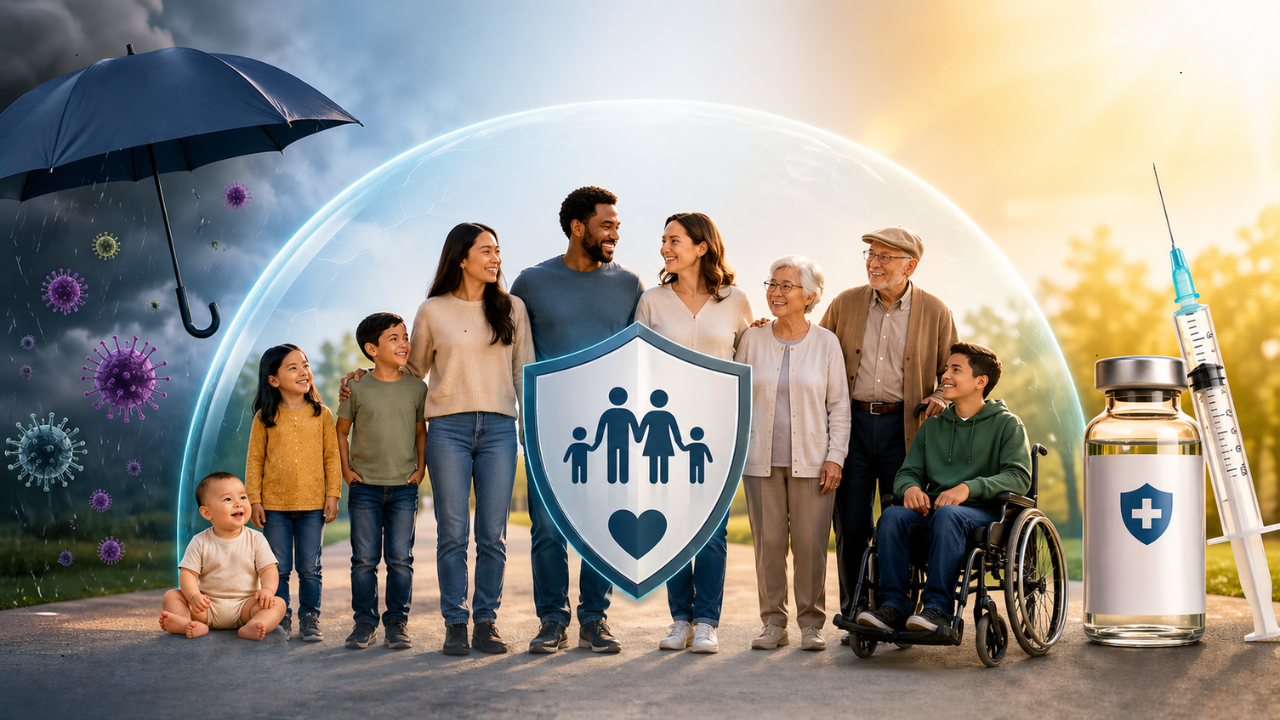
Vaccines are like insurance; they’re important for health as well as safe to take, said Dr NK Arora, the former Chairperson and currently a member of the National Technical Advisory Group on Immunization, NTAGI. NTAGI is the highest advisory body on immunization in the country, which consists of independent experts who provide recommendations on vaccines after reviewing data on disease burden, efficacy, and cost-effectiveness of vaccines. As part of the ongoing World Immunization Week, Dr. Arora, the Executive Director of The INCLEN Trust International, spoke in an exclusive interview with HealthandMe on the importance of vaccines.Comparing vaccines to insurance, Dr Arora highlighted the importance of immunization for both the young and the elderly. He emphasized that vaccines provide preventive protection against serious diseases, much like insurance offers financial security before a crisis occurs. He also underlined that timely immunization across all age groups is essential to reduce disease burden, prevent outbreaks, and ensure long-term public health safety.“What I will say is that vaccination is like insurance. This is insurance for our health. And so it ensures the health of our children, ensures the health of our women, and pregnant women. It will ensure the health of our adolescents where the vaccination is going on,” said the expert. The expert also urged people not to waste their time with anti-vaccine rumors and noted that vaccines, approved and given in the public health system, are safe and free of cost. These are initiated only after rigorous trials. “Please do not hesitate to take the vaccine,” he said, adding that “vaccines are developed after extensive studies, both before it is first used in human beings and then again in human beings. And safety is something of paramount importance”. He said people must get a vaccine, not when sick, but when we are in good health, and importantly urged the need to dispel myths around vaccines.“I would like to assure all my readers that all the vaccines which are approved and given in the public health system are safe. Occasionally, you will hear some misinformation, some rumor, and this needs to be dispelled. If you are not very sure, please contact your physician, the nearest physician who looks after you and your family, and get clarifications from them. Rather than putting your weight on social media news and hearsay from neighbors and others, please get it. But I again assure you that all the vaccines available in India today are very safe”. World Immunization WeekWorld Immunization Week is observed every year from April 24 to 30. The theme for 2026 is ‘For Every Generation, Vaccines Work.’ According to the WHO, vaccines have saved more than 150 million lives over the past 50 years."That’s 6 lives every minute, every day, for more than 5 decades," the WHO said.Currently, more than 30 life-threatening diseases and infections are prevented by vaccines.However, 20 million children missed at least one vaccine dose in 2024, leaving far too many at risk of preventable disease.Vaccination in India: Progress with GapsIn India, vaccines have played a significant role in improving public health. The country's immunization campaigns have been key to eradicating polio and smallpox. It has also eliminated yaws and maternal and neonatal tetanus in India. In addition, child mortality rates, measles-rubella, and tuberculosis have also been considerably reduced.As per an official government statement, full immunization coverage has risen from 62 per cent in 2015 to 98.4 per cent in January 2026.The percentage of zero-dose children to the total population has declined from 0.11 per cent in 2023 to 0.06 per cent in 2024.However, gaps remain in child vaccination. These include:Only 76.4 per cent of children (12–23 months) are fully vaccinated (NFHS-5)India accounts for 6.4 per cent of global zero-dose children and 49.2 per cent in South Asia.In 2024, 909,000 children remained unvaccinated, while 454,000 were partially vaccinated.