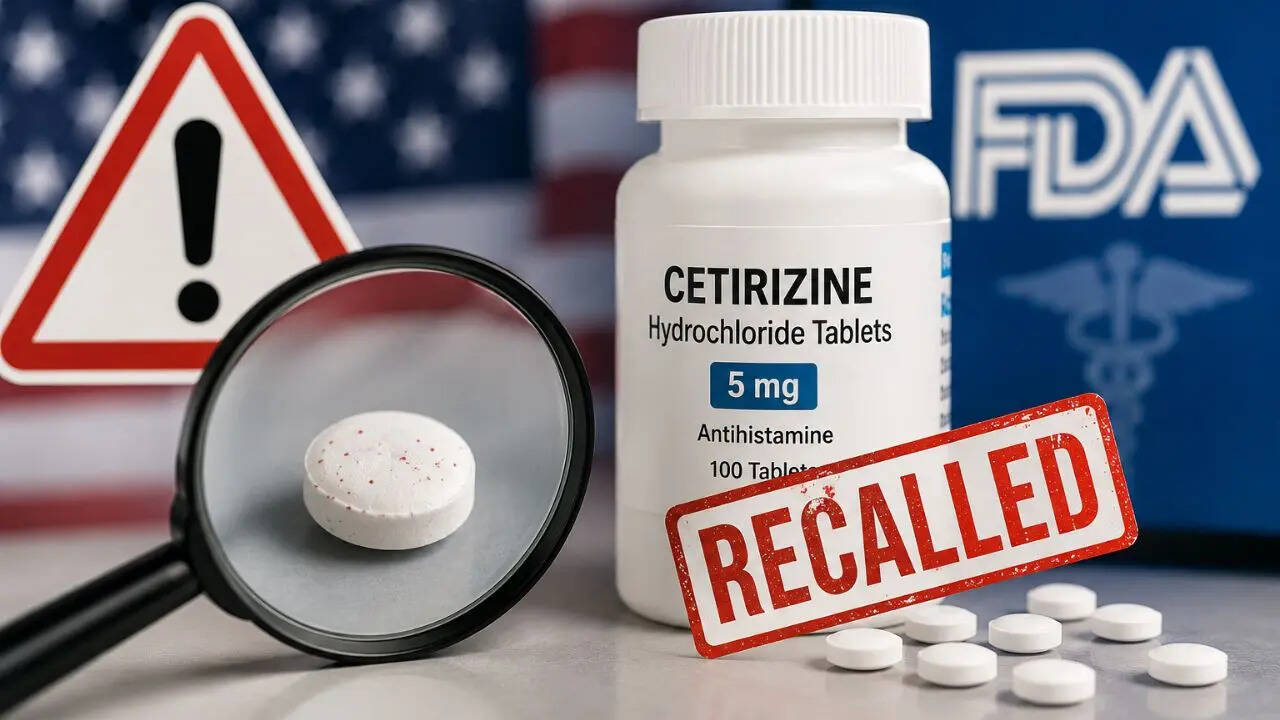
Millions of Americans rely on cetirizine, the generic version of Zyrtec, to keep seasonal allergies at bay. But a recent nationwide recall has raised concerns after some tablets were found to be contaminated with another medication, prompting FDA to warn consumers to check their medicine bottles.The US Food and Drug Administration (FDA) has announced that India-based company Unique Pharmaceutical Laboratories, a division of J.B. Chemicals & Pharmaceuticals Ltd., is voluntarily recalling four lots of Cetirizine Hydrochloride Tablets USP 5 mg because of potential cross-contamination with ranitidine, a medication used to treat heartburn and stomach ulcers.Why Was The Allergy Medicine Recalled?According to the FDA, the recall was initiated after a pharmacy technician noticed unusual tablets. Some cetirizine tablets had red dots or discoloration, which led to a proper investigation. The company later confirmed that certain tablets had been cross-contaminated with ranitidine during manufacturing.The FDA, in its recall announcement, said, "Unique Pharmaceutical Laboratories is voluntarily recalling four lots of Cetirizine Hydrochloride Tablets USP 5 mg to the consumer level due to cross contamination with Ranitidine." Although no adverse events have been reported so far, the company is recalling the medication as a precaution because taking an unintended drug could pose health risks for certain patients. Why Is Cross-Contamination A Grave Concern?Cross-contamination occurs when traces of one medication accidentally end up in another drug during manufacturing or packaging.In this case, people expecting to take an allergy medicine could unknowingly consume ranitidine which could lead to adverse effects.While ranitidine was once commonly used to treat acid reflux and heartburn. The medication decreases the amount of acid made in the stomach, according to MedlinePlus and the U.S. National Library of Medicine.The accidental exposure is particularly concerning for people who are hypersensitive to ranitidine or its ingredients.According to the FDA, these individuals could experience reactions ranging from mild allergic symptoms to potentially life-threatening conditions.Also read: Common Antidepressant May Ease One Of Long COVID's Debilitating Symptoms, Landmark Trial SuggestsWhich Medicines Are Affected In The Recall?Consumers should check the lot numbers listed in the FDA recall notice to determine whether their medication is affected. The recall involves:Product: Cetirizine Hydrochloride Tablets USP 5 mgPackage: 100-count HDPE bottlesDistributor: Rising Pharma Holdings Inc.Expiration: October 2028National Drug Code No. – 16571-401-10Lot numbers – GY825029, GY825030, GY825031, GY825032What Are The Potential Health Risks? Also read: Wildfire Smoke Could Hurt IVF Success; Here's Why Doctors Say You May Want To Delay Your AppointmentAlthough Unique Pharmaceutical Laboratories said it has not received any reports of adverse reactions related to the recalled tablets, the contamination could pose a serious risk for people who are allergic or hypersensitive to ranitidine.According to the recall notice, individuals who unknowingly take the contaminated tablets could experience anaphylaxis, a severe and potentially life-threatening allergic reaction that requires immediate medical attention. Symptoms of anaphylaxis may include: Difficulty swallowingLoss of consciousnessHypotension (low blood pressure)Dyspnea (shortness of breath)Angioedema (sudden swelling beneath the skin)Swelling of the throat or facePruritus (itching)Urticaria (hives)What Should You Do If You Have The Recalled Medication?Consumers who have the affected cetirizine tablets should stop using the product and check whether their bottle belongs to one of the recalled lots. Anyone who develops symptoms like swelling of the face or throat, difficulty breathing or swallowing, hives, or dizziness after taking the medication should seek immediate medical attention.