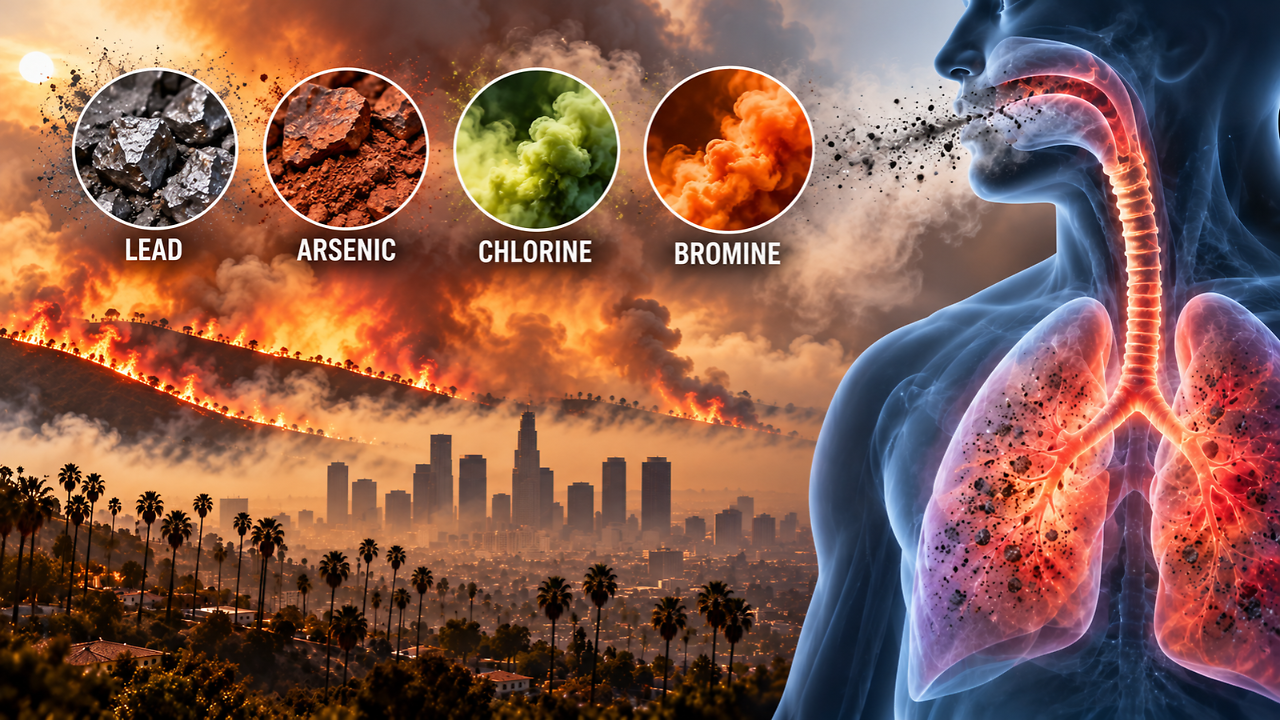
In January 2025, Los Angeles was ravaged by wildfires, which reportedly exposed an estimated 7 million people to lead concentrations more than 80 times higher than normal levels. The findings were published in Science Advances.Researchers from the California Institute of Technology (Caltech) found that smoke from the Eaton Fire contained excessive concentrations of toxic metals and other chemicals than smoke from a wildfire that burned mainly vegetation. The findings highlight the health risks caused when fires spread through populated areas and burnt homes, vehicles and electronic equipment.The lead exposure for an estimated 24-hour period across the Los Angeles metropolitan area was more than 80 times typical levels. The researchers also found that the fire plume contained 50 times more lead, three times more arsenic and seven times more chlorine and bromine than the smoke. LA Wildfire Smoke Was Highly ToxicWildfire smoke is releases particulate matter from the burning of trees, grass and other vegetation. However, when fires spread deeper into cities, they can also burn building materials, paint, vehicles, plastics and electronic devices, releasing more toxic pollutants.The Eaton Fire began on January 7, 2025, and ravaged communities in and around Altadena, California. As the fire burned homes and vehicles, concentrations of toxic metals in the atmosphere increased drastically.The researchers compared the chemical composition of the Eaton Fire plume to measurements from the 2024 Airport Fire in Southern California, which predominantly burned vegetation. They found that the urban fire plume had a completely different chemical composition.“Urban fire plumes are chemically distinct from those of wildfires. Now that we have these observational data about how they differ, we can go back and adjust our models to more accurately estimate how smoke might affect people,” said Haroula Baliaka, the study’s lead author, in a statement released by Caltech.Also read: Recreational Drugs, Steroids & Birth Control: Expert Explains Why Strokes Are Arriving Decades EarlierHealth Risks Of Lead And Arsenic ExposureLead is a toxic metal that can damage the nervous system. In children, exposure can impair brain development and lower IQ. In adults, it can cause high blood pressure and other health problems.Arsenic exposure is also connected to several cancers. Chlorine and bromine are halogens that can be released when certain materials burn.However, scientists have not established the full health consequences of the short-term, high-concentration lead exposure estimated in the study. The findings establish that millions of people may have encountered elevated levels of toxic pollutants, but they do not show how many developed health problems as a result.Urban Fire Smoke Needs Stricter Monitoring Wildfire smoke threatens populated areas. Smoke can travel beyond the fire zone, exposing people who may not face an immediate risk from flames.Researchers and outside experts have called for better monitoring of smoke composition, better public alerts and emergency responses that account for toxic pollutants as well as fire danger.The study also points to a gap in current understanding of air quality models that are based on wildfire emissions. They may not be fully be able capture the chemical hazards from fires that burn buildings and vehicles.“Smoke travels; it's not just about the burn area. What does a plume mean for people who are miles away from a fire but receive the smoke? We evacuate for fire, but we don't evacuate for smoke exposure,” Baliaka said according to CBS Los Angeles.