
- Health Conditions A-Z
- Health & Wellness
- Nutrition
- Fitness
- Health News
- Ayurveda
- Videos
- Medicine A-Z
- Parenting
Law on Assisted Dying in Jersey Could Be Passed Soon After Draft Approval

Credits: iStock
Law on assisted dying will soon be passed in Jersey as politicians approved the principles to allow the same. On Wednesday. States member approved the draft law that would enable people with a terminal illness and experiencing incurable suffering to end their life with the help of a medical professional.
The Assisted Dying Review Panel said that they would need to take a closer look at the details before the law is finalized. The law is expected to be debated again on February 24 after the scrutiny panel is done with reviewing the details.
The draft law has been approved with 32 votes for and 14 votes against. This was similar to the result when the first details of the assisted dying law was given a green light in May 2024. The vote also followed the approval of an end of life care law, which was passed on Tuesday. This required the island's health minister to prove end of life care for the last 12 months of anyone's life.
Law For Assisted Dying: What Does It Mean For Jersey?
Humanists UK chief executive Andre Copson said, and as is reported by the BBC, "This vote in favour of the draft law represents a historic moment for Jersey, and a huge step forward for compassion, dignity and choice at the end of life. The proposals contain strong safeguards and reflect the clear wishes of the public, who have spoken through citizens' juries and repeated surveys. Today, members of the States Assembly have listened to those voices and are one step closer to bringing choice and compassion to those facing the hardest of circumstances."
As a rebuttal, Christian leaders on Sunday led a prayer outside the States building. Organizers of Walk for Life said the prayer was attended by 200 people who were there to share their "great concern for the unintended consequences of the introduction of assisted dying, that has been expressed over the last few years."
Read: Can Right To Die Be Practiced By Non-Terminally Ill Patients?
Law For Assisted Dying In Jersey: What It Proposes?
As per the official government website of Jersey, the law is for those with a terminal illness, who is experiencing or is expected to experience unbearable physical suffering. Under such scenario the person "chooses to end their life with the help of a medical professional". The website notes that it is not same as suicide. It is a "service provided to people in certain limited circumstances that will be set out in law".
Also Read: Uruguay Becomes The First Catholic Latin American Country To Legalize Euthanasia
The website also notes that this does not replace palliative care and end of life care services. As person approaching the end of their life or living with serious illness should be provided the care and treatment they need to maximize their quality of life and minimize any suffering or distress. "Assisted dying is an additional choice that some people may make because they want more control over the manner and timing of their death," notes the website.
Assisted Dying or Euthanasia Vs Assisted Suicide
The difference between euthanasia and assisted suicide depends on who is administering the lethal dose. In an assisted suicide, the patients administer a lethal dose themselves.
The bill furthermore places no time limit on life expectancy, unlike similar laws do in the US, Australia, and New Zealand.
Read More: The Kessler Twins Die By Assisted Suicide in Germany; How It Differs From Euthanasia
The bill states that anyone with an incurable illness that cause them "unbearable suffering" can request euthanasia, even if the illness is not terminal. The catch is, applicants must be mentally competent, and two doctors must be required to rule that they are psychologically fit enough to take the decision for themselves.
What Is Euthanasia?
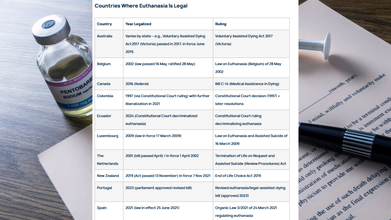
The term has Greek origins, which means "good death", and refers to the practice under which an individual intentionally ends their life, painlessly. However, there are various types of Euthanasia, which are as followed:
Active Euthanasia: Where a patient is injected with a lethal dose of the drug, also known as "aggressive" euthanasia.
Passive Euthanasia: Where the patient's artificial life support such as a ventilator or feeding tube is withheld.
Voluntary Euthanasia: This happens when the patient consents to it.
Involuntary Euthanasia: This happens when the patient is not in the state to consent to euthanasia. In such cases, the patient's family makes the decision.
AIIMS And ISRO Sign MoU To Advance Research In Space Medicine
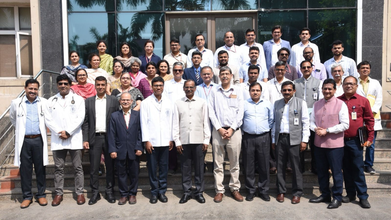
Credits: Dr P Sarat Chandra (LinkedIn)
All India Institute of Medical Sciences (AIIMS) and the Indian Space Research Organisation (ISRO) signed a Memorandum of Understanding (MoU) on Monday to collaborate on advancing research in space medicine.
The MoU was signed between M Srinivas, Director (AIIMS), New Delhi and Dinesh Kumar Singh, Director, Human Space Flight Centre (HSFC), ISRO. The event brought together senior leadership from AIIMS and ISRO, including ISRO Chairman V Narayanan and Secretary, Department of Space, as well as Deans, Heads of Departments, faculty members, and studies from AIIMS New Delhi.
Also Read: Is There A Link Between Your Kidney Health And Other Chronic Diseases? Study Says Yes
As per the news agency Asian News International (ANI), a press release of the collaboration noted for a cooperative framework for ground-based and space-based research in Space Medicine. The press release also noted that the research will cover areas like human physiology, cardiovascular and autonomic regulation, musculoskeletal health in microgravity, microbiome and immunology, genomics and biomarkers and behavioral health.
“This MoU will give us the escape velocity to venture together into the field of space medicine. Collaborative research between AIIMS and ISRO will benefit patients, the nation, and ultimately humankind. As India moves toward Viksit Bharat by 2047, we hope to emerge as a Vishwaguru in space medicine as well,” said Prof M Srinivas, Director, AIIMS, New Delhi.
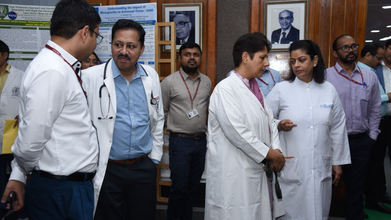
Chairman of ISRO Dr V Narayanan and Secretary, Department of Space also highlighted India’s remarkable journey in space programme. He noted how India evolved from the time when rockets and equipment were transported on bicycles and bullock carts to today, where it is going to be leading medical and research institutions like AIIMS to strengthen India’s human spaceflight capabilities.
The programme also featured a presentation on AIIMS New Delhi’s ongoing work in space medicine research, delivered by Prof. KK Deepak, former Head of the Department of Physiology. The event was attended by Heads of Departments and faculty members from across AIIMS New Delhi, along with representatives from the Resident Doctors Association (RDA), the AIIMS Student Association (ASA), and the Society of Young Scientists (SYS).
The collaboration represents an important step toward enhancing India’s capabilities in human spaceflight and biomedical research. It also aligns with the country’s broader scientific ambitions as India moves toward its centenary in 2047 and the vision of Viksit Bharat.
What Do We Already Know About Space Medicine?
As per a 2017 study in the British Journal of Anaesthesia, space medicine is fundamental to the human exploration of space. It supports survival, function and performance in this challenging as potentially lethal environment. It is international, intercultural and interdisciplinary, operating at the boundaries of exploration, science, technology and medicine.
Space medicine specialists play a crucial role in safeguarding astronauts and other spaceflight participants. Known as “flight surgeons,” they help develop strategies to protect the health, safety, and performance of space travellers in the extreme conditions of space. Their responsibilities span every stage of a mission — from selection and training to in-flight care, post-mission rehabilitation, and monitoring long-term health effects.
With inputs from ANI
Virus Without Vaccine Hits California; No Need To Worry, Say Public Health Officials
Credits: Canva
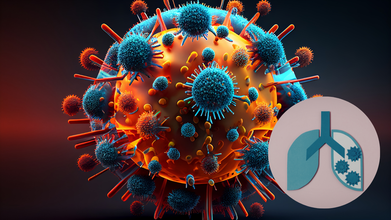
Sick days are again piling up with a respiratory disease, not COVID-19 or the flu. This disease is most likely the one Americans have not heard of. This is HMPV or human metapneumovirus. Doctors have asked people to stay vigilant as seasonal flu virus could lead to pneumonia and bronchitis, and it is spreading in California wastewater and around the country. However, as per public health officials, there is nothing to get worried at this point.
Also Read: Is There A Link Between Your Kidney Health And Other Chronic Diseases? Study Says Yes
As per the public database WasterwaterScan Dashboard, high levels of HMPV were detected across Northern California cities. The highest levels were reported in Redwood City, whereas elevated levels were found in San Francisco Bay Area and Napa's Wine Country. What's more dangerous is that this virus is without a vaccine.
The good news is that in other parts of country HMPV remains lower. However, the Centers for Disease Control and Prevention (CDC) noted that data from October 2025 shows the cases are trending up, especially during winter and spring.
Dr. Matthew Binnicker, director of the Clinical Virology Laboratory at Mayo Clinic, as reported by The Independent said, "In the late winter, early spring, it can account for five percent to 10 percent of all the respiratory infections that we diagnose in the United States. So it's definitely out there." Experts explain that other viruses like HMPV or influenza get a chance when COVID is quieter.
Read: HMPV Virus Cases Surging In California, New Jersey: Is It Dangerous?
Virus Without A Vaccine: What Is HMPV?
HMPV was first discovered in 2001 and is part of the Pneumoviridae family along with the Respiratory syncytial virus (RSV).
HMPV most likely spreads from an infected person to others through:
- the air by coughing and sneezing
- close personal contact, such as touching or shaking hands
- touching objects or surfaces that have the viruses on them, then touching the mouth, nose, or eyes
In the US, HMPV circulates in predictable patterns each year, typically beginning in winter and lasting through spring.
The usually self-limiting and mild symptoms typically last 4 to 5 days. These include:
- cough
- fever
- nasal congestion
- shortness of breath
People at risk include:
- elderly people
- children
- people with comorbidities
"The HMPV is not deadly, and there is no evidence of mortality or a severe transmission rate," former Indian Council of Medical Research (ICMR) scientist, Dr. Raman Gangakhedkar, told IANS, during the virus's outbreak in India in 2025.
“The virus may cause pneumonitis-like illness, but the mortality rates are almost unknown so far. HMPV has a global prevalence of about 4 per cent,” he added.
While no vaccine or treatment can prevent HMPV infection, to avoid the infection, individuals must:
Practice good hygiene and cover your mouth and nose with a tissue when coughing or sneezing, or use your elbow, not your hands, for it. And wash your hands properly, especially in healthcare settings.
Why Are People Hearing About The Virus Without Vaccine Now?
The reason people have not heard about it before is because its symptoms are nearly indistinguishable from other respiratory infections, so often it could go undiagnosed. Furthermore, earlier the COVID cases and influenza cases sparked up, which deviated the attention from HMPV. Now, with the season gone, and increased awareness around respiratory illnesses, greater attention to viruses like HMPV is also paid.
1 In 7 Indians Affected By Mental Health Disorders; Govt To Launch NIMHANS-2 To Boost Care
Credit: Canva
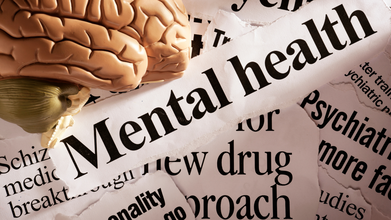
One in seven Indians, or over 14 percent of the population, suffers from some form of mental health disorder. Amid an increasing treatment gap -- up to 90 percent -- seen in several states, especially in North India, the government today reiterated the plan of launching a second National Institute of Mental Health and Neurosciences (NIMHANS) in the northern states.
NIMHANS-2 was first announced by Finance Minister Nirmala Sitharaman during the Union Budget 2026-27, to deliver specialized care for mental health and neurological disorders in north India.
Health experts and policymakers, as part of the government-led Post-Budget Webinar series, highlighted the growing burden of mental and neurological disorders in India and also stressed the urgent need to strengthen institutional capacity to meet emerging healthcare demands.
"One in seven Indians is affected by mental health disorders, while several states continue to face a treatment gap ranging from 70 to 90 percent," the experts said.
Noting that Non-Communicable Diseases (NCDs) account for over 60 percent of deaths in the country, they added that "neurological and mental health conditions are among the leading contributors to disability-adjusted life years (DALYs)," among the citizens.
Need For Tertiary Neuro-psychiatric Care
To address these, the experts called for ramping up tertiary mental health institutions and expanding specialized services.
The session, moderated by Vijay Nehra, Joint Secretary, Ministry of Health and Family Welfare, highlighted that North India currently lacks adequate tertiary neuro-psychiatric care facilities. These include areas such as:
- advanced neuroimaging,
- neurocritical care,
- specialized neurological services
Further, making a virtual address at the Post-Budget Webinar, Union Health Minister JP Nadda also highlighted the government’s focus on strengthening mental healthcare services in the country.
"NIMHANS-2 will be established in North India to expand advanced clinical care, training, and research," Nadda said.
"In addition, the Central Institute of Psychiatry, Ranchi, and the Lokopriya Gopinath Bordoloi Regional Institute of Mental Health, Tezpur, will be upgraded as regional apex institutions to strengthen mental healthcare services in the eastern and north-eastern regions," he added.
Meanwhile, the experts also stressed the need to improve services in underserved and geographically remote regions, including the northeastern states, through better infrastructure, capacity building, and targeted deployment of trained mental health professionals.
They also discussed strategies for expanding advanced neuro-psychiatric care and reinforcing India’s overall mental healthcare ecosystem. They proposed:
- Adopting a hub-and-spoke model supported by digital health platforms
This would allow tertiary institutions and centers of excellence to provide technical guidance, specialist consultations, and clinical support to district hospitals and community-level health facilities.
"Such a model would strengthen referral pathways and ensure that specialized mental health services are accessible to people even in remote and rural areas," the experts said.
- Integrating services under Tele-MANAS
Both existing and upcoming campuses of NIMHANS must be integrated , as this will enable a robust nationwide tele-mental health network that ensures
- timely counselling,
- psychological support,
- specialist consultations
- Digital follow-up systems
The experts called for the seamless integration of healthcare facilities, aligned with the vision of the Ayushman Bharat Digital Mission and the ABHA ID ecosystem. This, they said, will
- enable continuity of care,
- Improve monitoring of patients,
- Lead to better clinical outcomes
- A national Brain-Mind Cloud Network
The Network proposed under the National Health Mission would connect premier institutions such as All India Institute of Medical Sciences (AIIMS), state medical colleges, and primary healthcare centers through a digitally integrated platform.
It could also facilitate
- unified mental health records,
- AI-based screening tools,
- data-driven clinical decision support systems,
- tele-neuro-psychiatric hubs at regional centers.
- Follow Us :


© 2024 Bennett, Coleman & Company Limited