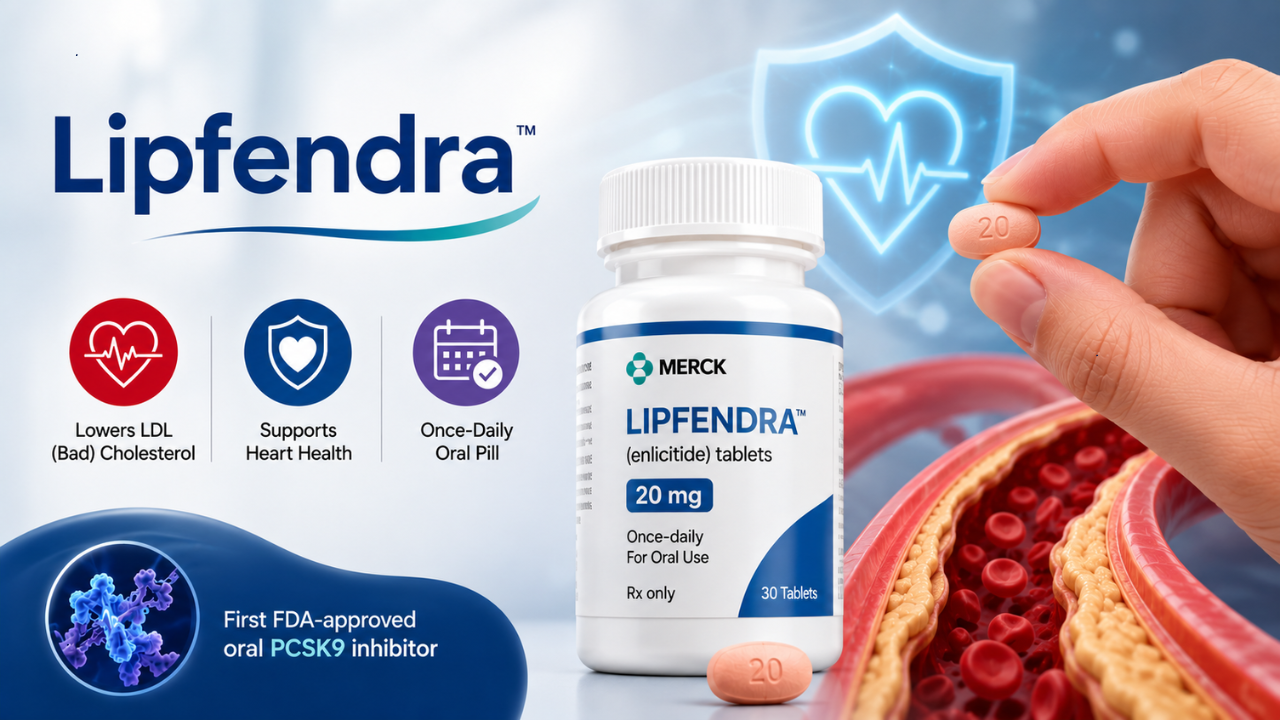
The US Food and Drug Administration (FDA) has approved a once-daily pill that can lower low-density lipoprotein (LDL), commonly known as "bad" cholesterol, a major risk factor for heart disease.Developed by Merck, enlicitide, which will be marketed as Lipfendra, is the first FDA-approved oral PCSK9 inhibitor for reducing LDL cholesterol.Lipfendra has been approved as an adjunct to diet and exercise to reduce LDL cholesterol in adults with primary hypercholesterolemia, including those with heterozygous familial hypercholesterolemia (HeFH).The approval is based on two Phase 3 clinical trials showing that Lipfendra can reduce LDL cholesterol to 50–60 mg/dL or even lower in many patients."Results from these Phase 3 trials showed treatment with Lipfendra resulted in reductions across other atherogenic lipoproteins associated with atherosclerotic cardiovascular disease (ASCVD) risk, including non-high-density lipoprotein cholesterol (non-HDL-C) and apolipoprotein B (ApoB)," Merck said.High LDL cholesterol is a major risk factor for atherosclerotic cardiovascular disease (ASCVD), the leading cause of death globally."In two Phase 3 trials, LIPFENDRA led to impressive reductions in LDL-C. Now, for the first time, patients have an oral PCSK9 inhibitor for LDL lowering," said Dr. Ann Marie Navar, lead author of the clinical trial and associate professor at the University of Texas Southwestern Medical Center.Also read: Spinal Muscular Atrophy: England to Roll Out Nationwide Newborn Screening From 2027How Does Lipfendra Work?Lipfendra is a 20 mg once-daily tablet that works by blocking PCSK9, a protein that regulates LDL receptors in the liver.Normally, PCSK9 reduces the number of LDL receptors available to remove cholesterol from the bloodstream. By inhibiting this protein, Lipfendra allows more LDL receptors to remain active, enabling the liver to clear more LDL cholesterol from the blood.Unlike statins, which lower cholesterol by blocking an enzyme the liver uses to produce cholesterol, Lipfendra targets the PCSK9 pathway. It is also the first oral medicine in this class, whereas existing PCSK9 inhibitors are administered as injections.What Did the Clinical Trials Show?The FDA approval was supported by two Phase 3 studies, including a 24-week trial involving 2,912 participants, which demonstrated significant reductions in LDL cholesterol.The studies found that:Lipfendra lowered LDL cholesterol by up to 60%.Many participants achieved LDL levels of 50–60 mg/dL or lower.The drug also reduced non-HDL cholesterol and ApoB, two additional markers associated with cardiovascular risk.Side effects were similar to those seen with placebo.Read More: Meet Erica Schwartz: Trump's CDC Nominee Who Pledges to 'Never Betray Science'The cholesterol-lowering effect was comparable to that seen with injectable PCSK9 inhibitors.Merck is now conducting a cardiovascular outcomes trial to determine whether Lipfendra also lowers the risk of heart attacks, strokes and cardiovascular death, as injectable PCSK9 inhibitors have previously been shown to do.Lipfendra: How Much Does It Cost?Merck said Lipfendra will be available in the United States within the next few weeks. The company has set a list price of $315 for a 30-day supply, according to Merck spokeswoman Julie Cunningham.Who Could Benefit From Lipfendra?Lipfendra is intended for adults with hypercholesterolemia, a condition characterized by elevated LDL cholesterol that can lead to plaque buildup in the arteries.The drug may particularly benefit:Adults with primary hypercholesterolemia.People with heterozygous familial hypercholesterolemia (HeFH).Patients who need additional LDL lowering despite diet, exercise or statin therapy.Individuals looking for an oral alternative to injectable PCSK9 inhibitors.