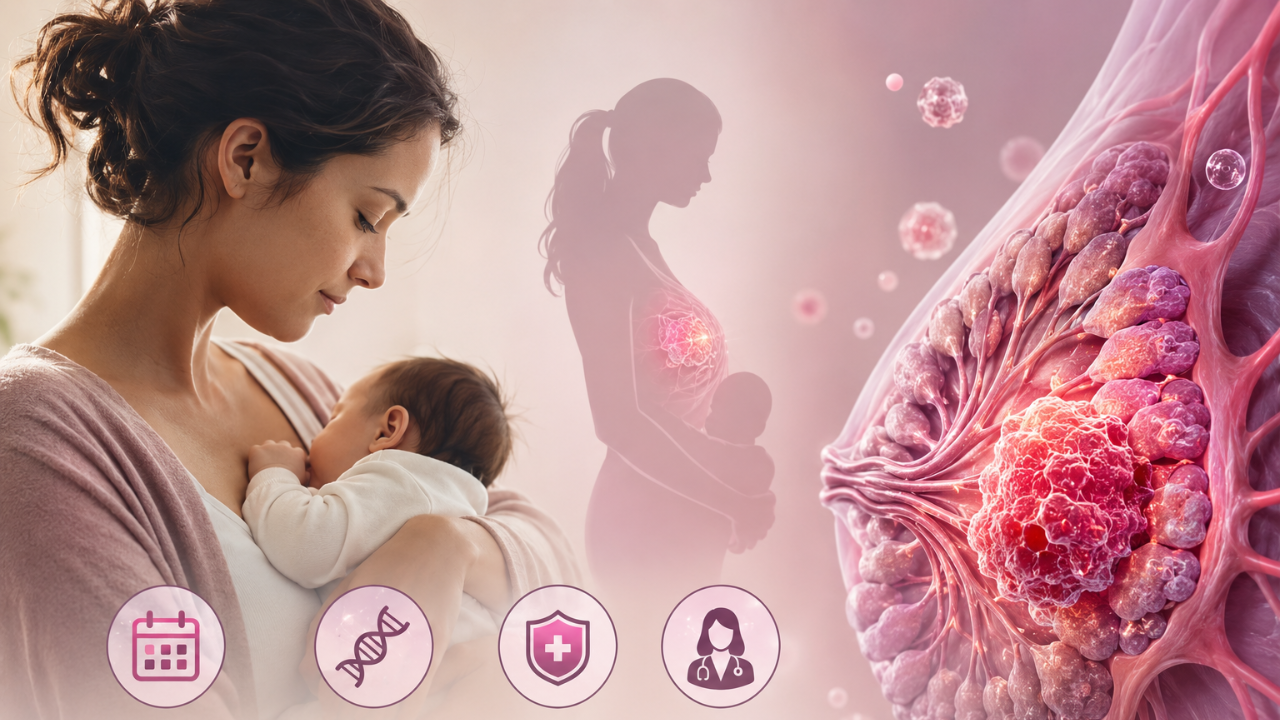
Breast cancer diagnosed shortly after pregnancy may be more aggressive. According to new research, some young mothers may face poorer outcomes despite having similar types of breast cancer tumors as other women. A UCLA-led study, published in npj Breast Cancer, found that women diagnosed with hormone receptor-positive (HR+), HER2-negative breast cancer within the first three years after childbirth, especially during the first year, were more likely to have tumors with a higher risk of recurrence. It therefore indicates that postpartum breast cancer is not simply breast cancer diagnosed after pregnancy but may be a biologically distinct disease. Breast Cancer In New Mothers Also read: Could Chemotherapy Soon Be Optional? AstraZeneca and Gilead Drugs Show Promise for Breast Cancer PatientsResearchers analyzed young women with HR-positive, HER2-negative breast cancer using the widely used 21-gene Oncotype DX Recurrence Score, a genomic test that helps predict the likelihood of cancer recurrence and whether chemotherapy may be beneficial. They discovered that tumors diagnosed during the first three years after childbirth had significantly higher recurrence rates than tumors in women who had never given birth. The highest scores were observed among women diagnosed within the first year after delivery. "Our findings suggest that the first three years after childbirth represent a distinct biological window during which hormone receptor-positive breast cancers may behave more aggressively," the researchers observed. The study also provides one of the first genomic definitions of this high-risk postpartum period rather than relying solely on clinical observations.Can Childbirth Change Breast Cancer Outcome? Also read: You Know What? Wearing Black Underwears Do Not Cause Breast Cancer - Myths Busted By ExpertResearchers believe that the answer to that question lies in what happens to the breast after breastfeeding comes to an end. After pregnancy and lactation, the breast undergoes a natural process called mammary gland involution, during which the milk-producing tissue shrinks, and the breast returns to its pre-pregnancy state. While this change is normal, it creates a temporary environment that features inflammation, weakened immune system, and extensive tissue restructuring. According to a recent review published in Breast Cancer Research, these biological changes may unintentionally create conditions that help dormant cancer cells survive, grow, and spread. Researchers describe this postpartum remodeling as a "tumor-promoting microenvironment." These processes may partly explain why postpartum breast cancers are often diagnosed at more advanced stages and have poorer outcomes than breast cancers in women of similar age who have not recently given birth. Effect Of Delay In Childbirth The findings hold importance as breast cancer rates among younger women continue to increase worldwide just when women are getting pregnant later in their lives. Previous studies have indicated that breast cancer detected after pregnancy behaves differently. "The medical community has long recognized that breast cancers diagnosed after pregnancy can behave differently," UCLA researchers said. "With breast cancer rates among younger women increasing, scientists have been studying whether delayed timing of first pregnancy may help explain some of that trend." Because pregnancy and breastfeeding naturally change breast tissue, warning signs like lumps or breast firmness can sometimes be mistaken for normal postpartum changes. This may delay diagnosis and allow cancers to progress before they are detected.