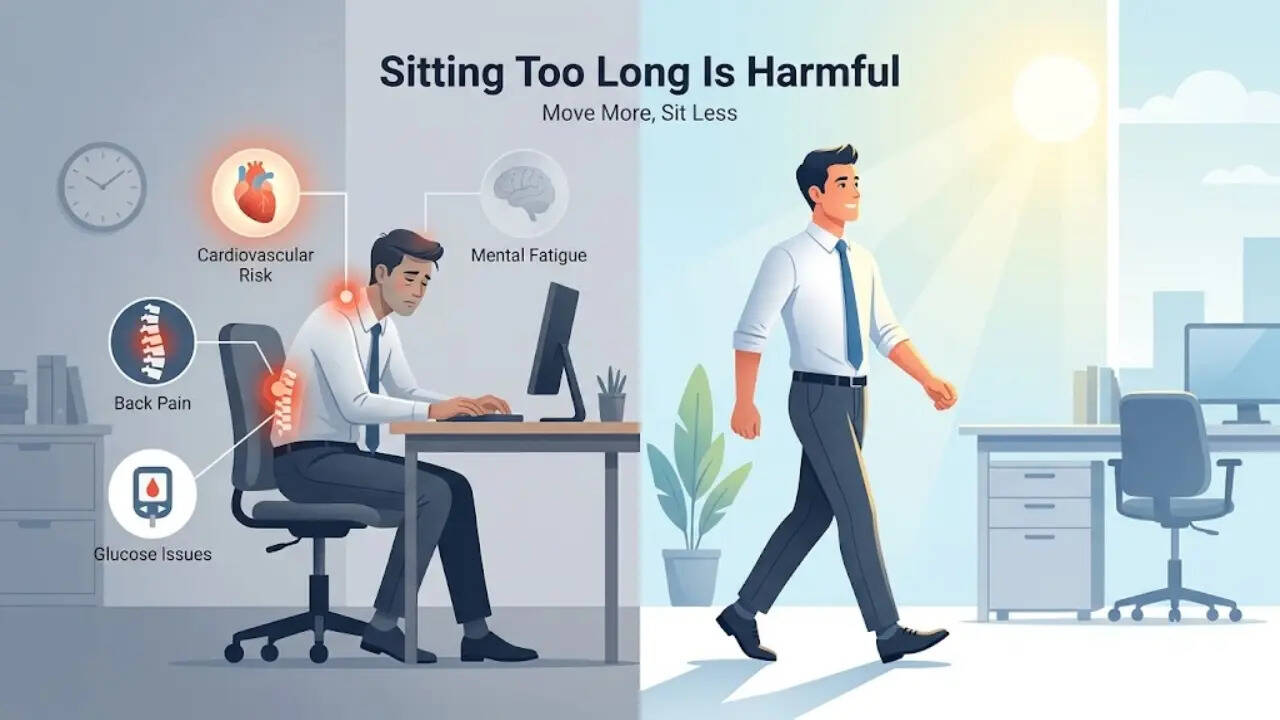
Desk jobs cause just as much damage as smoking. Several studies have stated that sitting for prolonged hours does the same amount of damage as smoking, and for that reason, experts have recommended exercise. Doctors and scientists have long said that working out is a good way to combat the damage caused by prolonged sitting hours—but a new study begs to differ. It turns out that the damage caused by sitting too much can contribute to the risk of heart disease, early death, and even type 2 diabetes. However, working out and eating right may not be sufficient to make up for this loss.What are the physical effects of long sitting hours?Physical inactivity refers to not engaging in vigorous or moderate workouts. Public health guidelines suggest 150 minutes of moderate-intensity workouts like cycling or brisk walking and 75 minutes of vigorous workouts like running. Sedentary behaviour, on the other hand, refers to reclining with low energy expenditure or long durations of sitting in front of a desk or television or during a long commute.Experts say that a person can, therefore, be physically active yet live a sedentary lifestyle. Some can also go for a run before work and yet remain seated for about the next eight hours. This workout helps, but it does not combat the ill effects of sitting for long hours. When the body stays still for longer periods, a series of changes occur — skeletal muscle activity levels drop, making it difficult for the body to absorb glucose from the blood. This can result in insulin resistance and eventually type 2 diabetes.What happens when you sit for long hours?Blood circulation also becomes inefficient, and nutrients and oxygen take much longer to reach the tissues, thereby impairing vascular function and raising blood pressure. Together, these circulatory changes can lead to high cholesterol, belly fat accumulation, and high blood sugar. Prolonged sitting also impacts the musculoskeletal system. Limited movement and poor posture have an adverse impact on the lower back, neck, and shoulders, explaining why pains and aches are common among corporate workers.How do long sitting hours affect mental health?The effects of long sitting hours can impact your brain as well, reducing energy levels, alertness, and concentration. Employees who sit for extended durations are less productive and feel more sluggish at work. Globally, this leads to four to five million deaths every year, hence explaining why regular workouts are encouraged.Can regular exercise combat the ill effects of long sitting hours?It turns out that taking a gym membership and going for regular workouts may not be sufficient to combat the ill effects of long sitting hours. On the other hand, small and regular interruptions can make a difference. Research suggests that moving or standing up for even two to five minutes every 30 to 60 minutes can improve glucose metabolism and reduce heart-related risks too.According to a study of offices in the UK, these measures can reduce daily sitting time by one to one and a half hours. Employees involved reported better musculoskeletal comfort, energy, and focus. This makes the message evident—regular workouts are essential, but they may not fully combat the risks associated with long sitting hours. A quick walk after lunch, attending to phone calls while taking a short walk, or even taking small breaks every now and then—these small efforts will help you protect your health better than most other remedies. For a modern corporate employee, protecting health need not be about exercising after work but about sitting less and moving more even while work is ongoing.