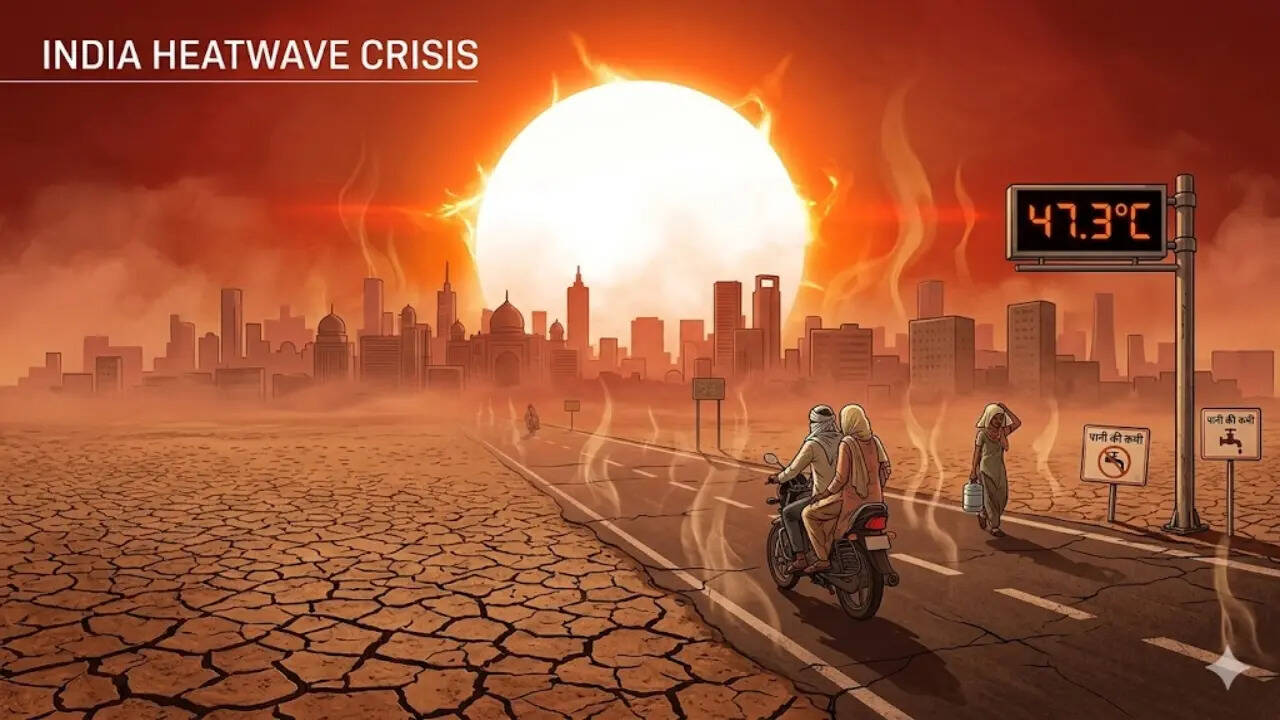
If you thought that the worst in terms of the heatwave was coming to an end, you were wrong. While heatwaves are an unfortunate common occurrence in India, this year is different. Earlier, in 2025, the summer brought India to its knees, with temperatures soaring as high as 50 degrees Celsius in parts of the country. And this year, temperatures have already crossed the 47 degrees Celsius mark—and reports suggest that the worst is yet to come. This year, experts are expecting the possibility of a “Super El Niño." Ever heard about it? Let’s find out what it means.What is Super El Niño?Super El Niño is a climate phenomenon occurring once every two to seven years. It occurs when ocean surface temperatures rise in the eastern and central Pacific. As a result, a strong event occurs, known as “Super El Niño”, which can intensify global heat.Has India entered the El Niño phase?The India Meteorological Department (IMD) has issued advisories for people living in heatwave-struck parts of the country. Recently, a report from AQI.in found that, out of the 100 hottest cities in the world, India is home to 95. This, in a way, makes India the hottest country in the world. Several heatstroke-related deaths have been reported in the country in the month of April itself —andthe heatwave is likely to worsen in May and June. Cities in Uttar Pradesh and Chhattisgarh are at the top of the list, as the top 10 hottest ones are in these states. Temperatures have consistently been over 40 degrees in these cities. Odisha, Karnataka, and Kerala are also in the grip of this severe heatwave.While it cannot be conclusively said that India is in its El Niño phase, the current scenario mimics the effects already. The IMD is therefore urging people, through its advisories, to stay safe and hydrated. Extended hot days can lead to various impacts, including an increased risk of health issues like heatstroke, higher electricity consumption, and water shortages,” the advisory suggests. Experts say that India is particularly vulnerable to this heat stress due to its monsoon and high pre-monsoon temperatures. However, human-related factors worsen this situation, such as urban development and diminishing green cover.Some experts, however, are saying that the ongoing heatwave is not an El Niño; rather, it is an anti-cyclonic pressure over northern and central India, which is working like a heat dome. However, the possibility of a stronger El Niño cannot be completely ruled out. Previously, it occurred in 1997–1998 and 2015–2016, resulting in drought-like conditions.Can the heatwave trigger heart attacks?In an interview with Health and Me, Dr Joy Shome, Head of TAVI/TAVR — CK Birla Hospitals, BM Birla Heart Hospitals, said, "An alarming rise in the number of young adults who experience cardiac events has been observed due to heatwaves that are becoming more common and more extreme (as outlined in the Beat by Beat report). The cardiovascular system is put under enormous strain by excessive amounts of heat. To help cool down the body, our blood vessels expand (dilate), and the heart must pump more blood through them; however, dehydration results in thicker blood, increasing your chance of developing a blood clot (a leading cause of heart attacks)."Dr Shome also said that heart disease is no longer only affecting the elderly; a substantial number of cardiac deaths occur prematurely and affect younger populations. Lifestyle, stress and metabolic issues are all contributors to this trend. India has contributed nearly one in five cardiac deaths worldwide, and cardiovascular disease accounts for around 25% of all deaths in India — illustrating how large this crisis is. The ‘thin fat’ phenomenon is another factor; many Indian people may look thin but have significant amounts of visceral fat — meaning many young adults could be at risk of suffering a heart attack.Is the heatwave making people in India fall sick?States and Union Territories have been instructed by the Ministry of Health and Family Welfare to create heatwave management units, issue early warnings, and maintain real-time reporting of heatstroke cases. These measures, however, may not be enough, especially for vulnerable groups of people. Severe heatwaves can lead to death, yes; however, there is a risk of heat stress, heatstroke and even dehydration.