
- Health Conditions A-Z
- Health & Wellness
- Nutrition
- Fitness
- Health News
- Ayurveda
- Videos
- Medicine A-Z
- Parenting
Measles Cases Cross 14,000 in Mongolia, Mostly Among Partially Vaccinated Children
Credits: Canva
Mongolia is witnessing a sharp rise in measles infections, with the total number of confirmed cases reaching 14,123, according to the country’s National Centre for Communicable Diseases (NCCD). Health officials say the outbreak is largely affecting school-age children, many of whom had received only one dose of the measles vaccine instead of the recommended two.
In a public advisory, the NCCD urged parents to ensure their children complete the full vaccination schedule, warning that partial immunization leaves children vulnerable to a potentially severe and highly contagious disease.
Why Children Are Most Affected
Health authorities noted that the majority of new infections were recorded among children who had not received their second measles shot. While a single dose offers some protection, it is not sufficient to prevent outbreaks, especially in school settings where close contact accelerates transmission.
The NCCD stressed that completing the two-dose regimen significantly strengthens immunity and reduces the risk of community-wide spread.
One of the World’s Most Contagious Viruses
Measles is considered one of the most infectious diseases known to humans. It spreads through direct contact with infected nasal or throat secretions, such as coughing or sneezing, and through airborne transmission in enclosed spaces.
What makes measles particularly dangerous is its ability to remain active in the air or on surfaces for up to two hours after an infected person has left the area. According to health experts, a single measles patient can infect up to 18 other people, making rapid containment extremely challenging once outbreaks begin.
Why Vaccination Still Matters
Vaccination remains the most effective way to prevent measles infection and limit its spread. The measles vaccine is safe, cost-effective and helps the immune system recognize and fight the virus before serious illness develops.
Before the measles vaccine was introduced in 1963 and widely adopted, large-scale outbreaks occurred every two to three years worldwide, causing an estimated 2.6 million deaths annually. Despite medical advances, measles continues to claim lives when vaccination coverage declines.
In 2023 alone, an estimated 107,500 people died from measles, most of them children under the age of five, highlighting the consequences of gaps in immunization programmes.
Recognising the Symptoms Early
Symptoms of measles typically appear 10 to 14 days after exposure. Early signs often resemble a common viral illness and can last up to a week. These include a runny nose, persistent cough, fever, red and watery eyes, and tiny white spots inside the mouth known as Koplik spots.
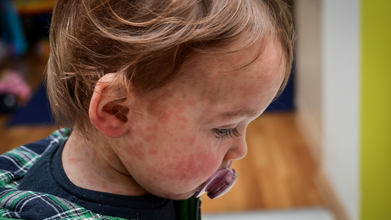
The most recognizable symptom—a red, blotchy rash—usually appears 7 to 18 days after exposure. It starts on the face and upper neck before spreading downward to the torso, arms, legs, hands and feet over several days. The rash generally lasts five to six days before fading.
A Renewed Call for Prevention
Health officials in Mongolia emphasize that measles outbreaks are preventable. They urge parents, caregivers and schools to prioritize full vaccination and seek medical advice at the first sign of symptoms.
With measles capable of spreading rapidly through communities, authorities warn that completing both vaccine doses is not optional but essential to protecting children and preventing future outbreaks.
FDA Refuses To Review Moderna's Flu Vaccine Application

Credits: Canva
FDA refuses to review Moderna's flu vaccine: The U.S. Food and Drug Administration (FDA) has declined to begin reviewing Moderna’s application for its experimental flu vaccine. The company made the announcement on Tuesday. The decision marks another signal of stricter vaccine oversight under the Trump administration and has already rattled investor confidence, with Moderna’s stock falling nearly 7% in after-hours trading.
Read: CDC Vaccine Schedule: Coverage Falls From 17 to 11 Diseases For Children
Moderna said the FDA’s refusal came as a surprise and contradicted feedback the company had received earlier, before it submitted the application and launched phase three trials for the vaccine, known as mRNA-1010. The company has now requested a meeting with the agency to better understand what it described as an unclear “path forward.”
FDA Refuses: Objections Raised Over Trial Design
According to Moderna, the FDA did not flag any safety or efficacy concerns with the vaccine itself. Instead, the agency objected to the design of the clinical trial—despite having previously signed off on it. Moderna added that the setback would not affect its financial guidance for 2026.
The experimental flu shot had shown encouraging results in phase three trials last year, successfully meeting all primary trial endpoints. At the time, Moderna positioned the stand-alone flu vaccine as a critical step toward developing a combined influenza and COVID-19 vaccine, a key long-term goal for the company.
FDA Refuses: Shifting U.S. Vaccine Policy Landscape
The decision comes amid sweeping changes to U.S. immunisation policy over the past year under Health and Human Services Secretary Robert F. Kennedy Jr., who has long expressed skepticism toward vaccines. Moderna on Tuesday pointed to the FDA’s top vaccine regulator, Vinay Prasad, who returned to the agency in August after being removed earlier.
Prasad currently heads the FDA’s Center for Biologics Evaluation and Research (CBER) and has publicly argued for tighter regulatory standards for vaccines. He has also drawn controversy for comments linking child deaths to COVID-19 vaccines.
FDA Refuses: FDA Letter Cites Comparator Concerns
In a letter dated February 3 and signed by Prasad, the FDA stated that its refusal to review Moderna’s application was solely due to concerns about the trial’s design. Specifically, the agency objected to Moderna’s choice of comparator, arguing that comparing the experimental shot to a standard, approved flu vaccine did not represent the “best available standard of care.”
As a result, the FDA concluded that the study did not qualify as an “adequate and well-controlled” trial under its regulatory definition.
Moderna has strongly disputed this interpretation, arguing that FDA rules do not require companies to use the most advanced or highest-dose vaccine as a comparator in clinical trials.
FDA Refuses: Moderna Pushes Back, Eyes 2026–27 Timeline
In a statement, Moderna CEO Stéphane Bancel said the decision undermines innovation and fails to advance shared public health goals. He emphasized that the trial design had been discussed and agreed upon with CBER before the study began.
Moderna now expects the earliest possible approval for its flu shot to come in late 2026 or 2027, pending regulatory reviews across the U.S., Europe, Canada, and Australia.
The FDA declined to comment, stating it does not discuss regulatory communications with individual companies, reported CNBC.
Mayor Zohran Mamdani Confirms Deadly Cold Has Killed Nearly 20
Credit: Canva
Extreme frigid temperatures have led to the death of 18 people across New York, Mayor Zohran Mamdani has confirmed.
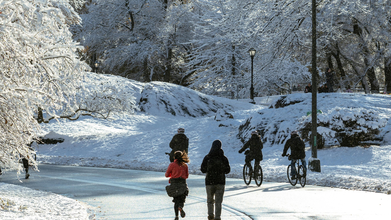
Since late January, the city has been gripped in a cold snap, including 13 days of temperatures of 0C (32F) or below, one of the longest stretches of sub-zero weather New York has seen in six decades since a major snowstorm.
According to Mamdani, certain days in New York have been colder than the continent of Antarctica.
"Since Friday's press conference, one additional New Yorker lost their life on the streets of our city as a result of this cold snap. The total lives lost is now 18. Each life lost is a tragedy, and we will continue to hold their families in our thoughts," he said.
He also urged those experiencing homelessness to head to a shelter one of the 1,400 placements that have been made into shelters and safe havens. Apart from this, 33 New Yorkers have also been involuntarily transported for their safety in these conditions.
"Until temperatures warm up, I ask all of you in this room and outside of it to please continue to take additional precautions. Stay safe, stay indoors, and please, New York, let's keep looking out for one another," the mayor said.
The newly minted Mayor also said that across this past Friday and Saturday nights, 560 New Yorkers used Health + Hospitals warming centers and nearly 300 New Yorkers used a Department of Social Services warming vehicle.
READ MORE: US Cardiologist Reveals When You Are More Prone To Heart Attacks
On 27 January, Mamdani noted that at least 10 of the people who had died were found outdoors. The cause behind the other deaths remain known.
"We have been working hard to keep New Yorkers safe, and we will continue to do so. Because it is not forecast to be above 32 degrees [Fahrenheit] until tomorrow, and 35 degrees is hardly balmy weather," he said.
Experts Recommend Drinking More Water During Winters
Winter is usually associated with hot drinks, cozy layers and fewer reminders to sip water. According to Dr. Swadesh Kumar, Cluster Head – Emergency and Trauma Care & Casualty, Gurugram, this mindset is exactly where the problem begins.
“People assume that because they’re not sweating or feeling thirsty, their body doesn’t need as much water. That’s a misconception,” he told Healthandme.
During cold spells, thirst signals are naturally suppressed. At the same time, the body continues to lose fluids through dry air, indoor heating and even breathing. “The loss is gradual and silent, which makes winter dehydration harder to spot,” Dr Kumar added.
Low fluid intake doesn’t just cause weakness, it can aggravate underlying health problems. When the body is dehydrated, blood becomes thicker, increasing the risk of clot formation. This is particularly dangerous for older adults and people with heart disease.
Kidneys are also affected. Reduced hydration puts extra strain on them, sometimes leading to acute kidney injury. “We see patients with palpitations, fainting spells and extreme weakness, only to later realize dehydration is the root cause,” Dr Kumar notes.
Winter illnesses further complicate the situation. Fever, rapid breathing and certain medications increase fluid loss. Yet many people intentionally avoid drinking water to reduce bathroom visits in the cold.
“This combination is especially risky for children and the elderly,” Dr. Kumar says. Children depend on caregivers for hydration reminders, while older adults naturally feel less thirsty. Both groups can slip into dehydration quickly during winter infections.
Simple Habits Can Prevent Serious Risk
Doctors advise treating hydration as a routine, not a response to thirst. Warm water, soups, stews and herbal drinks are practical winter options. Fruits with high water content also help, even when appetite is low.
“Monitor urine color, limit excess caffeine and be extra careful if you have a chronic condition,” Dr Kumar advises.
The cold wave is a reminder that dehydration isn’t just a summer problem. Even in winter, the body needs adequate water to function, and ignoring that need can quietly turn into a medical emergency.
Obesity Raises Risk of Death by 70 Percent, Study Warns

Credit: Canva
People suffering from obesity are 70 percent more likely to be hospitalised or die from an infectious disease, including flu, COVID-19 and pneumonia, according to a Lancet journal study.
Researchers from the UK and Finland, who analyzed over 500,000 people, found that those with a BMI of 30 or higher were at a significantly higher risk compared with people with a healthy BMI between 18.5 and 24.9. The risk escalated as body weight increased.
Dr Solja Nyberg, of the University of Helsinki and the study's first author, noted the problem could worsen and said: “As obesity rates are expected to rise globally, so will the number of deaths and hospitalizations from infectious diseases linked to obesity.
“To reduce the risk of severe infections, as well as other health issues linked with obesity, there is an urgent need for policies that help people stay healthy and support weight-loss, such as access to affordable healthy food and opportunities for physical activity.”
In the meantime, she added, it was “especially important” for those living with obesity to keep up to date with their vaccinations.
According to the World Health Organisation, obesity has been linked to 3.7 million deaths globally in 2024. If strong action is not taken, the number of people living with obesity is expected to double by 2030. Recently, the WHO released its first-ever guideline on the use of Glucagon-Like Peptide-1, or GLP-1, therapies for managing obesity as a chronic and relapsing condition.
“Obesity is a major global health challenge that WHO is committed to addressing by supporting countries and people worldwide to control it effectively and equitably. Our new guidance recognises that obesity is a chronic disease that can be treated with comprehensive and lifelong care,” said WHO Director-General Dr Tedros Adhanom Ghebreyesus.
Is Global Obesity On The Rise?
In 2022, nearly one in eight people worldwide were living with obesity. This is a number that has doubled more in adults and quadrupled among adolescents in the past three decades. Obesity also increases risk of many chronic illnesses and diseases, including diabetes, cardiovascular disease, and also certain cancers.While industrialized societies see soaring obesity rates, traditional and farming communities experience much lower levels of obesity, a contrast often attributed to more physically demanding lifestyles.
This is where this recent study plays a big role. The study found that this assumption does not fully hold true. Even though physical activity across population, or the energy expenditure, that is the total calories burned daily is not significantly lower in industrialized population, their body size is larger. So, if not the energy output, then what is the reason? The answer lies in the diet.
READ MORE: Diet, Not Lack Of Exercise Is The Real Reason For Rise In Obesity, According To Study
Childhood Obesity: The Silent Crisis
Childhood obesity is a long-term health condition that develops when a child’s weight is above the healthy range for their age, height, and sex.According to Mayo Clinic, doctors define it as having a body mass index (BMI) at or above the 95th percentile for children 2 years and older. In recent times, India has begun seeing a worrying rise in childhood obesity cases, especially in cities where lifestyle changes, unhealthy diets, and less physical activity are driving the trend.
In the United States, CDC data from 2017–2020 showed that about 19.7% of children and adolescents between ages 2 and 19 had obesity, roughly 14.7 million young people. Among them, 12.7% were between ages 2–5, 20.7% were 6–11, and 22.2% were 12–19.
Dr Vivek Jain, Senior Director & Unit Head, Paediatrics, Fortis Hospital explains that in recent years, obesity among children has risen sharply due to many factors. Kids are spending more time in front of screens, getting less outdoor play, and attending online classes, all of which cut down their activity levels. At the same time, fast food, sugary drinks, and packaged snacks have become a regular part of diets.
Modern lifestyles also encourage frequent dining out, reliance on processed meals, and irregular eating. Add limited access to safe play areas, heavy academic schedules, and family history of obesity, and the risks become even higher.
Without intervention, obesity in childhood often continues into adulthood, increasing chances of diabetes, high blood pressure, heart problems, and even some cancers.
How To Prevent Childhood Obesity
Prevention needs a joint effort from families, schools, communities, and policymakers. Parents play the most important role, as they shape habits from an early age. Dr. Vivek suggests:
- Balanced nutrition: Encourage home-cooked meals with fruits, vegetables, whole grains, and lean proteins. Limit fried foods, sugary drinks, and packaged snacks.
- Physical activity: Aim for at least 60 minutes of active play or exercise daily, such as sports, cycling, or outdoor games.
- Reduced screen time: Limit television, mobile, and gaming time to help children stay active and sleep better.
- Family involvement: Lead by example—eat meals together, exercise as a family, and make health a priority.
- School initiatives: Schools should provide nutritious meals, promote physical education, and teach healthy habits.
- Follow Us :


© 2024 Bennett, Coleman & Company Limited